


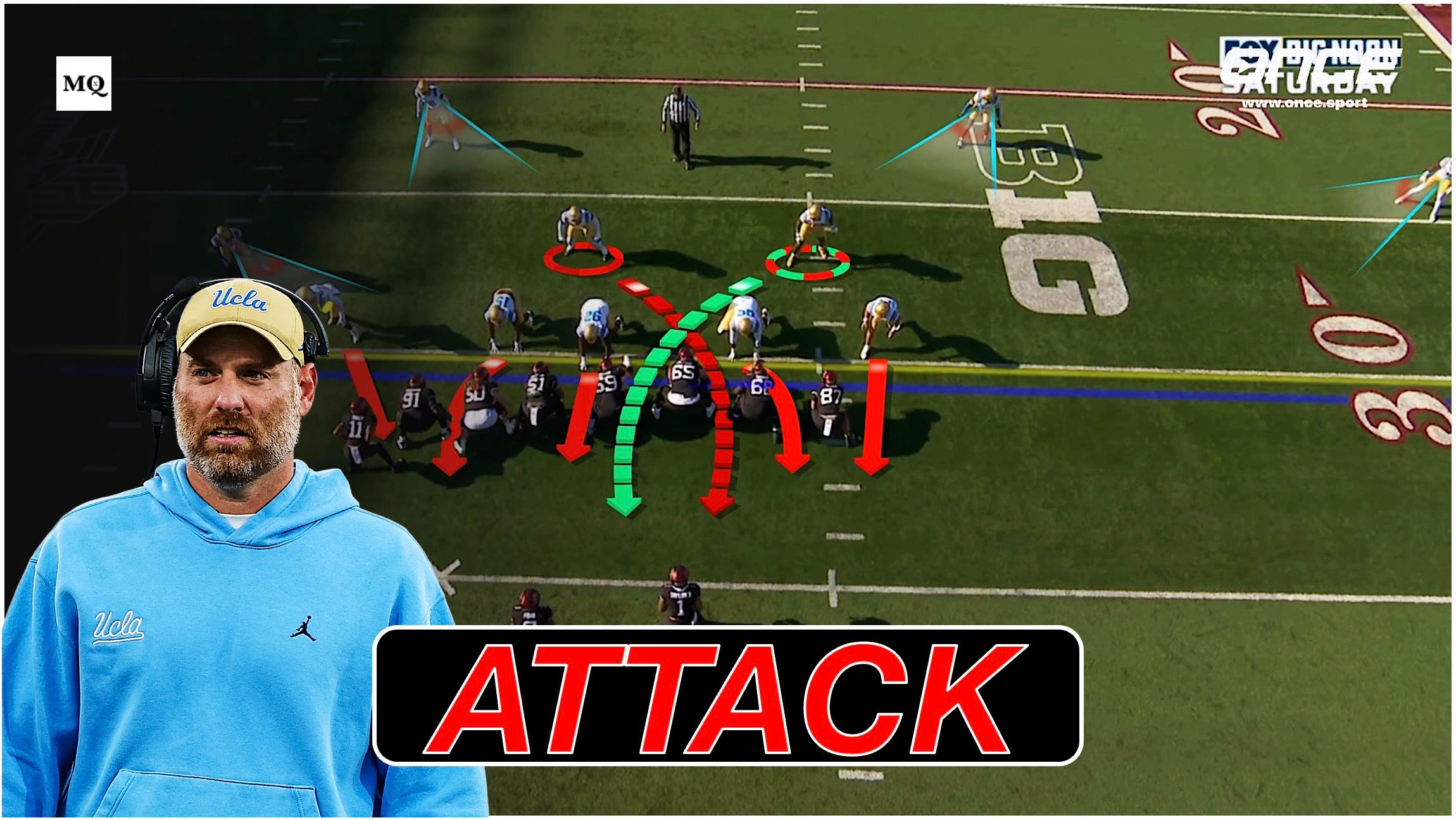
One of the most iconic stadiums in college football is the Rose Bowl, but when people talk football in LA, they rarely mention the UCLA Bruins. Yet in 2026, the Bob Chesney-led Bruins are already making a case not just as one of the best football teams in America, but arguably as the best defense.
#1 in Busted Drives (BCFToys)
#1 in EPA/Play*
#1 in EPA/Pass*
#1 in Success Rate*
#1 in Pass Success Rate*
#1 in INTs*
#2 in EPA/Blitz
#2 in Sacks*
#4 in Points Per Drive (BCFToys)
#7 in EPA/Run* | *Power 4 rankings (PFF)
Led by defensive coordinator Colin Hitschler, the Bruins defense is one of the most aggressive in the country, holding the third-highest Blitz Rate in the Power 4 (48%) and the fourth-highest against the pass (52%).
Hitschler's coaching stops include stints at Cincinnati and Wisconsin, where he worked under Luke Fickell and Marcus Freeman (Notre Dame). He also had a brief stint as Alabama’s co-DC during Kalen DeBoer’s inaugural year, helping Maurice Linguist lead a defense that finished tenth in DFEI.
Chesney hired Hitschler to lead James Madison's defense in 2025 after he was subsequently fired at Alabama. The Dukes ended the year in the College Football Championship and ranked top-five in 1st Down Rate and Busted Drives (BCFToys). That success opened the door for Chesney to move to UCLA, where he also tabbed Hitschler to be his DC.
On the surface, the Bruins run a Tite-based defense that mainly uses simulated pressures from the box to affect an opponent’s offense. Under Hitschler, UCLA ranks seventh in Sim% (44%) and runs them on over 50% of plays against 12 personnel.
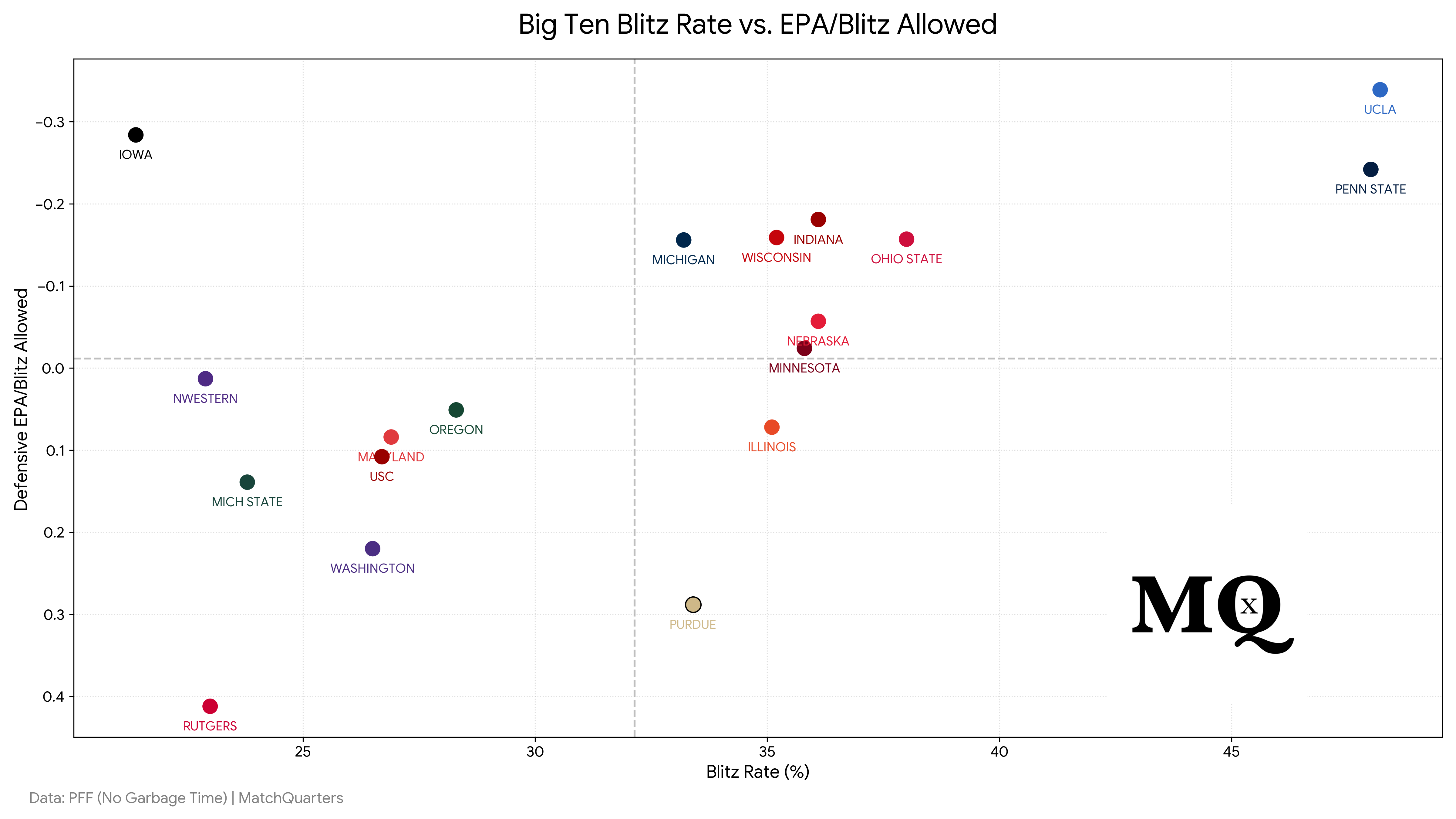
The Bruins’ blitz menu is among the most diverse and dangerous in college football. Currently, UCLA is fifth in total pressures and only behind LSU in EPA/Blitz and Success%. Though not a dominant rush (22nd in Win%), the Bruins are second in sacks (21), showing that their diversity keeps opponents on their heels and can create splash plays.
Offensive personnel typically dictates how aggressive the Bruins will get in their game plans. Against 12-personnel, their Blitz Rate spikes to 67% while their 10-personnel rate drops under a third of their calls (32%).
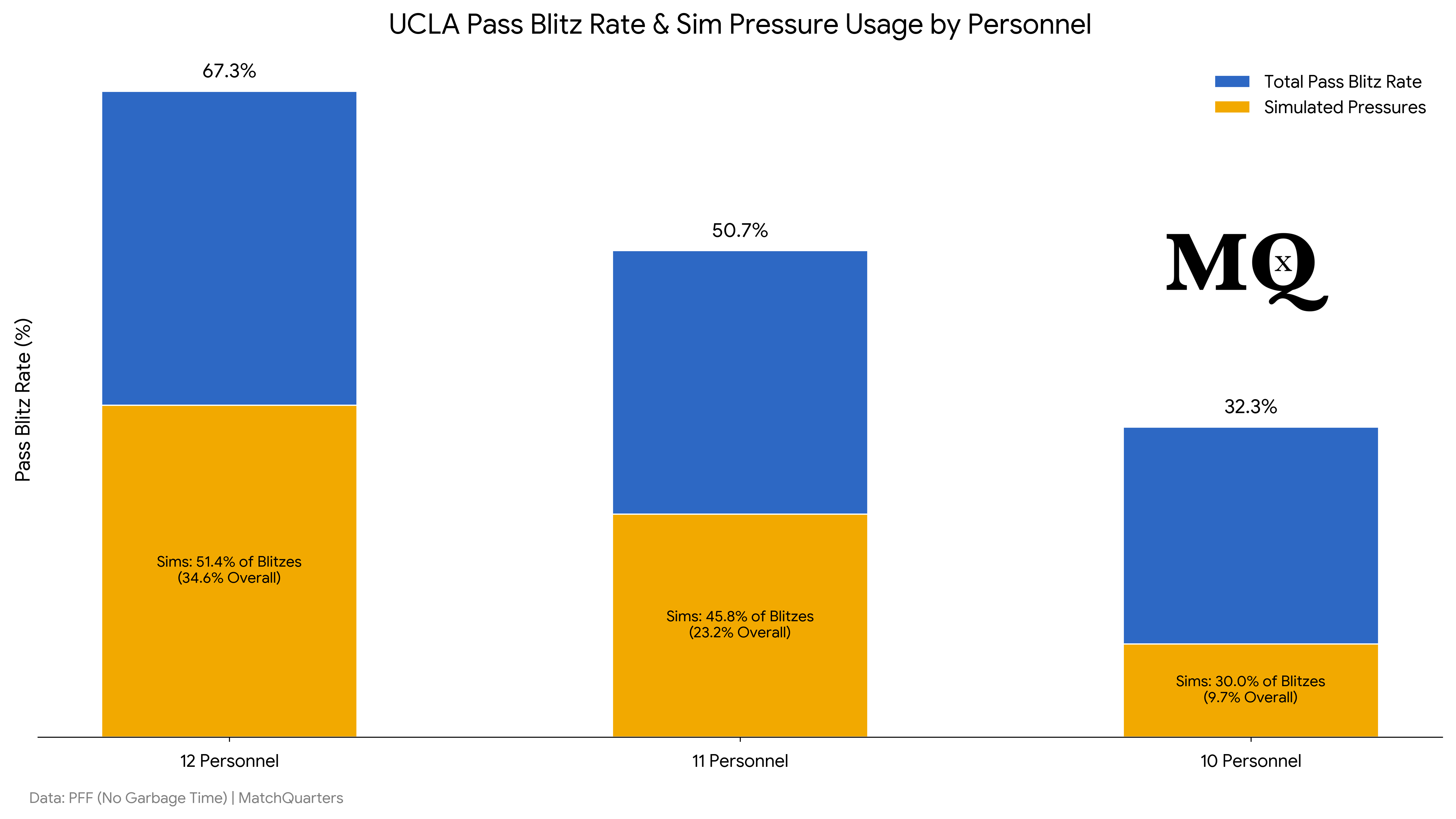
Hitschler also changes his structural approach. When offenses put more receivers on the field, simulated pressures shrink to 30% usage, while five-man pressures jump to 60% to create one-on-one matchups.
UCLA’s defense creates constant conflict for offensive lines and quarterbacks trying to set protections. The high blitz rate, spread across multiple pressure styles, keeps offenses disjointed in how they want to protect.
Minnesota's offense isn't elite, but its heavy personnel, unbalanced looks, and RPOs offer an excellent analytical backdrop for UCLA's pressure system. The Bruins didn’t record a sack versus the Gophers, but they affected the pocket and held Minnesota to ~3 YPC on the ground.
In this film breakdown, we examine the four main “buckets” within the Bruins pressure menu:
“Inside” Fire Zone (Nail/Sand): Two defenders through the B-gap.
“Plug” Pressures (Thiesmann/Orton): Vertical spikes through the A-gap.
“Pick” Pressures (Tip): Target an O-lineman to create a stunt off of.
“Cross-Dog” Paths (Traditional & Spike): Two LBs crossing into opposite gaps.
