


Since 2023, the NFL defensive landscape has been dominated by the Minnesota Vikings’ “Flores Paradox”: extremely high blitz usage paired with extremely high zone usage. Traditionally, when NFL defenses have had high blitz rates, they pair the pressure with man coverage, primarily Cover 1.
In the modern game, that approach gets eaten alive by motion, condensed formations, and play design. According to NextGen Stats, single-high coverage has fallen 12%, and man coverage has fallen 9% since 2018.
Flores isn't the only one breaking from the norm. Tampa Bay’s Todd Bowles has mirrored this high-pressure, high-zone philosophy with a completely inverted architecture.
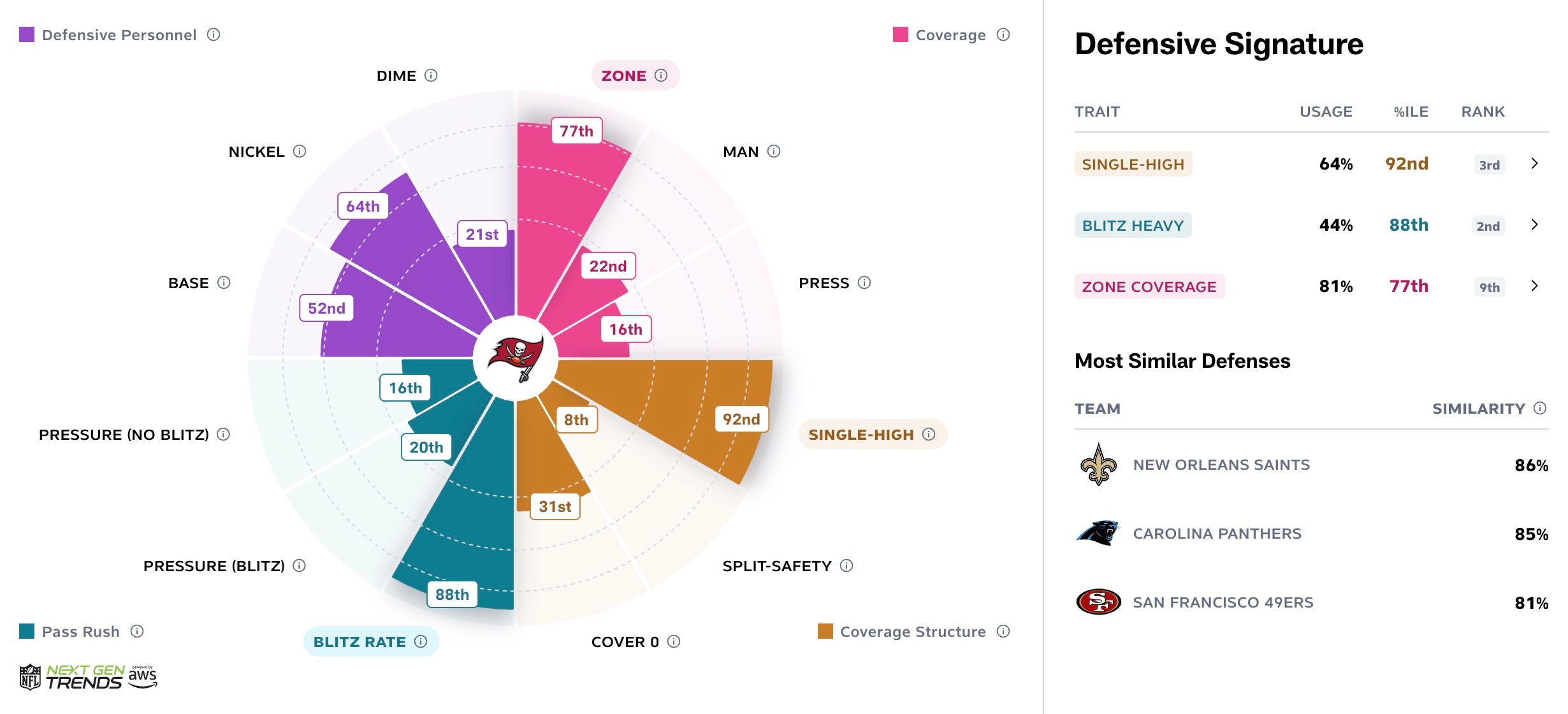
Heading into their bye week, the Buccaneers hold the league's third-highest Blitz Rate (39%) and fourth-highest Pass Blitz Rate (46%). Like the Vikings, the Bucs use a lot of zone coverage, but their departure is their shell.
Brian Flores uses split-field coverage behind his pressures ~75% of the time, behind the highest percentage of Base in the NFL at 66%.
Bowles inverts this, relying heavily on single-high coverages, which puts him in the 92nd percentile in overall closed-post usage, while operating in Nickel at a more standard 65% (14th).
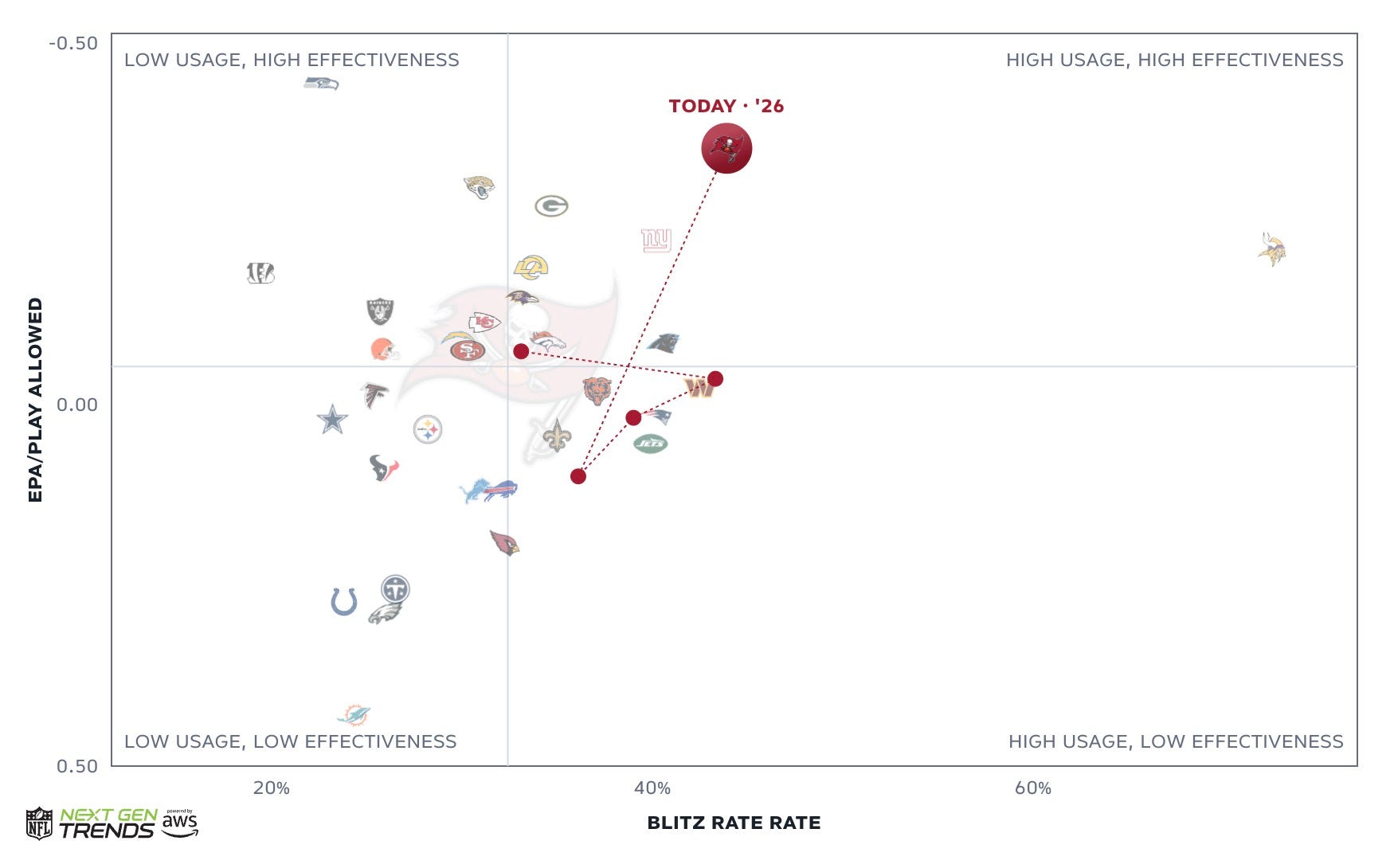
PFF ranks the Buccaneers as the NFL's best blitzing team at -.209 EPA/Blitz, just ahead of the Seahawks, who rarely blitz. Over the past three seasons, Tampa Bay has been a high-usage, low-production blitzing team, but 2026 looks different, and Bowles appears back among the NFL's premier blitz designers.
The Buccaneers are unique in their use of six-man blitzes, or “Hot” pressures. Flores introduced the concept as a primary blitzing tool in ‘23, running them on 83 total downs.
That year, the NFL ran 241 Hot blitz snaps. For context, in 2022, that total was 88. Currently, the NFL is on pace to have 340+ Hot blitz snaps in ‘26. 35% of Tampa Bay’s early-down pressures are Hot varieties; only Detroit has a higher percentage than 25%.
Tampa Bay already has an extremely high Pass Blitz Rate against 11 personnel (44%), but it uses Hot blitzes on almost half of those. Bowles isn’t using the pressure to create negative plays against the run or play-action on early downs; he’s deliberately overwhelming opponents that want to go “light” on 1st and 2nd Down.
Bowles’ blitz philosophy was on full display against the Chicago Bears 11 personnel grouping, which accounts for almost half of their plays and is their best-producing package (+.07 EPA/play | NextGen).
Against Caleb Williams and Ben Johnson, Bowles increased his passing-down pressure rate to 68% overall, and 56% against 11 personnel. The game plan led to four total interceptions against Cover 3 schemes, which has happened only twice since ‘18, according to NextGen.
Bowles mainly used his Hot blitzes against the Bears on 1st Downs. Williams finished the night 3/5 for 36 yards, two INTs, and one scramble against these looks.
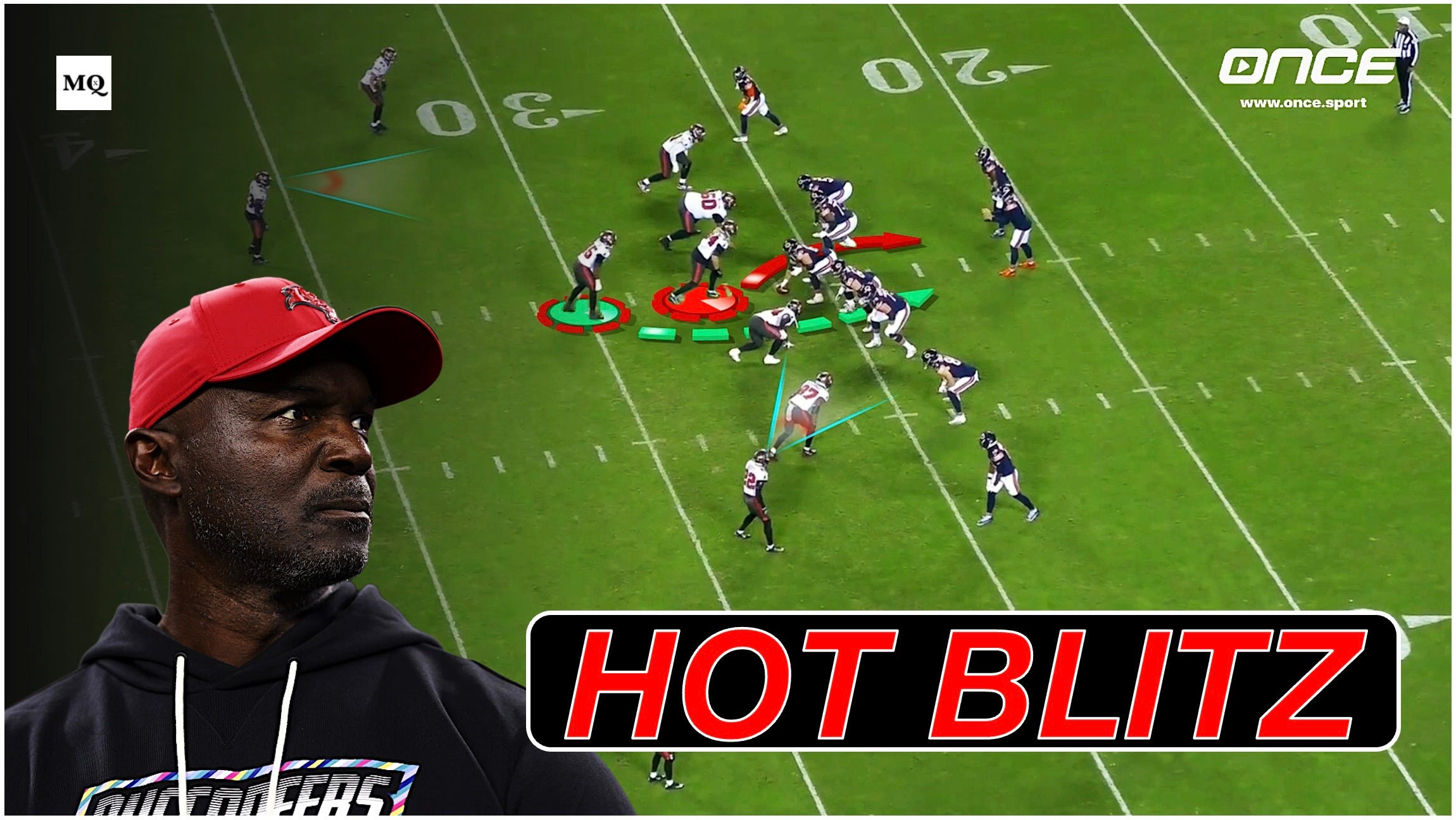
In this film review, I break down Tampa Bay's pressure paths and examine the unique technique Bowles uses to teach his “Eyes” defenders: the two underneath vision players responsible for capping the Hot blitz.
