


Nine Miami Hurricanes were selected in the 2026 NFL Draft. In the first round, Rueben Bain (15th/Buccaneers) and Akheem Mesidor (22nd/Chargers) were selected, and both represented Miami’s anchors on defense.
In the third and fourth rounds, Safeties Jakobe Thomas (Vikings) and Keionte Scott (Buccaneers) were also selected. It is these four players, in particular, that represent the cornerstones of Miami's defensive philosophy this past season.
Defensive Coordinator Corey Hetherman has had quite the past two seasons. 2024 saw a Gopher defense that finished in the top-10 in DFEI (think DVOA for college football) and in the top-20 in Points Per Drive (PPD) and Yards Per Play (YPP). Hetherman comes from the same system as his opponent from the National Championship, Bryant Haines of Indiana.
The Gopher defense that Hetherman put together reflected national champion Indiana’s base philosophy, which was born in 2019 at James Madison. Gifted with two first-rounders at DE and an NFL Nickel (Scott) and Down Safety (Thomas) that could be weaponized near the box, Hetherman scaled down the hybrid nature of the scheme.
Multiple Odd Fronts — Bench or Even Front Base
High Simulated and Creeper Usage — Standard Five-Man Pressures
Multiple Coverage Structures — Cover 3 Dominance
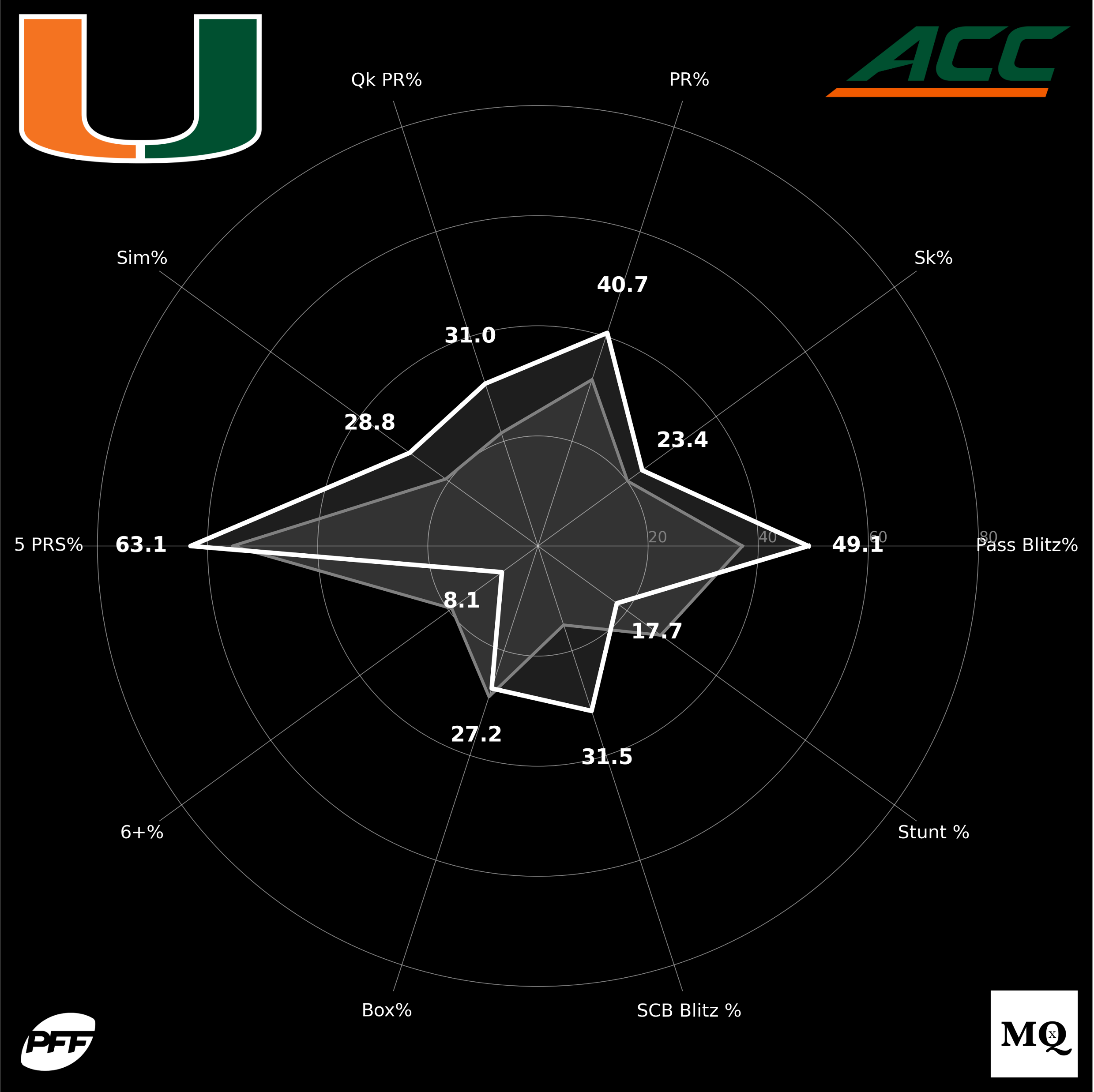
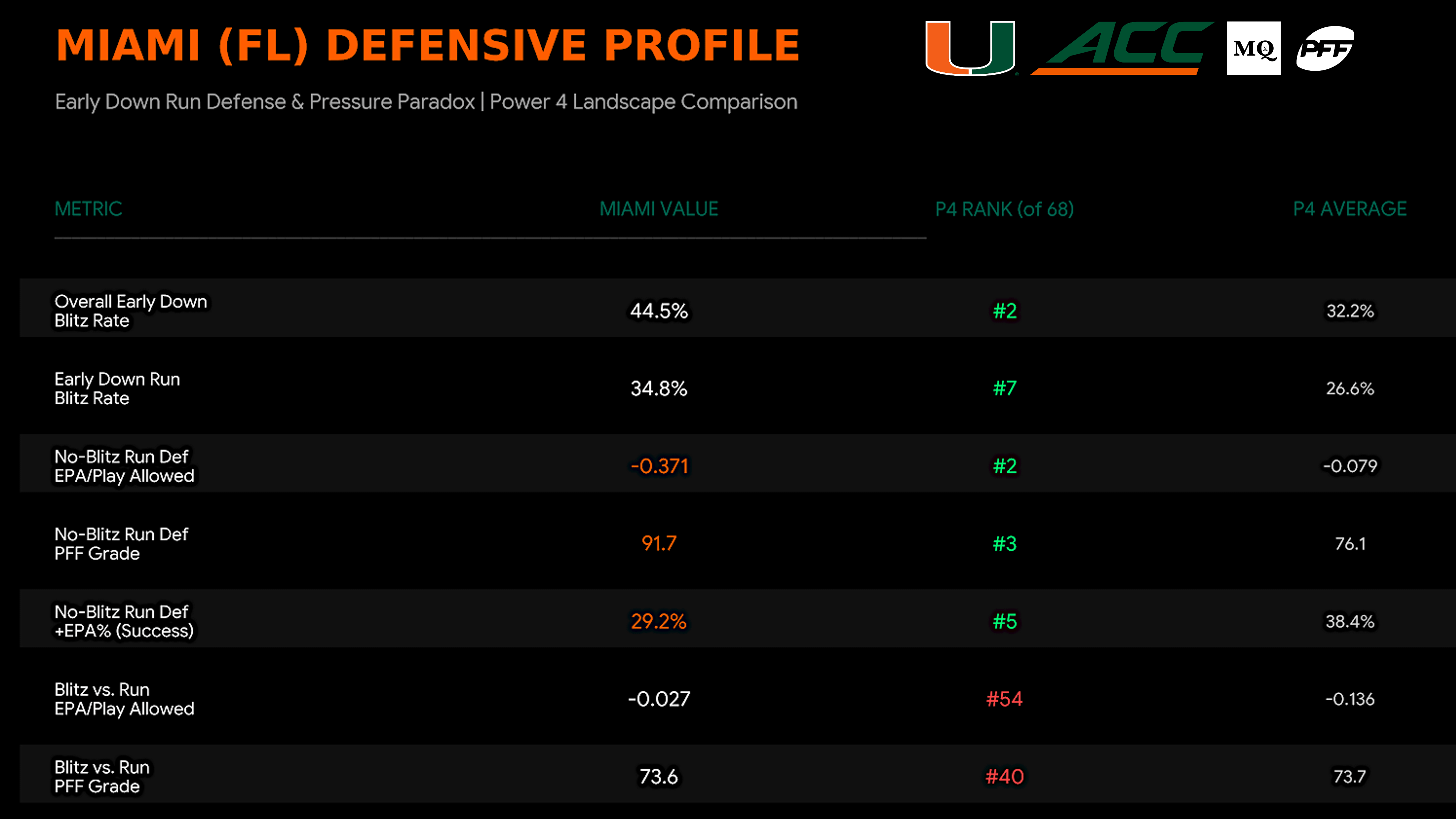
Hetherman took more of a “pro style” approach in Miami and leaned into his four NFL players. Most pundits and fans focus on the pass rush, which ranked fifth in Pressure Rate (40.7%) and second in “Quick” Pressures (31%). But it was their early-down run defense that allowed the unit to pin its ears back on passing downs.
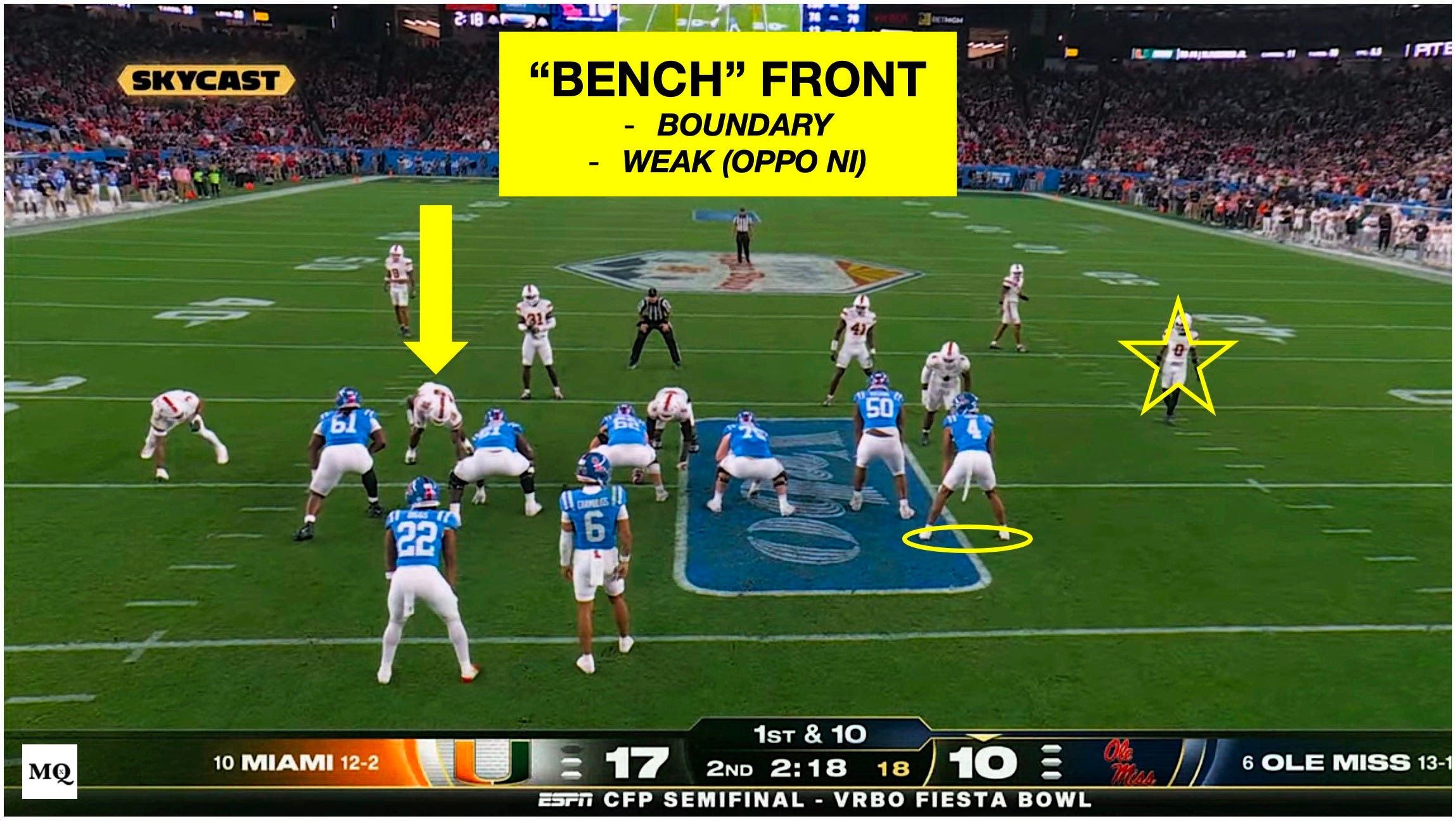
Miami had a top-10 run defense nationally and had the second-best EPA/run and the sixth-best Success Rate (29%) against the run in the Power 4 when they didn’t blitz. The Hurricanes’ base defense was dominated by a “Bench” front scheme, or an even front with the 3-technique (strength) set to the boundary on the majority of their plays.
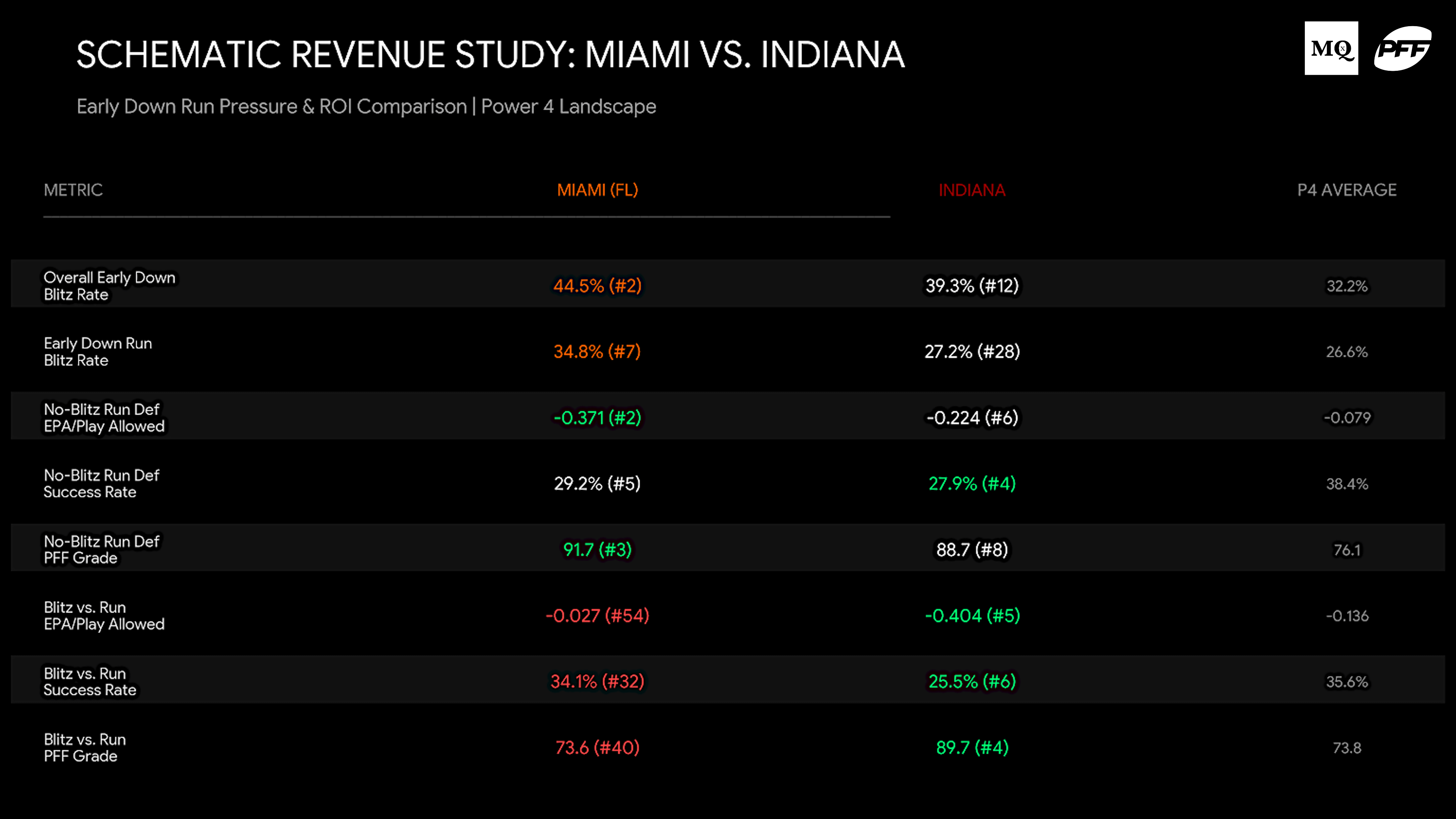
No-Blitz Run Def EPA/Play Allowed: -0.371 (#2 in P4)
No-Blitz Run Def Success Rate Allowed: 29.2% (#5 in P4)
No-Blitz Run Def PFF Grade: 91.7 (#3 in P4)
Run defense numbers dropped significantly when the Hurricanes brought pressure on early downs. Hetherman comes from an aggressive defensive philosophy, and though he was gifted with NFL talent and shifted his scheme to be more structured, the blitz numbers were still high compared to the rest of college football.

Pressure As A Base
Pressure is a non-negotiable in this scheme, and Hetherman utilized his apex defenders more than anyone else in college football. Even though overall run defense efficiency dropped in Miami, Indiana, and Hetherman’s 2024 Gopher defense illustrates how effective these pressure schemes can be on early downs.
Indiana in 2025 illustrated the “base” philosophy of this system, which is movement-based and structured from various Odd Fronts. Presented with an “NFL” roster in Miami, Hetherman streamlined his playcalling but kept the same aggressive nature.
Miami leaned into five-man pressures (63%) that featured the Nickel or field-overhang; in ‘25, Indiana used the Slot about half as often as the Hurricanes. Under Hetherman, the Hurricane defense focused more on five-man pressures rather than on the system’s foundational base in simulated pressures. Last season, the Hoosiers were second only to Florida’s DC Ron Roberts in simulated pressure usage (58%).
Miami’s defense was dominant when defending offenses from base (static) structures. With two dominant bookend edges and stout overhangs, the Hurricane’s defense suffocated the box. Under Hetherman, these “static” plays accounted for ~65% of all calls. Still, pressure was a main feature of the system.
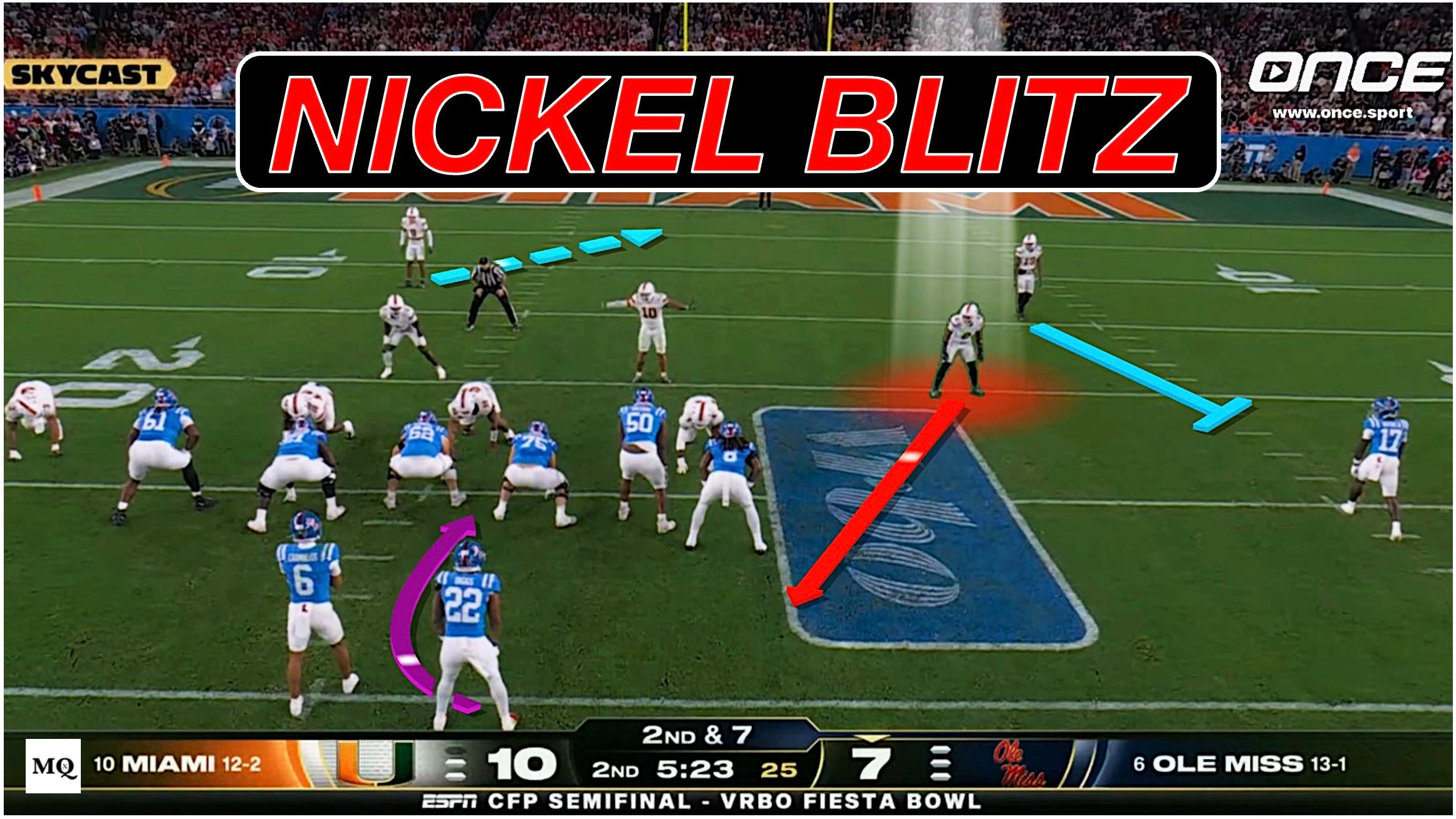
In 2025, Miami ranked seventh nationally in early-down Blitz Rate (35%). The main blitz concepts used by Hetherman were overhang pressures from their base Cover 3 shell. On early downs, no one blitzes the Slot defender more than Miami, which featured Scott as the main lever. To the boundary, that lever was Thomas.
Blitz vs. Run EPA/Play Allowed: -0.027 (#54 in P4)
Blitz vs. Run PFF Grade: 73.6 (#40 in P4)
Blitz vs. Run Success Rate Allowed: 34.1% (#32 in P4)
Unlike during his brief tenure in Minnesota, Hetherman’s secondary pressures didn’t stabilize the unit. Instead, it often weakened the overall defense, primarily due to its structure, offensive width, and the college hashes.
Within the Hurricanes’ Nickel pressures, nearly half had Scott working from a full coverdown or “wide” alignment attacking the edge of the box. The increased time-to-target can create space near the edge of the box, especially from a Bench Front that holds a B-gap bubble.
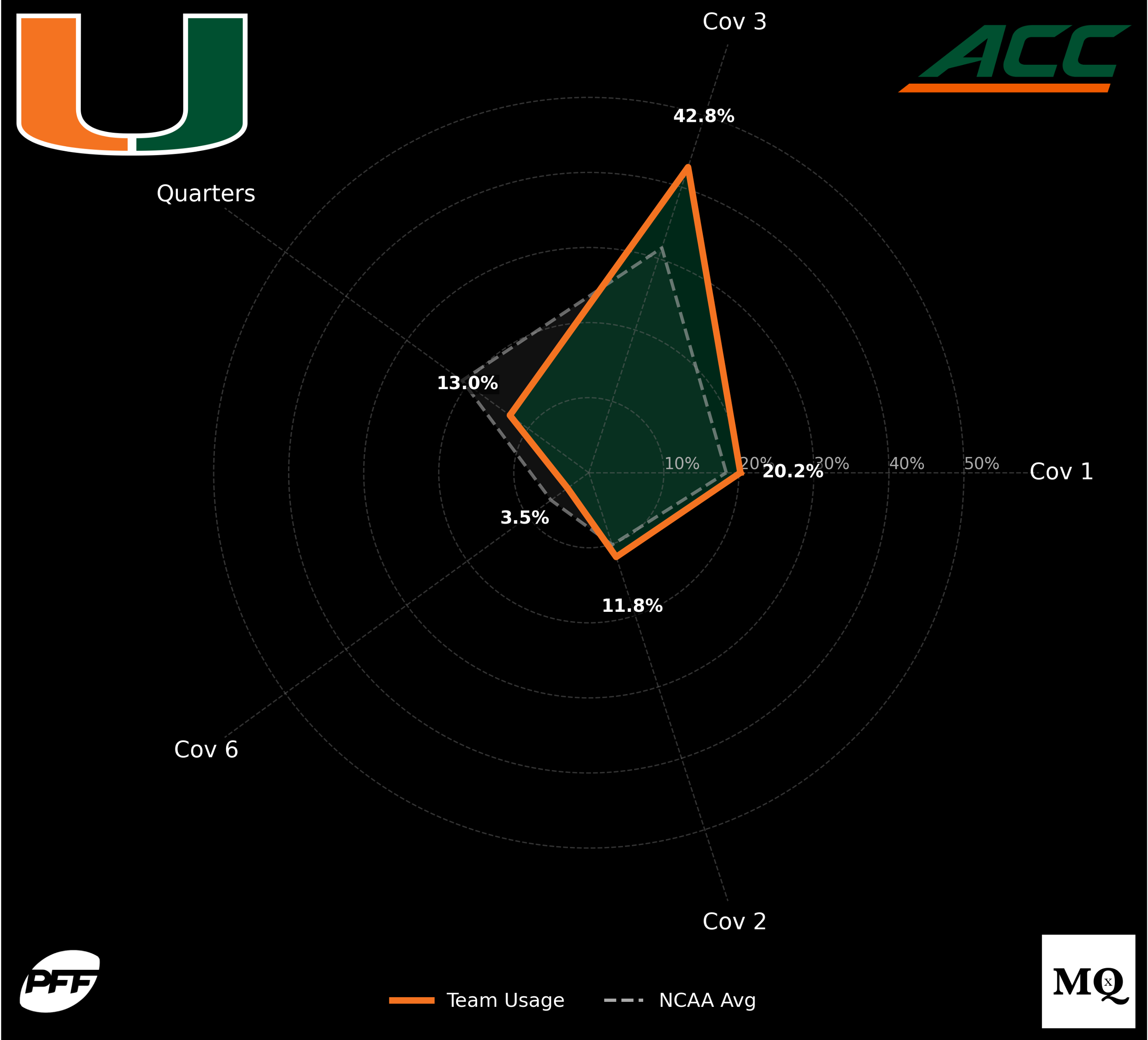
Cover 3 was also a main pillar of the scheme, with Cover 1, or Quarters, as a change-up. Miami ranked fifth in the FBS in Cover 3 usage. The high-volume use of apex defenders in the blitz game reflects the close-post concepts featured by Hetherman.
Hetherman didn’t completely abandon his roots in Coral Gables; although five-man pressures became his primary fastball, the Hurricanes still used simulated pressures on 29% of their snaps, keeping them in the top third nationally. That pressure mix, along with their dominant DE tandem, left just enough of the system’s baseline DNA on tape to keep opposing coordinators guessing.
Miami’s Bench Front “Base” and Cover 3-dominant scheme give a great illustration of how a movement-based defense can transform when given elite talent at the four cornerstone positions: DE and Apex defender. Plus a look at other edge pressures on the menu. Let’s dive into the tape!
—
Unlock The Film Study. As a paid subscriber, you get immediate access to:
The Spacing Blueprint: Learn how offenses used wide alignments and pre-snap motion to isolate Keionte Scott and exploit the Bench front’s open B-gap bubble.
Full Film & Telestration Breakdowns: Detailed analysis of Miami’s Field vs. Boundary pressure checks, including their answers for modern condensed run games.
The Complete Archive: Join an elite community of coaches and analysts with full access to weekly long-form clinics, tactical manuals, and exclusive NFL/college data downloads. Plus, resources on this exact scheme!

