


The 2025 Denver Broncos defensive line delivered an elite performance in creating quarterback pressures. Vance Joseph’s unit finished with 68 total sacks, four shy of the all-time record and the fifth-most ever. They added eight more in the playoffs, finishing with 76 total.
Denver is the only team in ‘25 to finish with four players with seven or more sacks. Although Nik Bonitto was the only defender to reach double-digit sack totals (14), the unit worked together to create one of the best rushes in NFL history. Offenses struggled against Denver’s rush because there was no weak link; eight defenders in all had 4+ sacks.
One of the main reasons the Broncos’ rush is so dangerous is that its two edge rushers have the quickest “get-offs” in the NFL. According to NextGen Stats, Jonathon Cooper had the fastest get-off in the NFL last year at 0.69 seconds, with Bonitto placing third at 0.72, right above Myles Garrett.
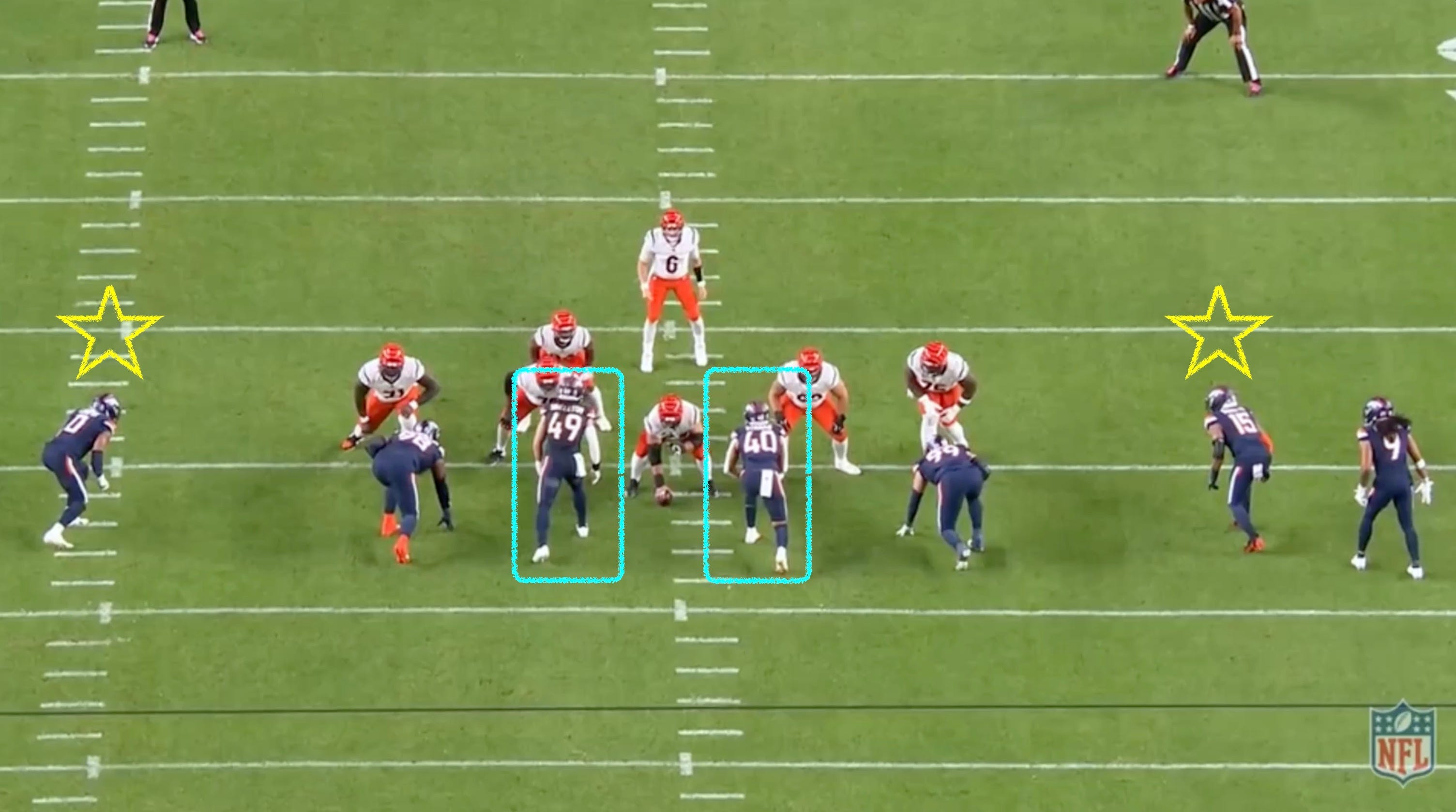
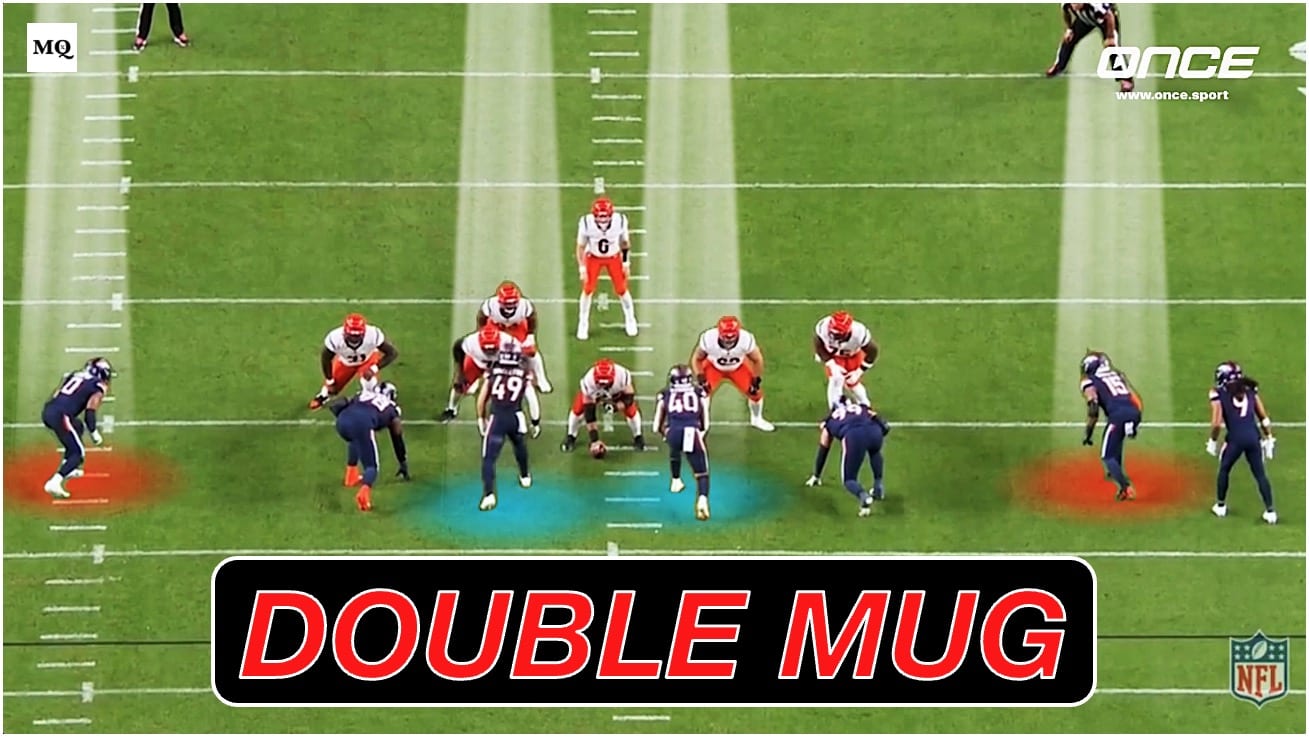
One of the main features for Joseph on passing downs was the use of “double mug” alignments, where both linebackers stand in the A-gaps while the four defensive linemen spread out. That width by Bonitto and Cooper is what wreaked havoc on opposing offenses’ pass protections.
The concept forces the offense to either fully slide one direction, leaving a RB on an Edge or completely free. Neither option in the NFL is ideal. The most popular option, and the one featured in the image above, is placing the RB on one of the LBs and walking him into the A-gap to reduce the speed at which the ‘backer can rush. The width issue still remains.
Denver used these double-mug alignments to dictate pass protections and isolate offensive tackles against the fastest Edges in the game. On top of the threat of an all-out rush, the Broncos used simulated and five-man pressures to change the leverage and keep opponents guessing where the pressure would come from.
The constant onslaught forced quarterbacks to accelerate their process at lightning speed. Denver had the second-fastest Time to Throw (TTT) at 2.36 seconds. Regardless of the defensive call, opponents’ passers knew the ball had to come out quickly.
Interestingly, the Broncos had the second-lowest checkdown rate at 7.9% and the third-lowest blitz checkdown rate at 4.8%. Regardless of whether Joseph applied pressure, the combination of tight secondary coverage and pressure from the defensive front forced quarterbacks to either eat the ball or throw highly contested passes. There wasn’t an option for a quick release if pressure hit home.
Denver’s defense allowed no air for any opponent. The unit led the league in almost every pressure category regardless of whether they blitzed:
Total Pressures: #1 (239)
QB Hits: #1 (149) | Blitz QB Hits: #1 (54)
Sack Rate: #1 (9.74%) | Adjusted Sack Rate: #1 (11.97%)
Blitz Sacks: #1 (28) | Blitz Sack Rate: #1 (13.40%)
More importantly, the secondary and pass rush complemented each other, compounding problems for opponents. When a pass rush forces quarterbacks to speed up their processing, and the secondary gives them no room for error, those factors act as a force multiplier and feed off each other in a seemingly endless loop. Denver had the second-lowest completion rate (57.8%) and yards per attempt (6.1 YPA), while also forcing the fourth-most throwaways (28).
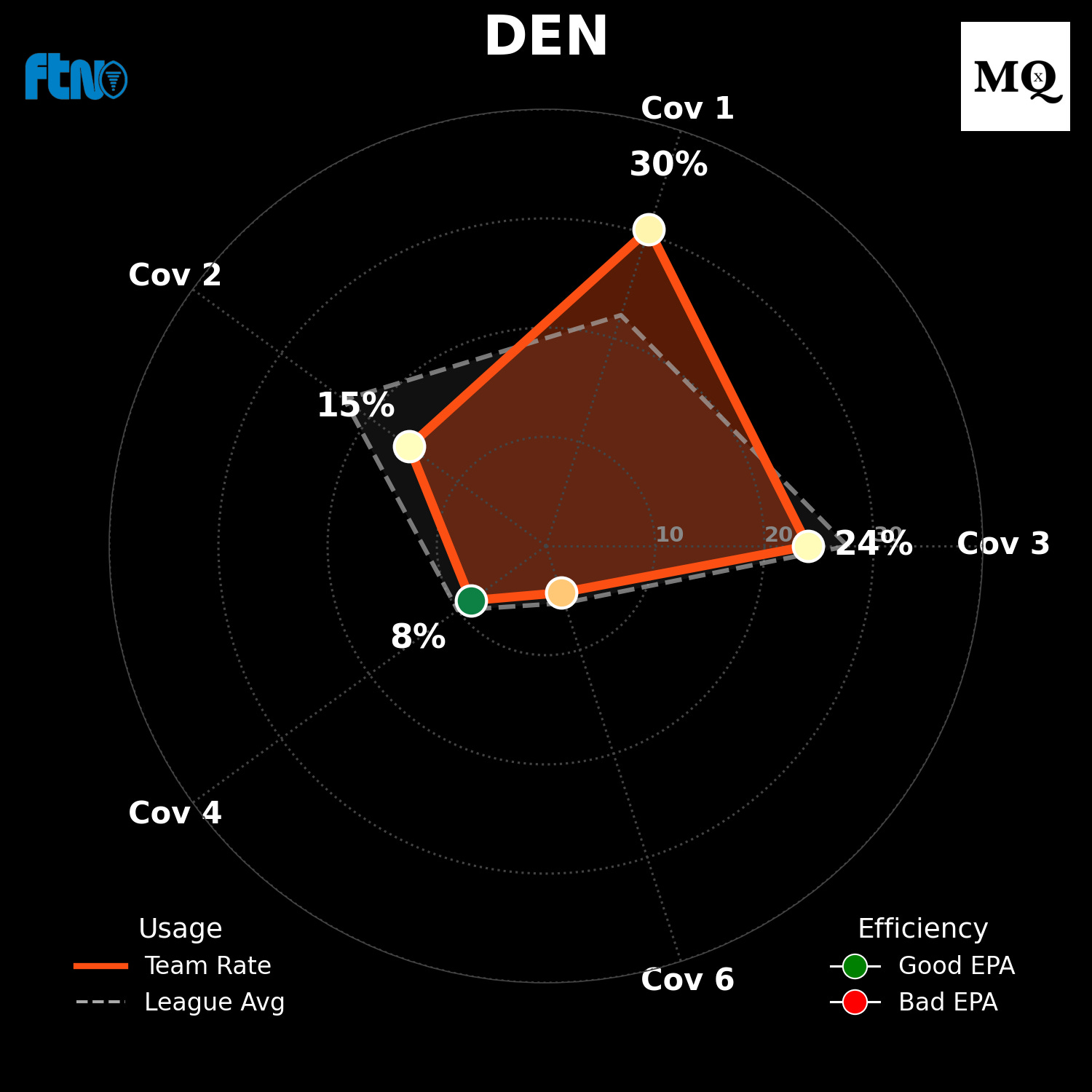
Under Joseph, the Broncos have become a closed-post, man-match-heavy unit. Pat Surtain II is considered one of the best CBs in the league and an All-Pro. Opposite him is Riley Moss, who led the NFL in pass breakups alongside Carolina’s Mike Jackson with 19.
Inside, Nickel Ja’Quan McMillian has become one of the best man-specialist Slot defenders in the league. There’s a reason why Joseph plays so much man coverage when sending pressure (56%): coverage talent and pass rush.
Last season, the secondary was fourth in “Step Coverage” (SC%), reps when a coverage defender was only a step away when targeted (18.7%). Denver’s coverage and rush mechanisms were both elite, making it difficult for opponents to get out of holes they dug on early downs, where the Broncos were third in Rush DVOA.
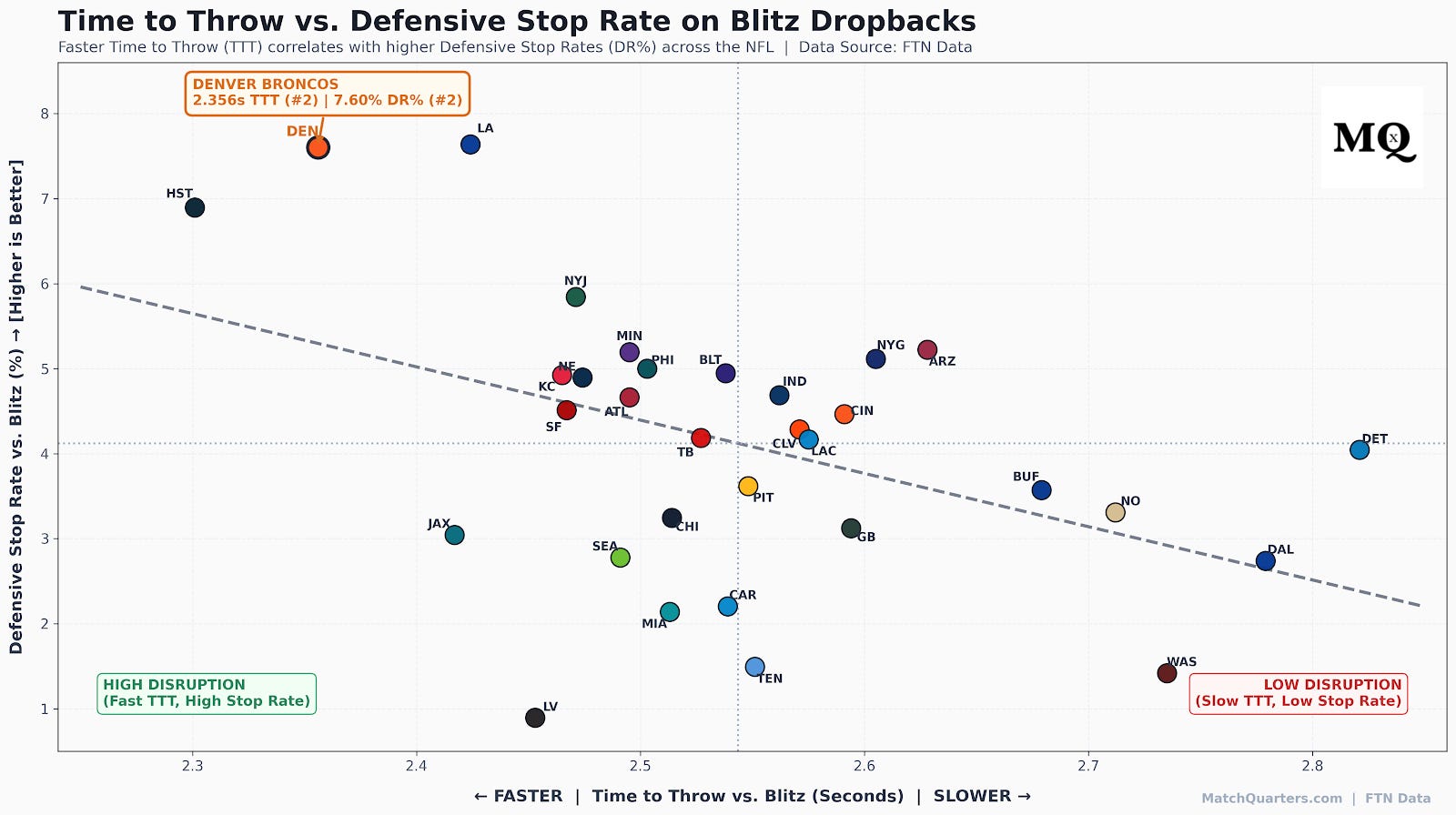
Vance Joseph used double-mug presentations as his primary building block for attacking passing downs. The unit’s ability to quickly get to the quarterback (TTT) and play sticky coverage (SC%) allowed the Denver defense to be historically good at creating sacks. The menu's high variance also helped throw opponents off the scent.
Everything in Denver wasn’t just haymakers or an overreliance on their speedy Edges. Joseph did an excellent job of curating different looks and pressure types each week. From Cover 0 max blitzes to Drop-8 schemes, the Broncos kept offensive coordinators guessing with double-mugged alignments. Let’s dive into the tape!
—
Free readers get the data overview, but paid subscribers get the actual playbook. Without a paid subscription, you’re missing the step-by-step coaching mechanics needed to install these looks into your own system:
Protection-Busting Rules: How to force slide protection and isolate athletic Edges on running backs.
Learn NTT Coverages: Exact post-snap rotation rules for disguising Cover 2 from man-heavy indicators.
Film Room: Access to video cutups alongside explanations on how the scheme works.
Help your coaching staff eliminate hours of manual film organization. The Cutup Generator automatically creates custom cutups, charts, and title slides directly from your tagged data.
