


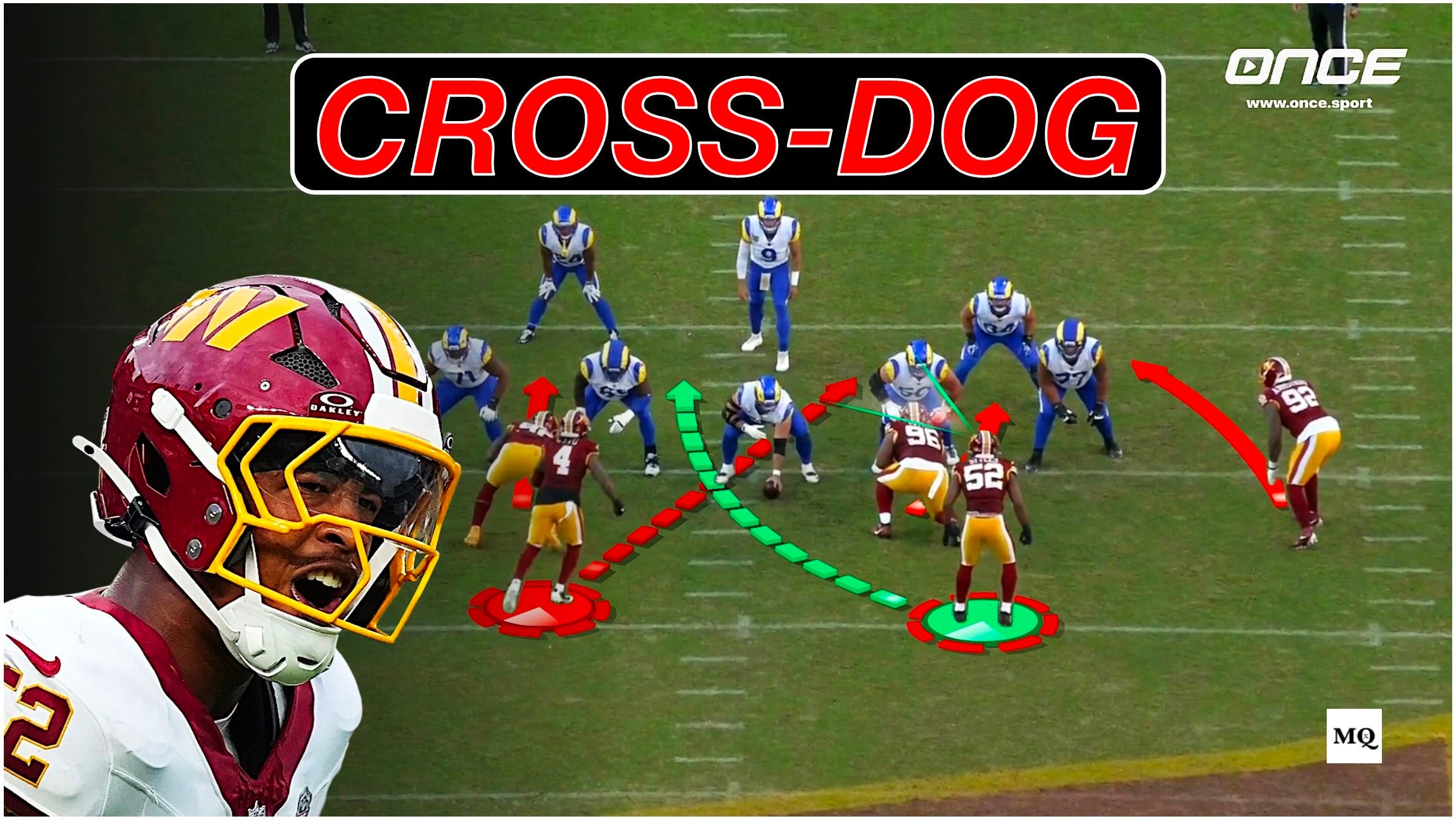
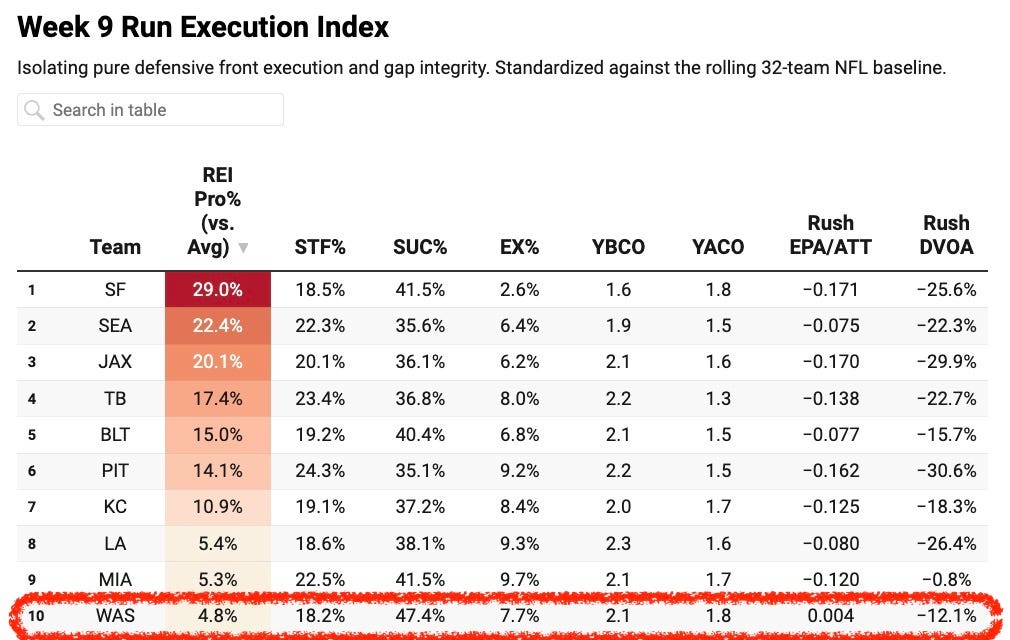
Washington runs the fifth-most snaps of Base personnel in the league and ranks in the top ten in MatchQuarters’ Run Execution Index (REI). Under Daronte Jones, the Commanders keep run-down explosiveness to a minimum (fifth in the NFL) while staying aggressive on early downs.
Defenses need concepts that translate across schemes to match offenses, regardless of who is on the field. One major trend at higher levels is using multi-TE formations to get defenses into Base packages.
From there, the offense uses traditional spread sets to get those players into space, creating matchup issues outside the box. Too often, defensive coordinators get passive in these situations because they don’t know what to expect, which is why utility pressures are so important.
A great example of schematic fluidity came in the Commanders-Rams game. Washington runs a defense similar to the Minnesota Vikings’.
Jones worked under Brian Flores as his Passing Game Coordinator, but blitzes about 20% less. Still, they use similar patterns throughout the scheme, including the traditional Cross-Dog path.
One way they do that is through utility pressures. Defensive coaches don’t have to reinvent the wheel every time they change a package when using a modular style of defense. Simple patterns, executed throughout the scheme.
—
Stop getting caught passive when offenses force you into Base.
Below the paywall, I break down the playbook slides, All-22 cut-ups, and the 4-pillar teaching progression (Technique, Alignment, Front, Coverage) to install modular utility pressures even at the High School level.
