


Since 2020, the Rams have been under the Fangio-adjacent umbrella. The system requires heavy schematic lifting by the secondary and is amplified by the rush. Without an above-average-to-elite rush, the system leaves its defensive backs on an island.
With Raheem Morris leaving for Atlanta at the conclusion of the ‘23 season, Chris Shula was promoted to defensive coordinator, bringing a new evolutionary twist to the Rams’ defense. Shula’s background includes a stop at John Carroll (‘14) between Brandon Staley’s stints as defensive coordinator (‘13, ‘15-’16).
When Staley returned to John Carroll after a one-year stint at James Madison (‘14), Shula left to become the Defensive Quality Control coach for John Pagano’s Chargers defense, which ran a Fangio-adjacent system. In ‘17, Shula joined Sean McVay’s first Rams staff (they are college best friends from Miami, OH). Shula worked under legendary coordinator Wade Phillips until Staley took over in ‘20.
It’s important to point out Shula’s background because the schematic shifts in Los Angeles feature elements of his dual background: Fangio and Phillips. One relies on coverage to answer problems, while the other uses an aggressive front to wreak havoc on opposing quarterbacks. Enter Shula, who has blended the two systems to create his own unique take on the Rams’ defense.

The Rams’ defensive identity is built on a relentless pursuit of the quarterback and an active defensive line. In ‘25, they led the league in Stunt Rate at nearly 30%, a full five points ahead of the Patriots at #2.
Last season, the Rams were top five in total pressures (5th), QB Hits (3rd), and QB Hit Rate (4th). There is an emphasis on attacking the line of scrimmage with the front.
LA also doesn’t send much pressure from the second or third levels, where they ranked 24th in Blitz Rate (<25%). The defense is designed to attack up front, which is a hallmark of a Phillips defense.
Shula’s front features five defensive linemen, giving him flexibility in sub-packages and Base (3-4) to rush the passer and attack protections. The goal in Base is to create one-on-one opportunities with five on the line of scrimmage. In Sub, the goal is to win with four and have one of the inside players require a double team.
Jared Verse: 80 total pressures | 16.8% win rate
Byron Young: 64 total pressures | 13 sacks
Kobie Turner: 55 total pressures | 8 sacks
Braden Fiske: 42 total pressures
Poona Ford: 30 total pressures
One of the major headlines this offseason was the trade for Browns DE Myles Garrett, in which the team gave up Jared Verse, their former 1st Round pick. Garrett is arguably the best defensive player in the league and finished with 25 total sacks last season. Verse is seen as an above-average pass rusher who had only 7.5 sacks last season.

Myles Garrett in 2025:
Sacks: 25.0 (1st)
PFF Pass Rush Grade: 93.3 (1st among edge rushers)
Pass Rush Win Rate: 24.6% (2nd among edge rushers)
Total Pressures: 84.0 (4th)
Shula already knows how to isolate pass rushers, but now has a force multiplier for the defensive front that was a fringe top-10 rushing team in ‘25. Garrett brings a near 25% win rate to the defense and should shift focus to the edges, which will only amplify the interior rushes of Kobie Turner and Braden Fiske. Turner has the potential to be a double-digit interior rusher, which would put him into a special category.
The Rams’ defense wants to keep its front intact, even when in Base. Simulated Pressures have become more popular in the NFL, and the Rams were fifth in usage (~11%). That is a feature of the Fangio system, but with Garrett on the line of scrimmage, Shula isn’t going to want to drop him.
When offenses try to force light box responses by aligning in Spread sets within heavier packages, removing a team’s best defender from the line of scrimmage creates an advantage. The NFL is trending toward heavier packages, but that does not mean offenses are giving up space outside.
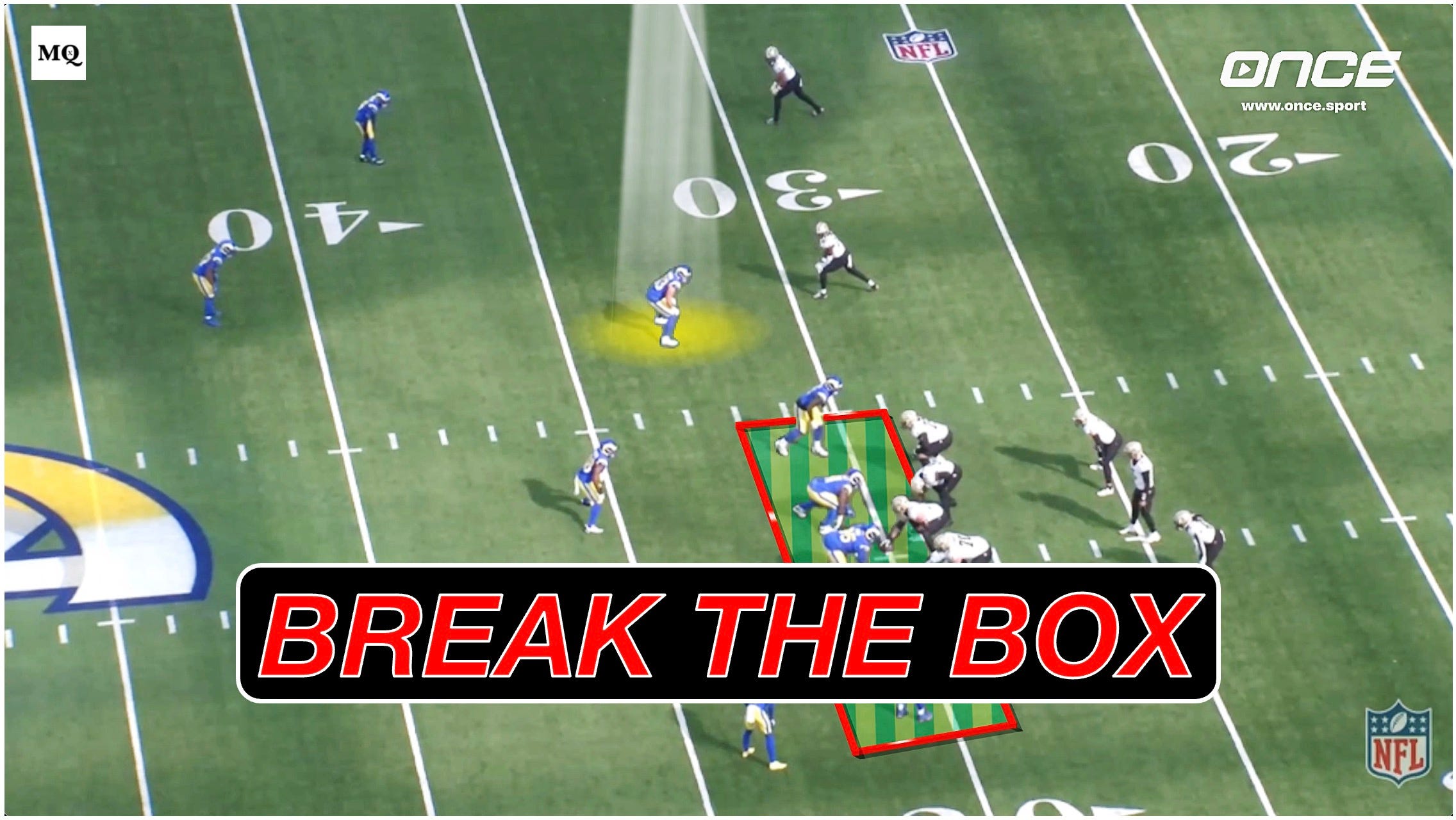
Similar to LA’s 13 personnel pivot last season on offense, it often meant getting defenses in Base personnel and attacking them through the air with TEs. Seeing this in practice daily, Shula created a clever way to “break the box” and cover down to two-receiver formations without sacrificing his front five in Base.
Against the Saints, instead of flexing Jared Verse out to cover down on a Slot receiver, Shula pushed his Mike, creating a Penny, or 5-1 alignment in his 3-4 Base. If the D-line is the “motor” for the defense, why take it apart?
In this article, I examine the 5-1 structure Shula created to keep his five-man rush intact. For LA, keeping their D-line together was essential, and he trusted them more than most coordinators. The Rams led the NFL in Dime usage at almost 30%. A DC doesn’t do that unless he thinks he can win with four.
Whether he is using 5-1 “Penny” looks against heavy personnel or leading the NFL in Dime usage on obvious passing downs, Shula's overarching philosophy stays the same: win up front with four or five down linemen and let the coverage structure fit around them. Let’s dive into the tape!
—
To see how Shula uses his secondary to fit behind the 5-1 Penny box, along with the full breakdown clips and backend adjustments, become a paying member of MatchQuarters.

Help your coaching staff eliminate hours of manual film organization. The Cutup Generator automatically creates custom cutups, charts, and title slides directly from your tagged data.
