

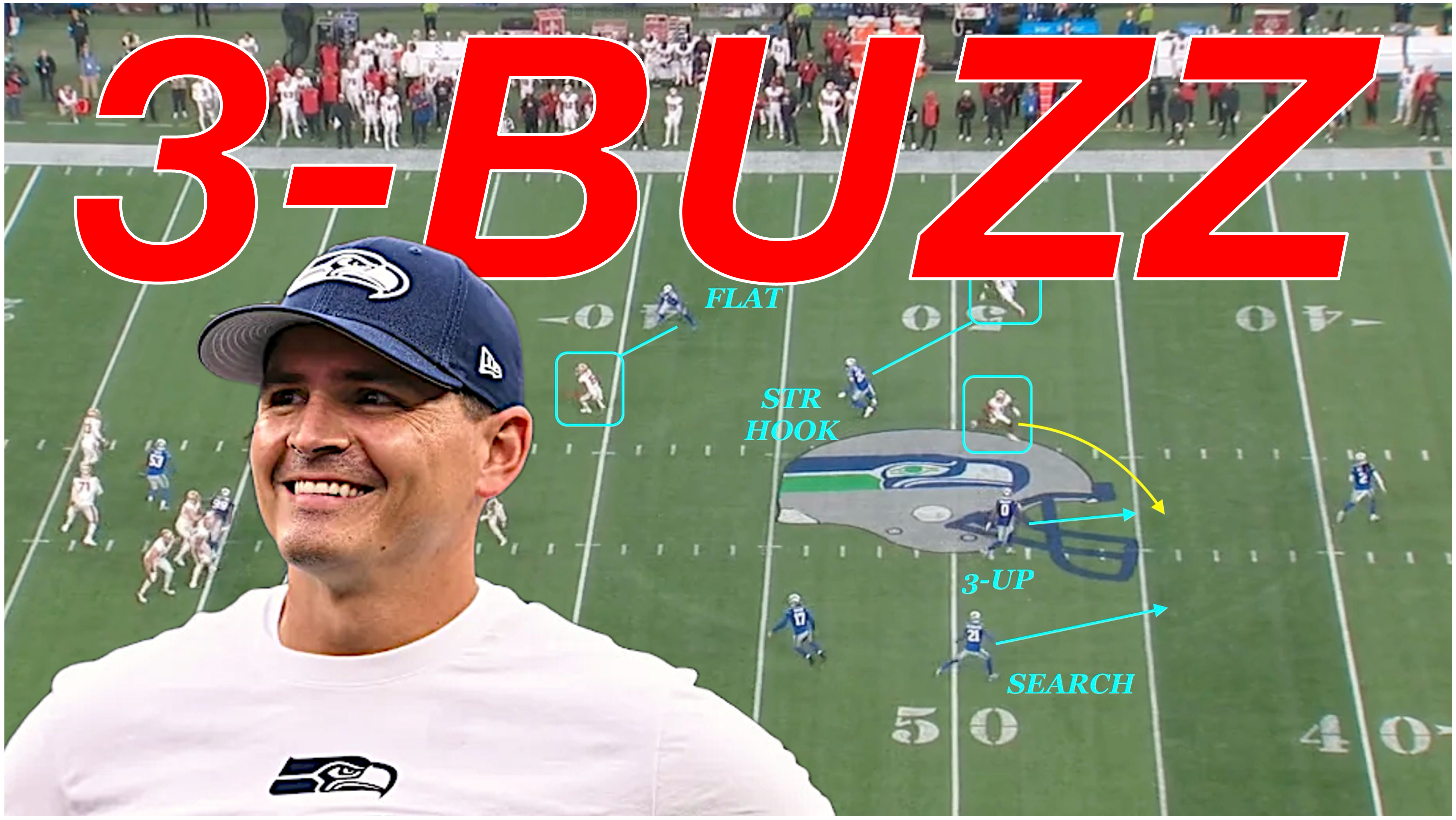
Last season, Mike Macdonald, at 36, was the youngest head coach in the NFL. Now 37, the Saints’ Kellen Moore will hold that marker in 2025. His quick ascendance to the top of the NFL reflects the coaching ‘school’ he came from in Baltimore.
The Ravens have one of the best coaching funnels in the NFL. Most of their staff is built in-house, rising from an intern to an on-field position. Head coach John Harbaugh has taken a collegiate approach to coaching development, hiring young coaches as interns and then moving them up as full-time assistants who leave for other posts.
Macdonald started as an intern in 2014, then moved to an assistant position coach in 2015-2016, finally moving to a senior role as a defensive backs coach alongside Chris Hewitt, the current Passing Game Coordinator for the Colts. When Wink Martindale (Michigan) assumed the defensive coordinator role in 2018, Macdonald replaced him as the Ravens’ linebacker coach.
In Baltimore, their coaching analysts are siloed, working up the ranks on a specific side of the field. The system is one of the more popular trees within the NFL, and coaches are constantly moving around or getting poached by other organizations. The collegiate approach allows Harbaugh to always have answers in the building that understand the culture at an intimate level.
Macdonald is the poster child for how their system works, and his departure to Seattle was followed by Dennard Wilson (DBs) and Anthony Weaver (DL) moving to coordinator roles in Tennessee and Miami, respectively. Jesse Minter, the Chargers’ DC, followed a similar path and worked alongside Macdonald from ‘17-’20 until he took the DC job at Vanderbilt.
After moving on from Don Brown, John’s brother, Jim, needed a DC at Michigan. He turned to the young Macdonald. Michigan’s defense had cratered during the COVID-19 season of 2020, and Jim wanted to move in a different direction. Macdonald instantly upgraded the defense, finishing 12th in DFEI (think FTN’s DVOA for the NFL), up from 116th in 2020 (BCF Toys).
A year later, John needed to do the same in Baltimore. Under Martindale, the defensive unit had also begun to crater, finishing near the bottom of the DVOA rankings in 2021. The Ravens would move on from Martindale and recall Macdonald to fix the issues with the defense.
Macdonald immediately streamlined the play calls, updating their pedagogy and naming structures while shifting the defense towards a more zone-centric style of play. Under Martindale, the defense had become too reliant on pressure and man coverage. The NFL’s defensive landscape was beginning to shift, and Macdonald revamped the defense, creating what I call the Ravens 2.0 system.

Minter would leave his post at Vanderbilt to join Jim in Michigan. The Wolverines would go undefeated in two years and win a National Championship. Jim, along with Minter, would move on to the Chargers. Macdonald would assume the head coach role in Seattle, and Zach Orr, a former player, would rise to become the DC in Baltimore, another in-house hire who started as an analyst in 2017.
Though the Seahawks finished with a 10-7 record, they missed the playoffs on a ‘strength of victory’ tiebreaker to the Rams. It also didn’t help that the NFL North had three teams with 11+ wins, with the Lions winning the conference and Minnesota finishing 14-3. Ten wins were the most for Seattle since 2020, when the Seahawks went 12-4 and lost to the Rams in the Wildcard Round under Pete Carroll (Raiders).
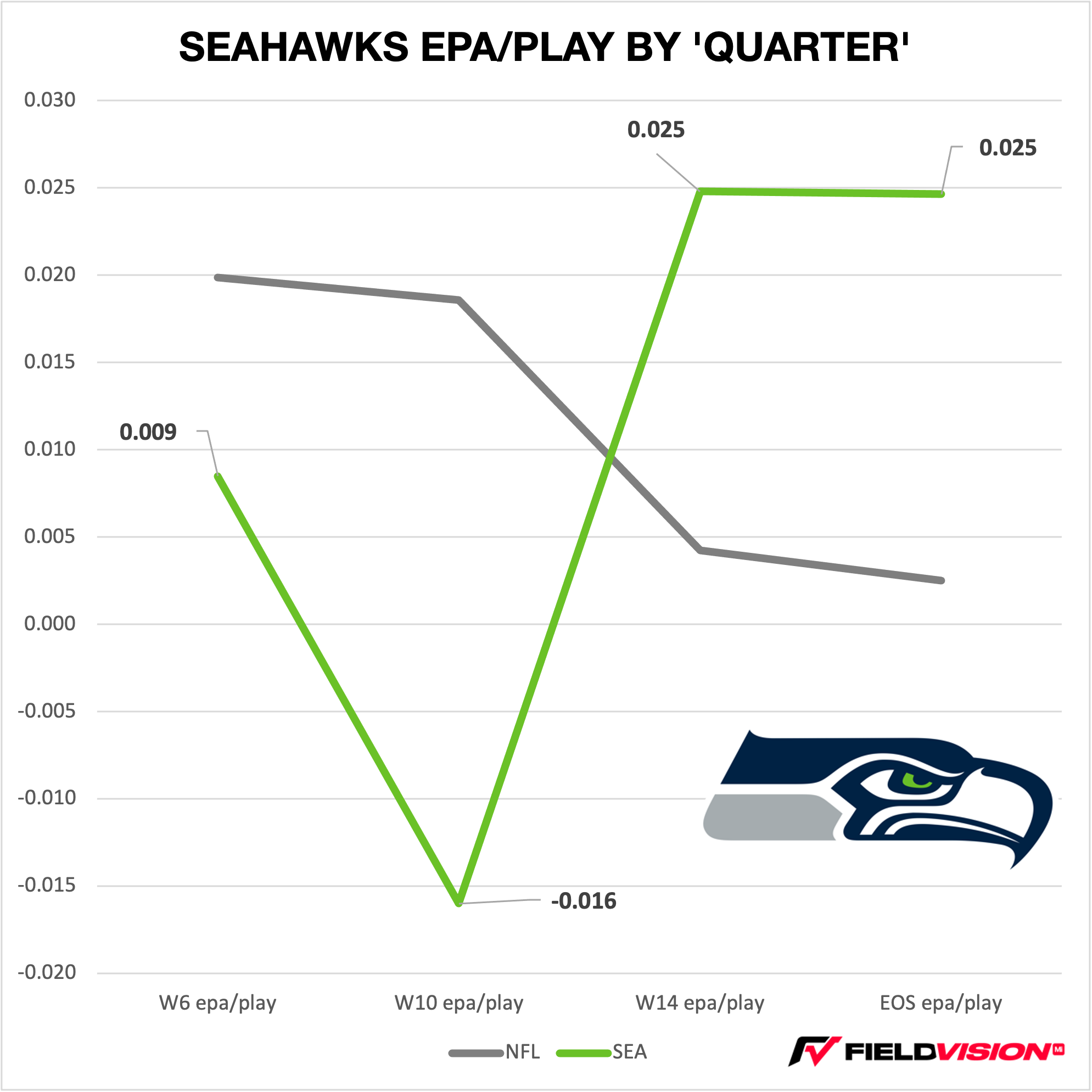
Defensively, it took half the year, but the Seahawks found their groove under Macdonald and finished a respectable 11th in EPA/play. From Week 10 to Week 14 (3rd Quarter of the season), the Seahawks had the third-highest rise in EPA/play (.041) in the NFL, taking them from 20th in EPA to 11th, where they would finish the year. FTN’s DVOA had them finishing 10th.

The Seahawks were a top-ten defense in stopping the pass, finishing ninth in dropback EPA and success rate. Seattle was also sixth in Points Per Drive (PPD), first in forced 3-and-outs, and third overall in Stops Per Drive (FTN). In Seattle’s last seven games, they finished 6-1.
