


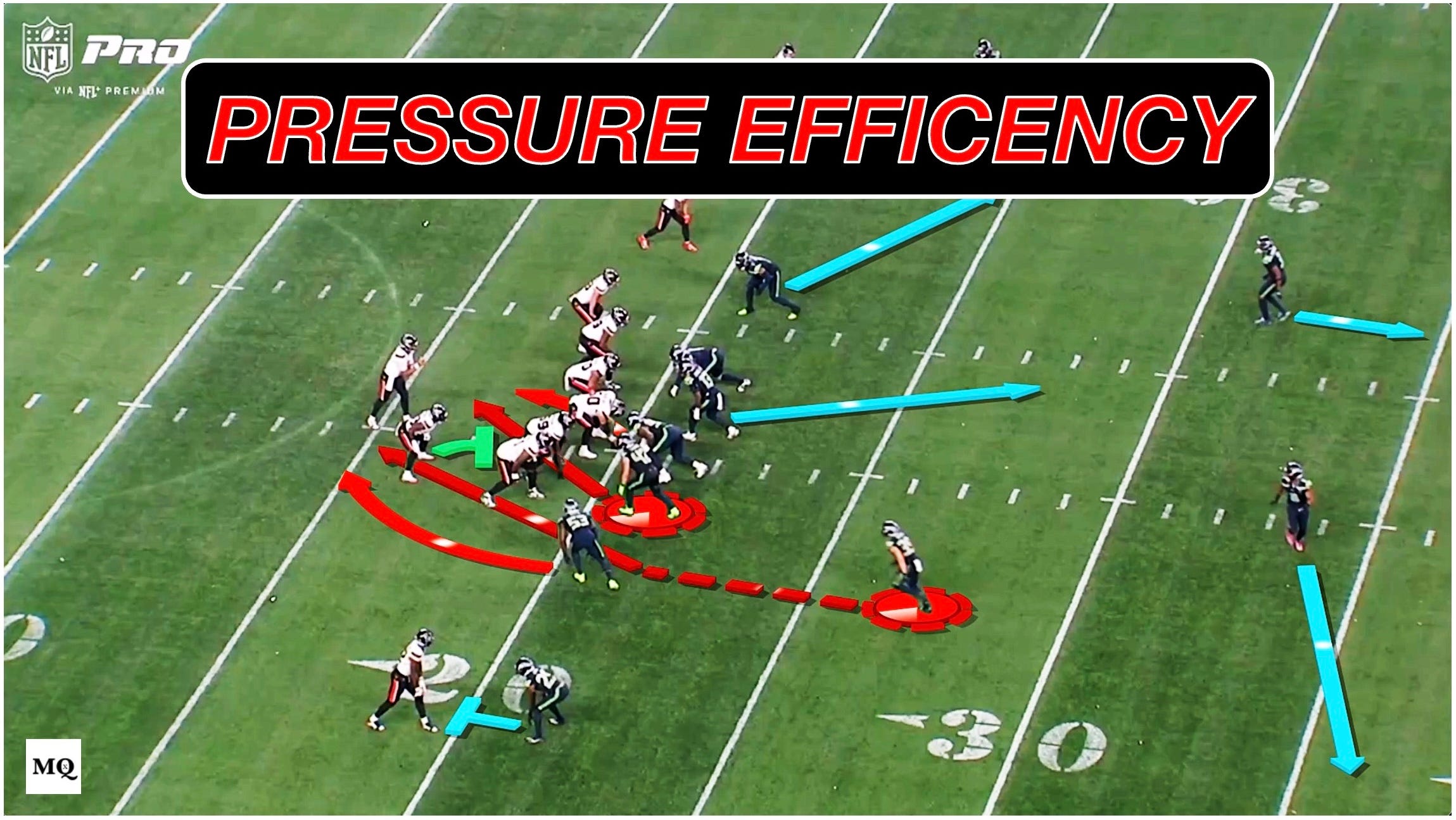
Why analyze the blitz designs from a defense that rarely blitzes? Seattle finished the season as the sixth-best defense of all time, according to FTN’s DVOA rankings (and as Super Bowl champs). The unit was a pressure engine without a premium pass-rusher and finished 25th in Blitz Rate.
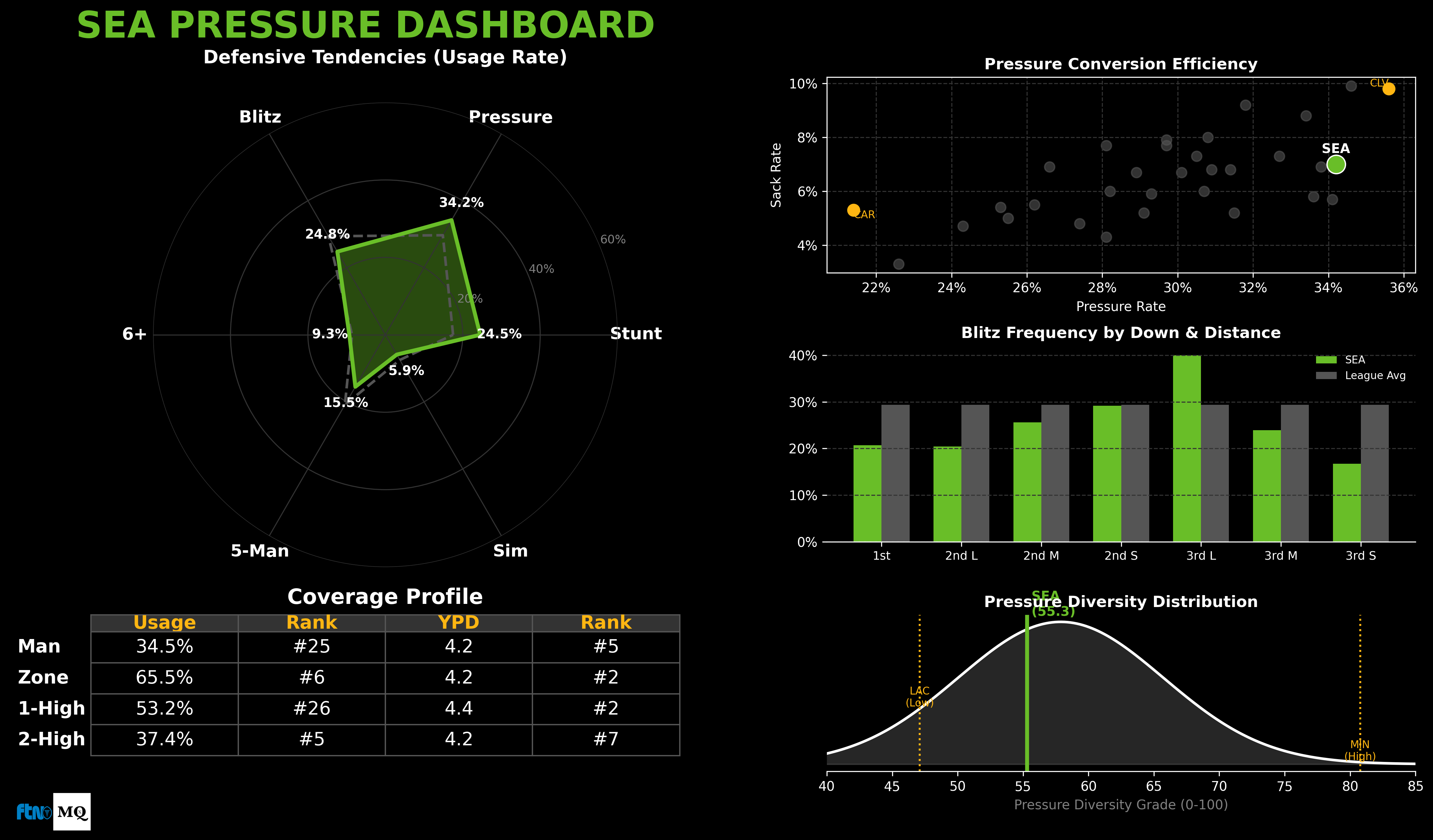
The 2025 Seahawks utilized a systematic approach to manufacture pressure. First, the Seahawks were a movement-based defense, opting to stunt (move) on 39% of their passing downs (2nd). When blitzing the stunt usage dropped to only 26% (25th), meaning they took a vertical approach to their blitz paths.
Second, blitzing was a small part of the defensive DNA, but it was surgical: they appeared only in the top 10 of Blitz Rates for 3rd & Long (10+). Of Seattle’s 48 sacks, 20 of them came via the blitz (6th), and the unit held the eighth-best sack conversion rate at almost a quarter of their blitz calls (23%).
Finally, Mike Macdonald used a pared-down blitz package, leveraging alignment and protection manipulation rather than spamming multiple paths. Blitzing, for Seattle, was a highly targeted change-up to their typical structural approach, and Macdonald was highly situational, understanding when to call them.

The efficiency of the package allowed the Seahawks blitzes to create unblocked defenders and “quick” pressures (<2.5 seconds) better than anyone else in 2025. When Macdonald called a blitz, it created quick pressure at a rate 17% points higher than if they didn’t blitz. Only the Houston Texans held a better Pressure Rate than Seattle when blitzing.
Macdonald designed a system that maximized pressure up front and funneled the ball, if thrown, into predictable areas. Essentially, they leveraged coverage constraints to force low-ADOT (Average Depth of Target) throws. If the protection could withstand the stress, the ball was still funneled into a predictable area for a limited gain.
There is a unique dichotomy within the Seattle blitz system. On the one hand, the Seahawks have the second-best Adjusted Sack Rate (aSR)1 and rank second in creating hits and hurries. On the other hand, they held the second-lowest clean pocket rate (bad) and the highest Open (Receiver) Rate at 47.2% (also bad). In comparison, when blitzed, opposing quarterbacks threw for the second-lowest YPA (6.2) and averaged -1.07 yards short of the sticks (ALEX).
This was all by design. Receivers were “open” because they were exactly where the coverage wanted the ball to go: low in the zone, short of the sticks, and in front of the secondary. When sending pressure, the Seahawks kept the ball at ~4 yards per drop-back (YPD) across the board, regardless of coverage.
Macdonald’s pressures are married to coverage concepts, and typically will have some kind of disguise or rotation behind them. Seattle finished third in 2025 in checkdown rates (~14%). That added layer of complexity for a quarterback can cause hesitation, and as the stats show, that leads to an explosion in pressure and feeding into the checkdown loop (throws under five yards).
The data confirms Macdonald’s efficiency, but the film reveals the manipulation and ability to select the best pressure paths. Let’s dive into the tape!
—
Master the structural secrets behind the NFL’s #1 DVOA blitz unit.
Stunt-to-Blitz Rates: Learn why Seattle dropped their stunt rate to 26% on blitz downs to ensure unblocked “quick” pressures hit home.
Modular Pressure Design: A film-room breakdown of the ‘Sand’, ‘Nail’, and ‘Pick’ concepts used to manipulate protection rules and create free hitters.
Film Library: More clips and diagrams of the top three pressures from the Seahawks' historic 2025 season.

