


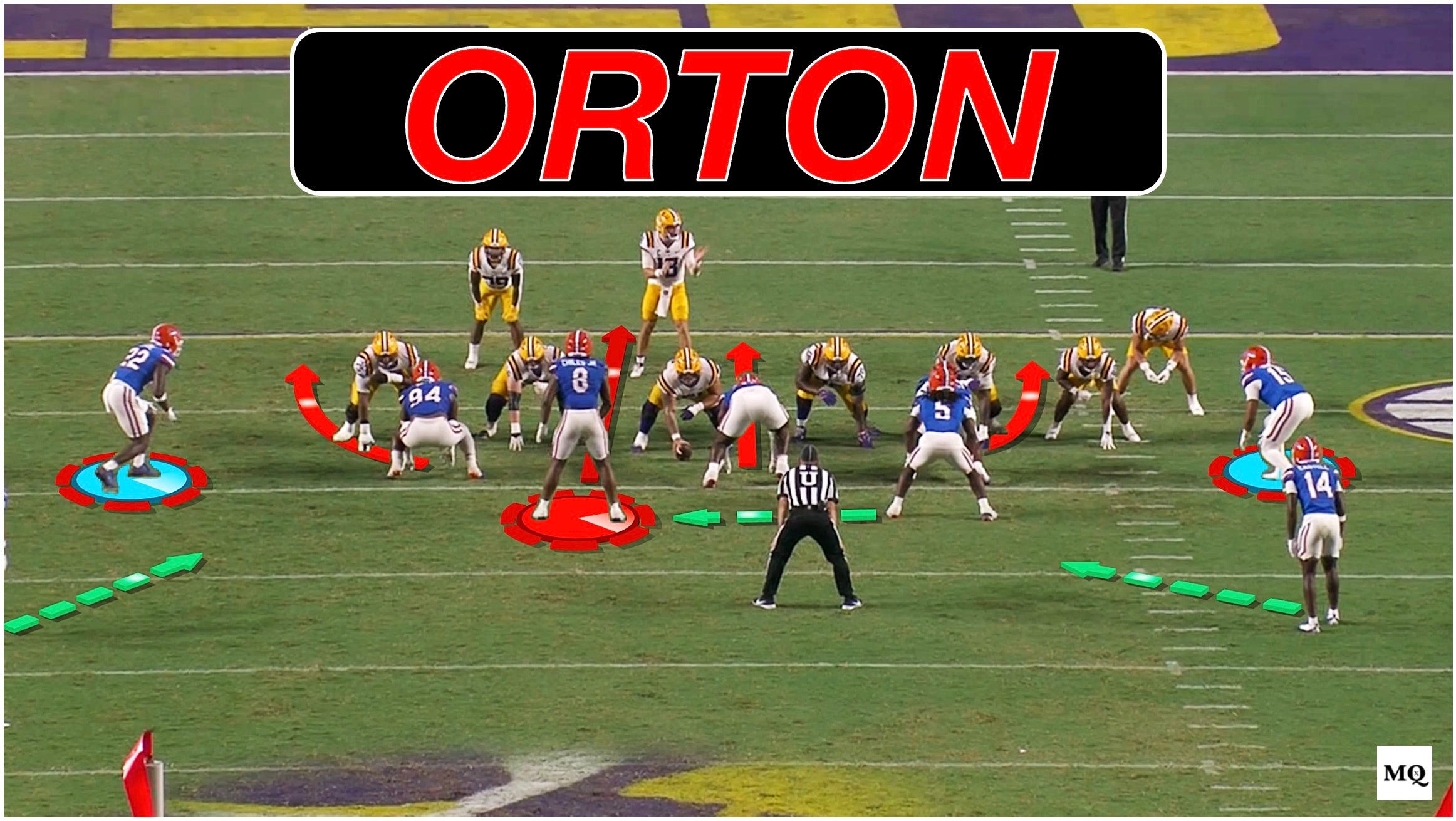
Dave Aranda (Baylor) and Ron Roberts’ pressure system is built on a duality of pressure points. Within blitz tags, the defense can target either toward or away from the TE, RB, or passing strength. That gives the defense six pressure points in total without having to teach any new scheme.
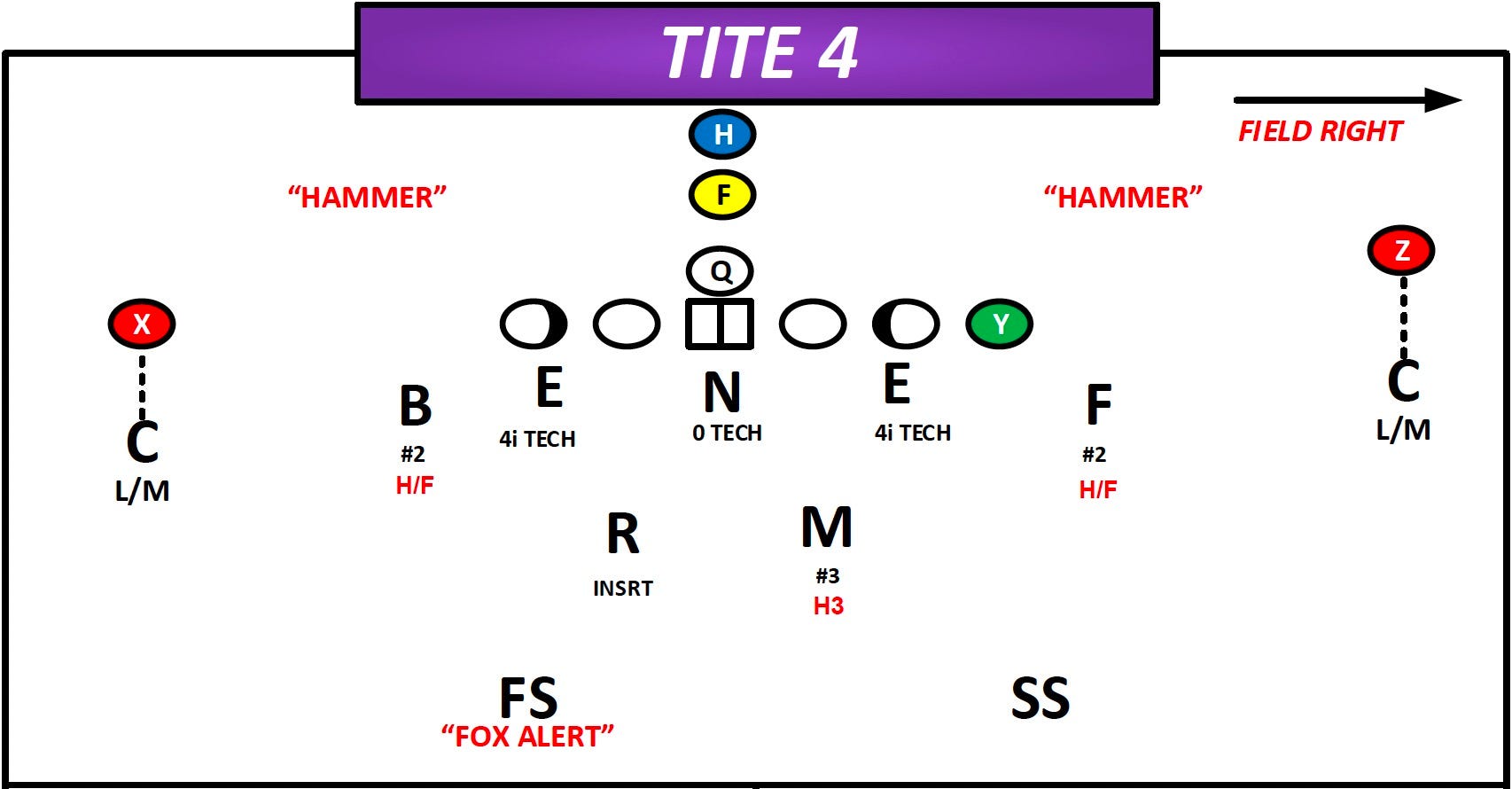
Roberts’ system is built on the foundation of his Tite Front, which is an odd spacing alignment (no B-gap “bubbles”). Each pressure within his system is designed to fit from odd spacing. So, even when blitzing, the defense doesn’t have to learn a new fit structure.
Within Roberts’ system in 2025, there was low blitz volume and a highly structured Base. The “static” pre-snap presentation and lack of overall blitz volume (~30%) gave the Gators an identical look every snap. That static picture is a force multiplier when Roberts calls a pressure, as seen on film and through the data.
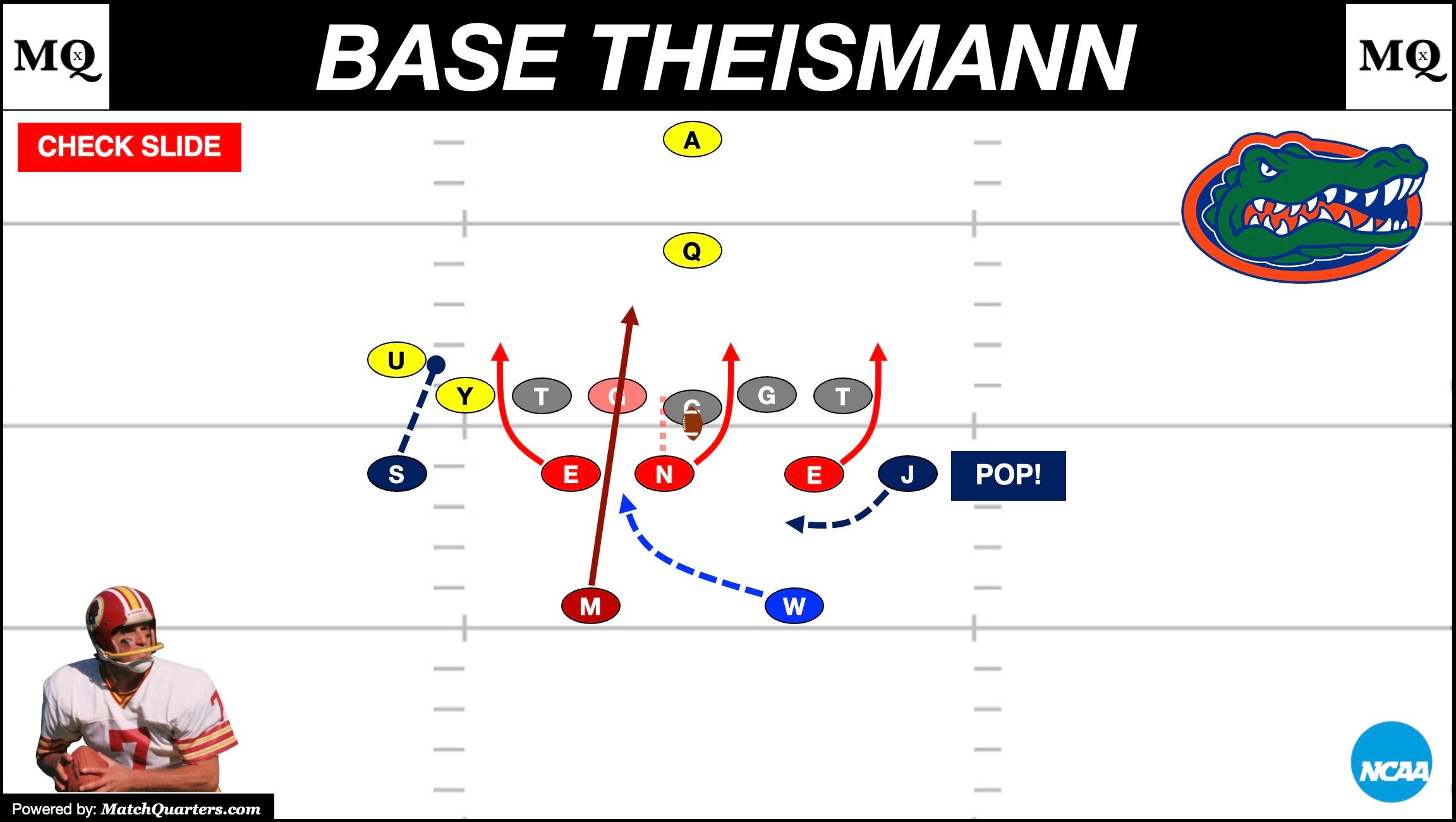
One of the most popular paths in football right now is the Theismann simulated pressure that attacks the TE’s side with a vertical penetrating blitz. As more offenses at every level pivot to the use of multiple TEs and vertical run concepts (Duo/Counter), the use of these internal “sims” has increased.
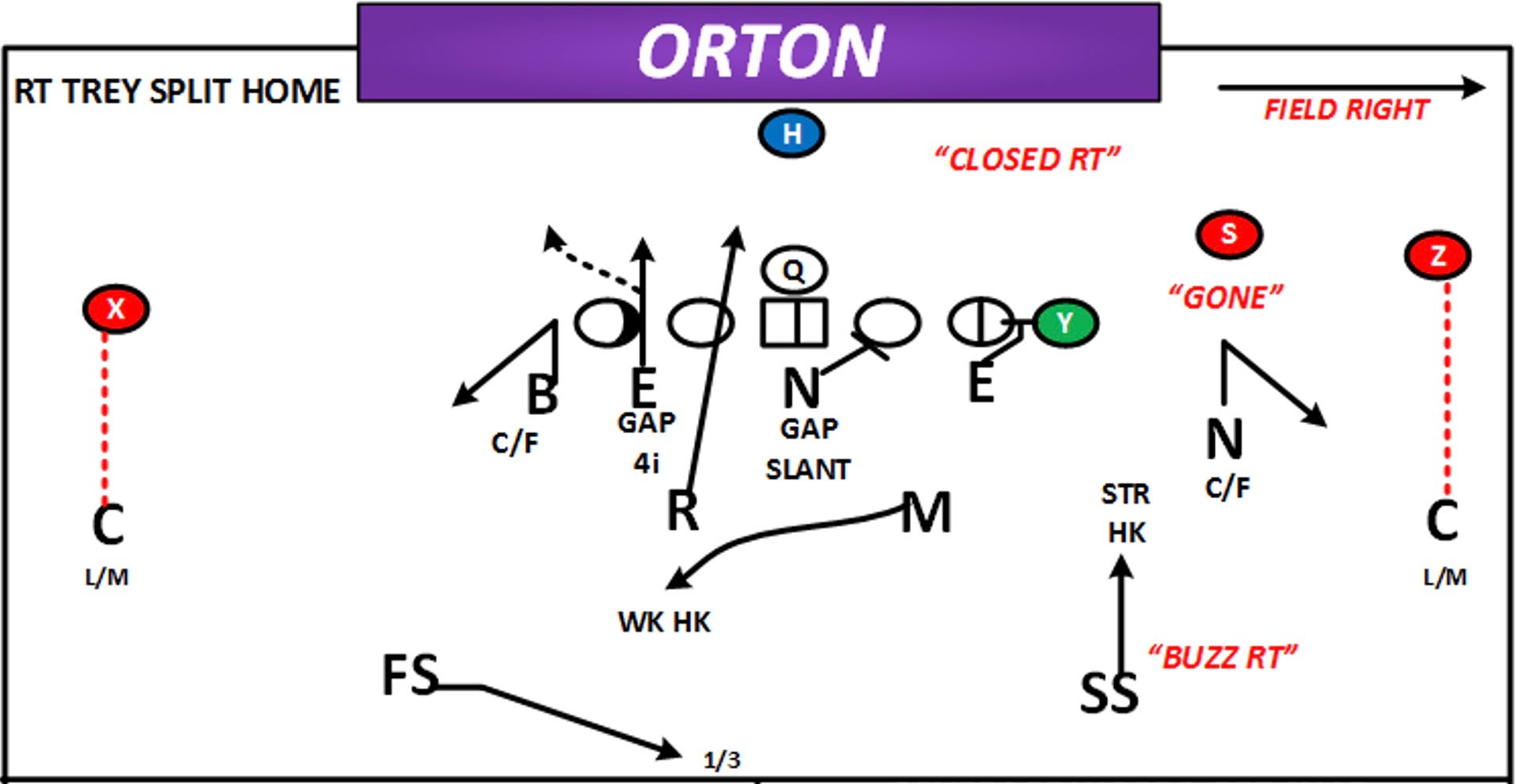
Opposite Theismann, which attacks the TE side, is Orton, the open-side complement. The pressure is designed to attack the weak side of an opponent’s blocking scheme and is better suited for zone-run schemes, or horizontal flows.
Regardless of pressure or “static” Base, the Florida Gators maintained an almost identical run-down efficiency. Although efficiency was similar, using pressure significantly reduced the Average Depth of Tackle (ADOTK) by nearly 1.5 yards and the Success Rate by more than 10%.
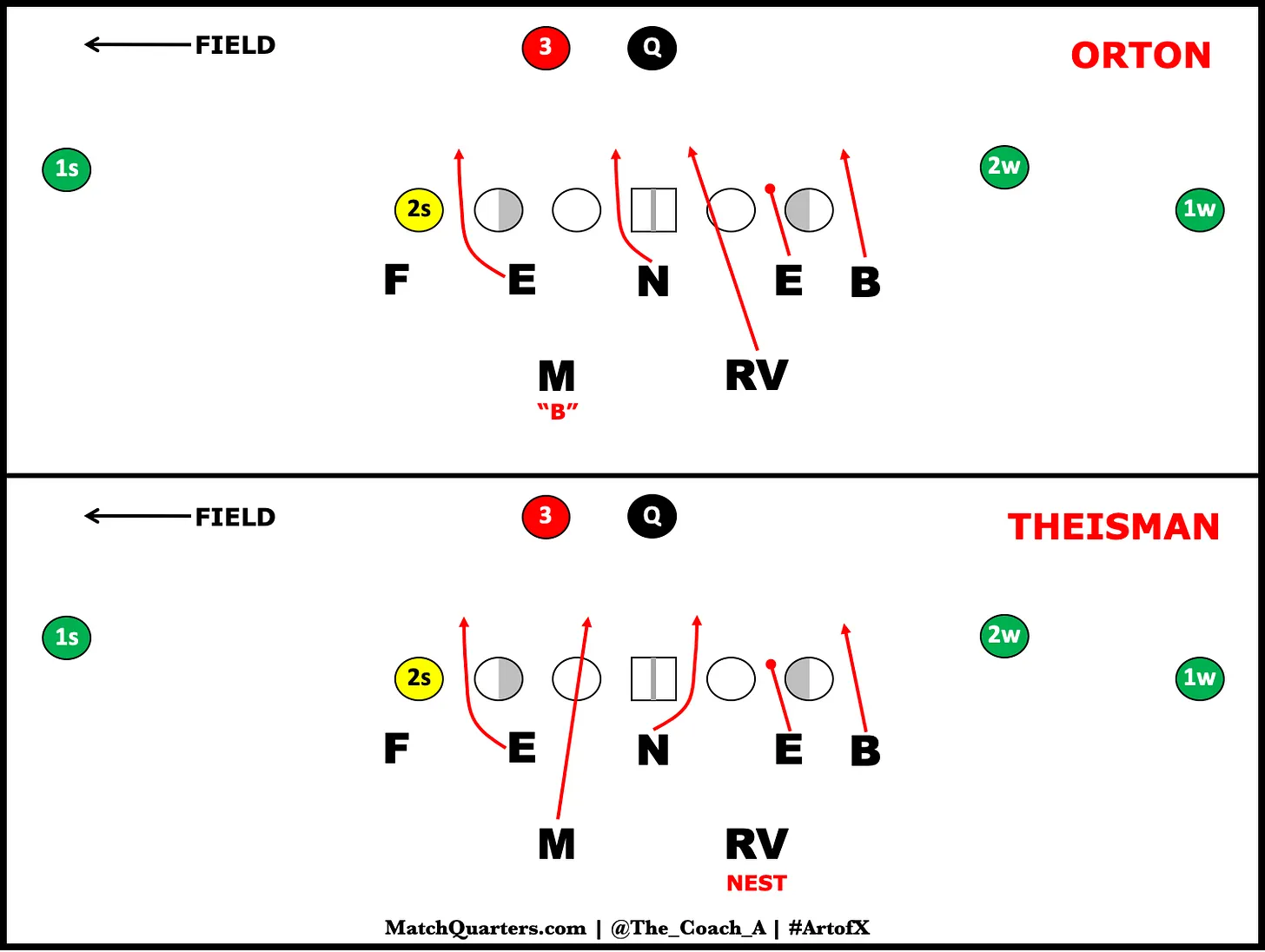
Aranda, at the 2020 Lone Star Clinic, detailed how concepts like Theismann and Orton are designed to destroy one-back run designs while still providing utility against play-action passing. The bonus of “flex” Edges that can insert versus the run or drop versus the pass gives the defense max utility on early downs.
Zone pressures are becoming increasingly important at the higher levels of football. The NFL has become a zone-pressure league, and the use of simulated pressures at the college level allows defenses to maintain their seven-man distributions while applying direct pressure on the offense. The fact that numbers convert to the run makes these utility pressures a critical tool within the modern defensive coordinator’s call sheet.

While modern football has become increasingly hyper-focused on the pass, the ability to stop the run on early downs is what gives the defense back the power. The Aranda-Roberts system was built on this belief, focusing on structure (Tite Front), zone coverage (cap verticals, layer the intermediate), and, finally, creating pressure, which, against the run game, means coordinated cut-offs.
We will examine three clips to illustrate Orton's effectiveness on the open side of the offense. The weak-side pressure is designed to counter Spread-style “gun runs” that feed into the horizontal nature of the plays. Let’s dive into the tape and see how the Orton path helped the Gators finish the year with a 71% Stop Rate (negative EPA plays) while still creating a pass rush when needed.
—
Transform your early-down defense with Ron Roberts' complete schematic toolbox. Access full front diagrams, coverage rules, and data breakdowns with a subscription to MatchQuarters.

