


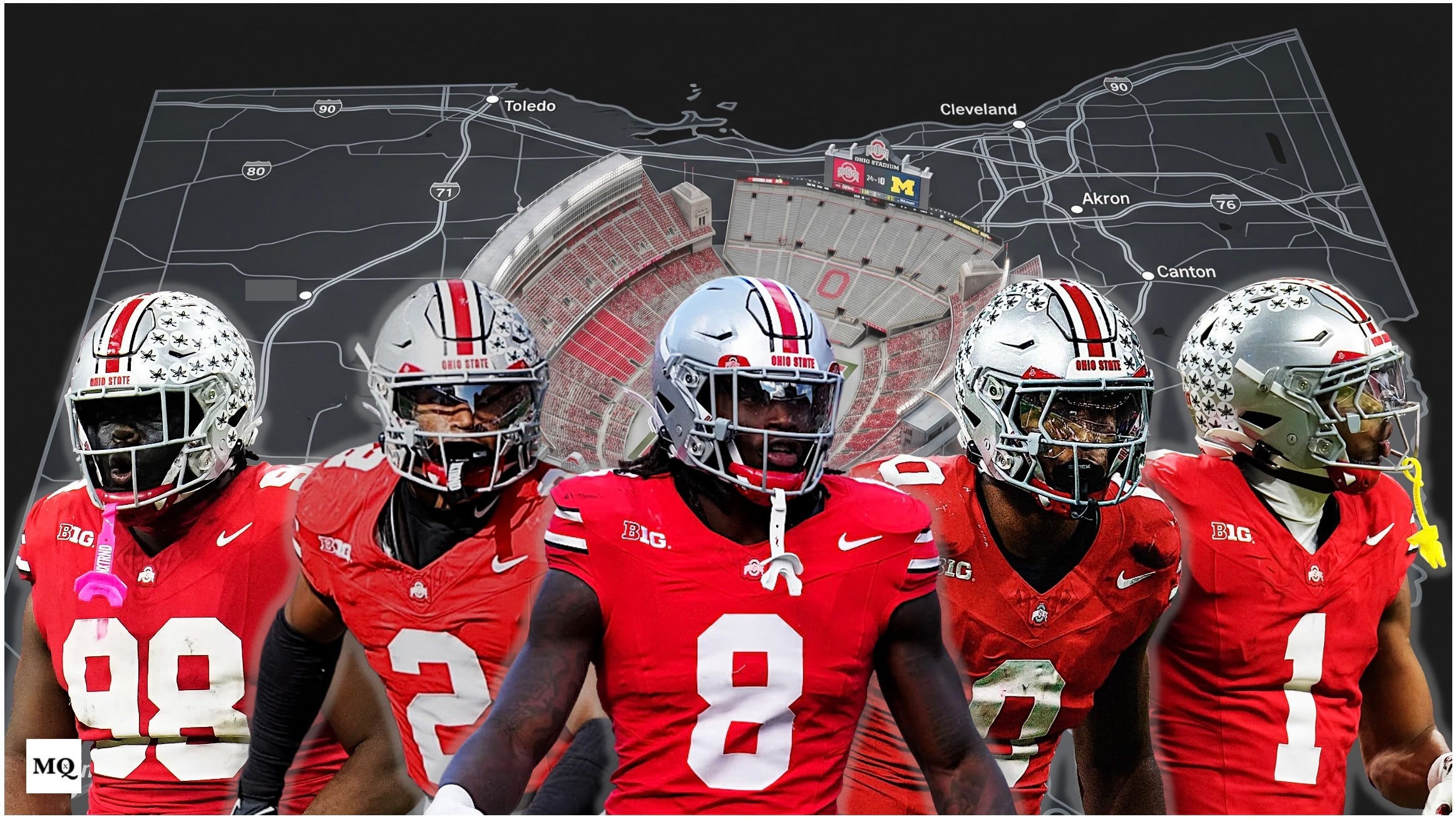
Matt Patricia’s first season in Columbus has to be viewed as a success as the veteran coach maximized an NFL-rich roster. Ohio State arguably had one of the best defensive units in 2025, both talent-wise and in on-field production. The Buckeyes led the FBS in Points Per Drive (PPD), Yards Per Drive (YPD), and were in the top-five in almost every advanced metric.
Heading into 2025, many around the program were hesitant to get behind the defunct former NFL coach. The last time Patricia had any success leading a defense was in 2017, as the New England Patriots' defensive coordinator under Bill Belichick.
The public “divorce” between head coach Ryan Day and Jim Knowles was well-documented and centered on the perceived complexity of the Buckeyes’ defense. With Knowles gone, Day wanted to pivot to a “simpler” style of play and adopt an NFL model.
Patricia was unemployed and provided Day with the name of a former NFL coach. As noted, the roster was also loaded with high-caliber NFL talent. The Buckeyes’ defense under Patricia was player-centric, and the veteran coach simplified his system to allow his defenders to flow freely to the ball.
Player Personnel
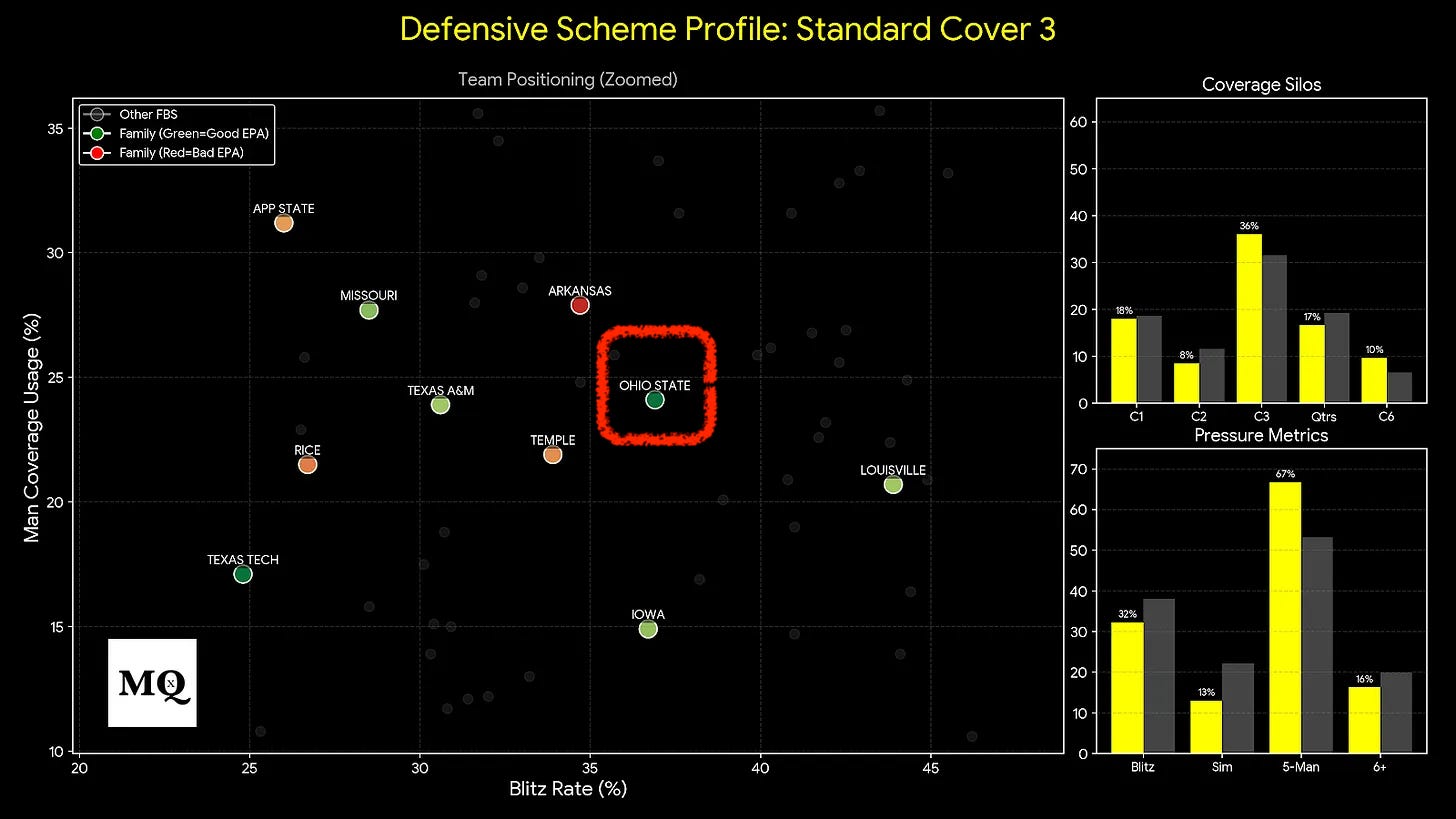
Ohio State’s defense was a standard Cover 3 model, based in Nickel (4-2) for much of the season. Patricia used his elite hybrid players, LB/ED Arvell Reese (Giants), LB Sonny Styles (Commanders), and Safety Caleb Downs (Cowboys), to create different presentations for offenses to contend with. Downs spent ~65% of his snaps near or around the box, with Reese splitting his time between being an edge rusher and “box” linebacker.
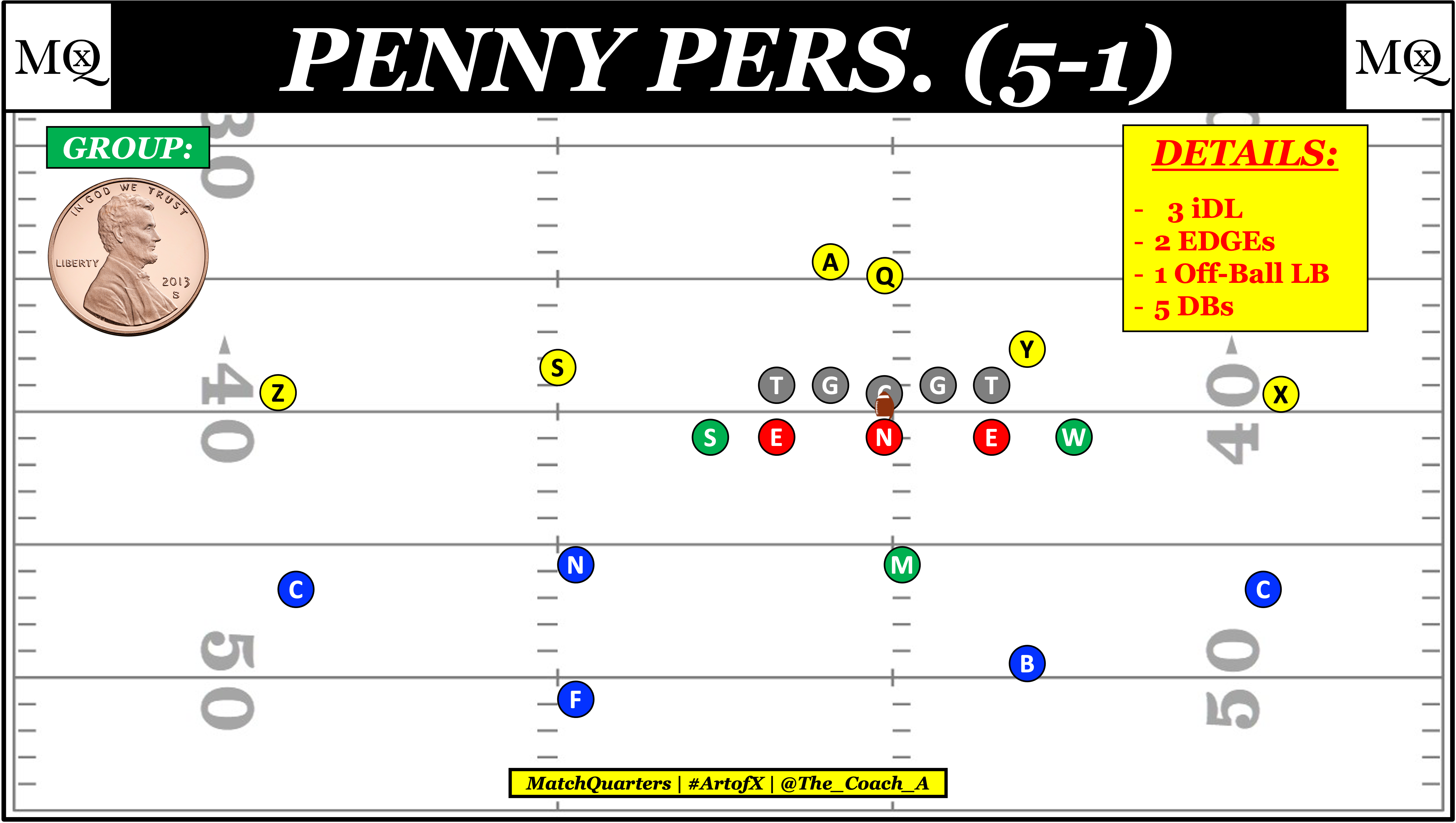
The main defensive “formation” the Buckeyes utilized was a “Penny” alignment, or 5-1 defensive structure. Reese would be moved around the edge of the box depending on the matchup and call.
Typically, the hybrid off-ball ‘backer would play to the boundary, but at times, Patricia used him to the TE’s side. The “Mike” linebacker, Styles, played ~80% of his snaps in the box. Patricia used these three players to create a triangle, leveraging the offense.
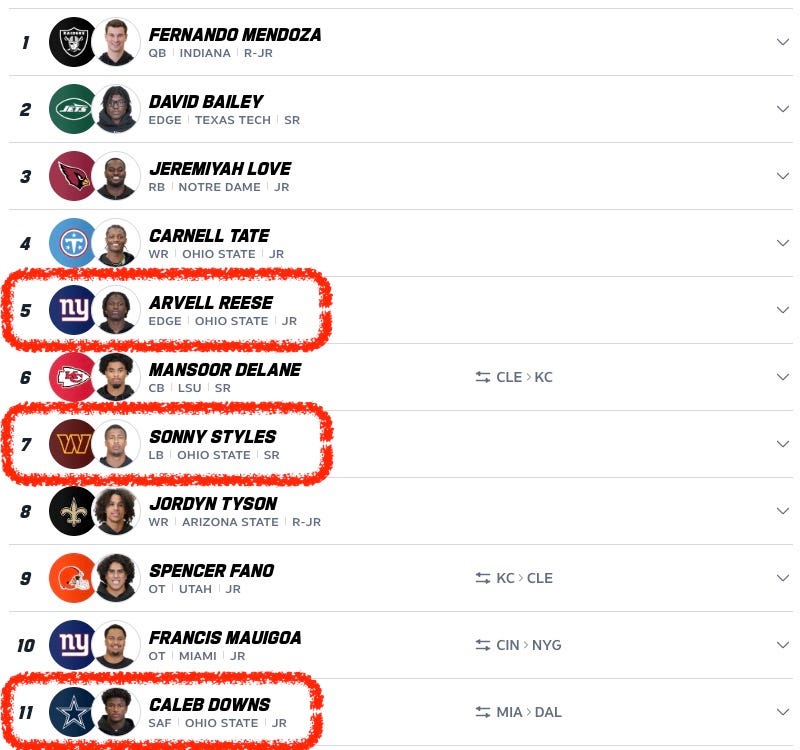
Three total Buckeyes came off the board in this year’s NFL Draft, with two more, iDL Kayden McDonald (Texans) and CB Davison Igbinosun (Bills) selected in the 2nd Round. Patricia had the key pieces for a dominant roster, with a star player at every key position.
Patricia’s “Pivot”
During his tenure with Detroit, Patricia had an affinity for man coverage. In his three seasons with the Lions, his defense led the NFL in Cover 1 usage at 37%. On the surface, it looked like Day was trying to roll back the clock and reestablish the Buckeyes as a man-dominant scheme.
Patricia instead leaned into Cover 3 (38%), which they ranked 34th in usage among FBS teams. Belichick’s system in New England was typically man-heavy, with Cover 2 as the change-up. Patricia flipped from man to zone, which is a modern trend in the league, and still used Cover 2 (17%) as a high-volume change-up (14th).
With high-caliber talent, Patrica didn’t want to “lock” his athletic players into designated roles, but allow them to move as “adjusters,” utilizing zone on ~72% of his calls. In typical NFL fashion, blitz numbers were not high (54th), and Pass Blitz Rates were even lower (71st).
Many around the country, even fans in Columbus, didn’t want to jump “all in” behind the Patricia hiring. After a few weeks, it was clear that this unit was going to shine all season. Let’s dive into the tape!
—
See the technical mechanics behind the nation’s #1 defense and the specific paths used to solve personnel mismatches. Become a paid subscriber to read the full article.

