


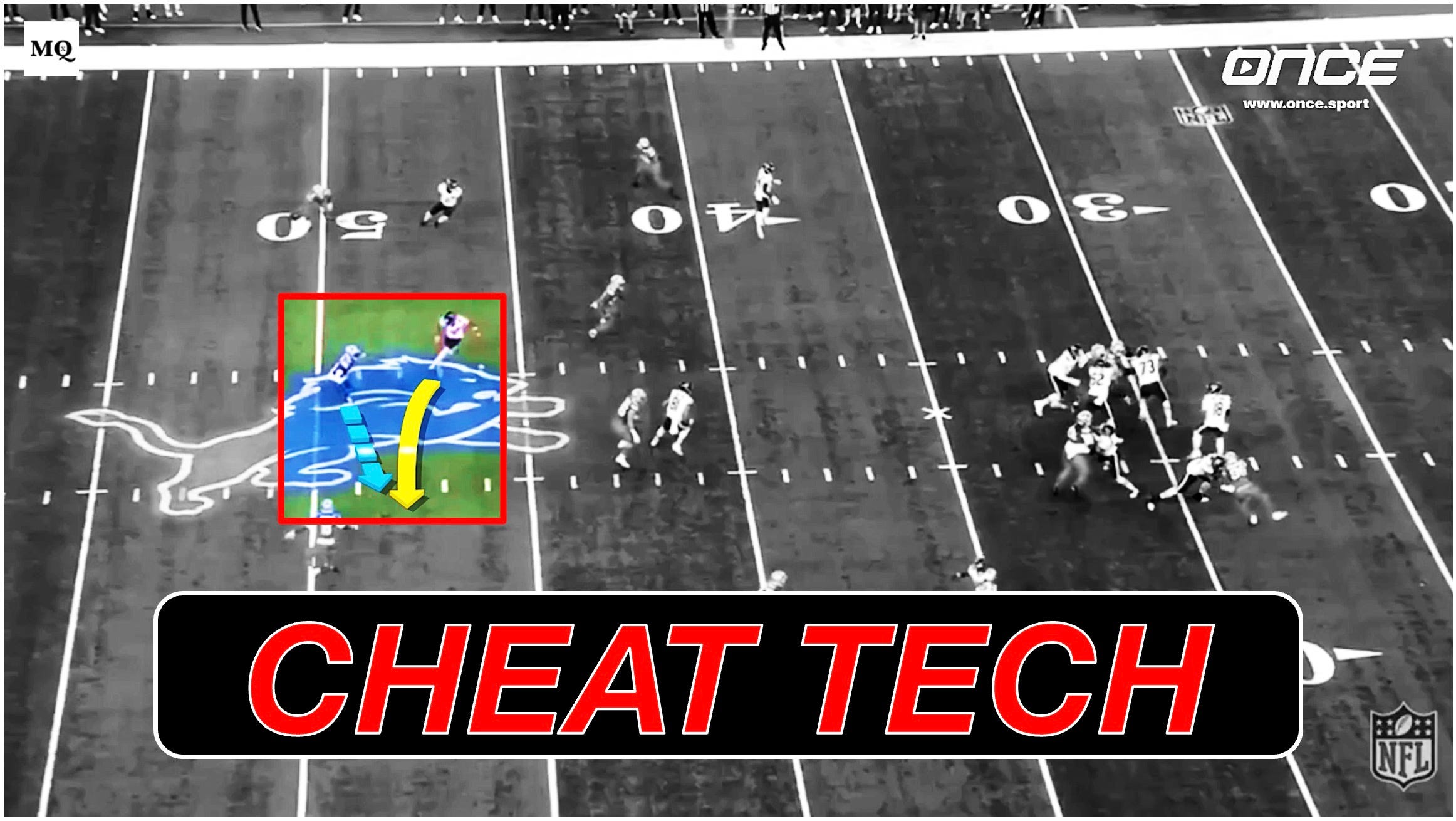
The Detroit Lions' defense is a true outlier in the modern game. As more teams look for a Nickel defender that lets them play sub-packages on early downs, the Lions go against the modern meta by playing a majority of their snaps in a “Base” defense. They will likely do that again in 2026, even with the addition of former Titans and Rams Nickel Roger McCreary.
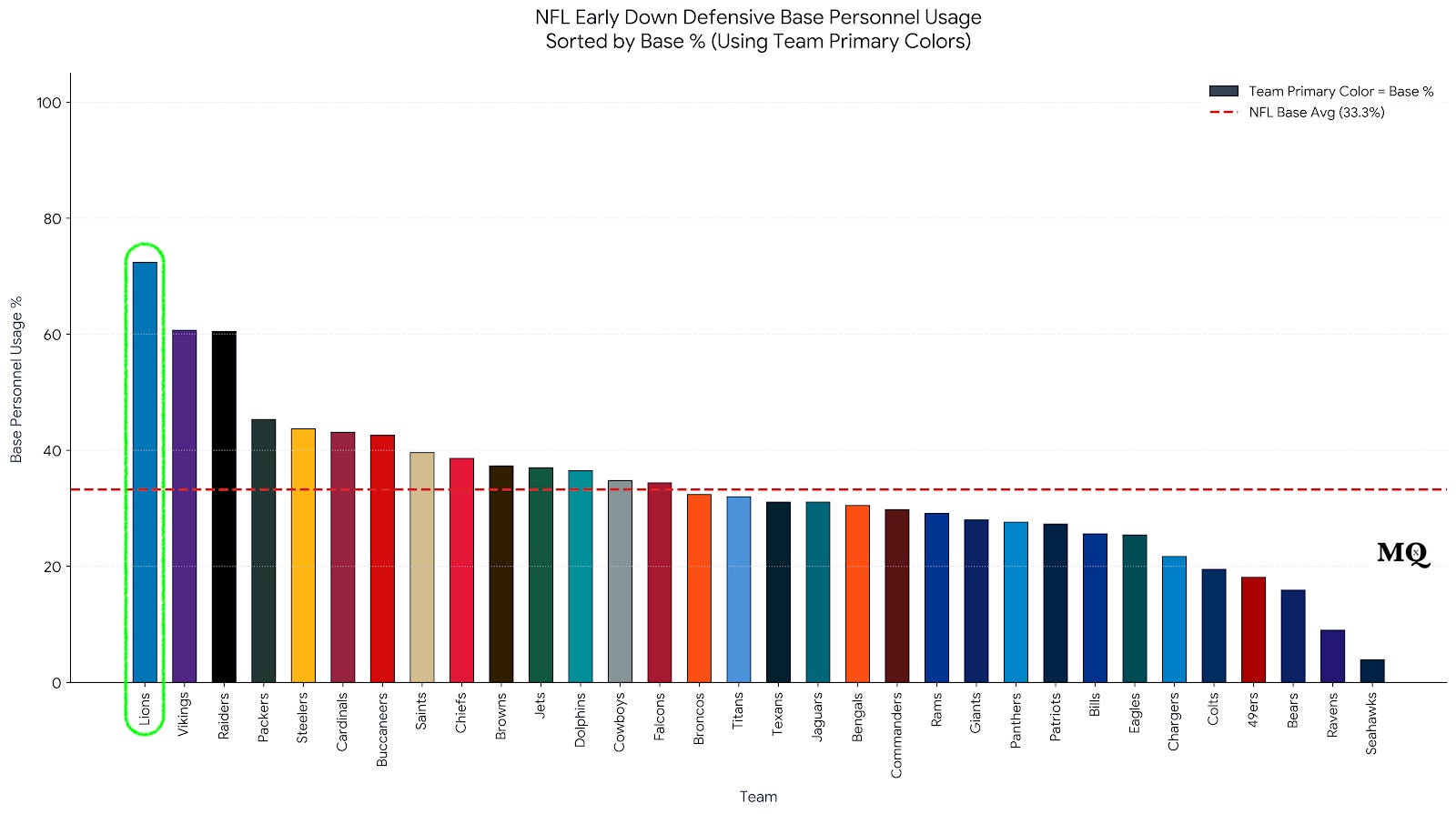
On early downs (1st/2nd), Detroit lined up in Base on over 72% of its snaps and paired that with a traditional 4-3 personnel grouping, both of which ranked #1 in the NFL. Operating from a 4-3 package requires three off-ball linebackers on the field, and losing Alex Anzalone will likely sting.
Within the league, only three teams, the Lions, Vikings, and Raiders, cleared the 50% mark in Base usage. Only seven total cleared 40%. The NFL is clearly a Nickel league, and the Lions are a complete outlier.
One area the Lions are aligned with regarding the current NFL meta is “hybrid” players. Derrick Barnes functions as a de facto Edge even though he is listed as an off-ball LB on the roster. He logged almost 50% of his snaps on the line of scrimmage last season.
By walking Barnes down to the line of scrimmage as a fifth rusher, defensive coordinator Kelvin Sheppard can present a 5-1 (Penny) or 5-2 (3-4) spacing on the field while keeping a 4-3 personnel in the game. Though in a 4-3 package, the Lions function as a 3-4 Base defense on most downs.
In the secondary, Safety Brian Branch can play almost anywhere. The Pro Bowl Safety logged only 38% of his snaps from depth, with over 50% coming from in or around the box. Both Barnes and Branch are used as “adjusters” in Detroit's Base-heavy philosophy.
Playing from a majority Base forces the Lions to align in a primary closed-post shell, with Barnes and Branch often staying heavy near the box. Barnes anchors the line of scrimmage, setting a hard edge near the perimeter of the box, while Branch provides the spatial offset.
His ability to play in the Slot or drop into the box as an extra run defender allows the Lions to maintain a heavy front-box count without sacrificing coverage speed. Detroit wants to stuff the run on early downs, forcing predictable passing situations and staying ahead of the chains on defense.
With so many bodies near the box, the Lions were still able to play the pass well from their Base personnel. Detroit finished fourth in early down passing Success Rate (43.5%), ranking them fourth overall. With only four DBs on the field, the Lions’ secondary has to play flawlessly if the team is to be an elite unit.
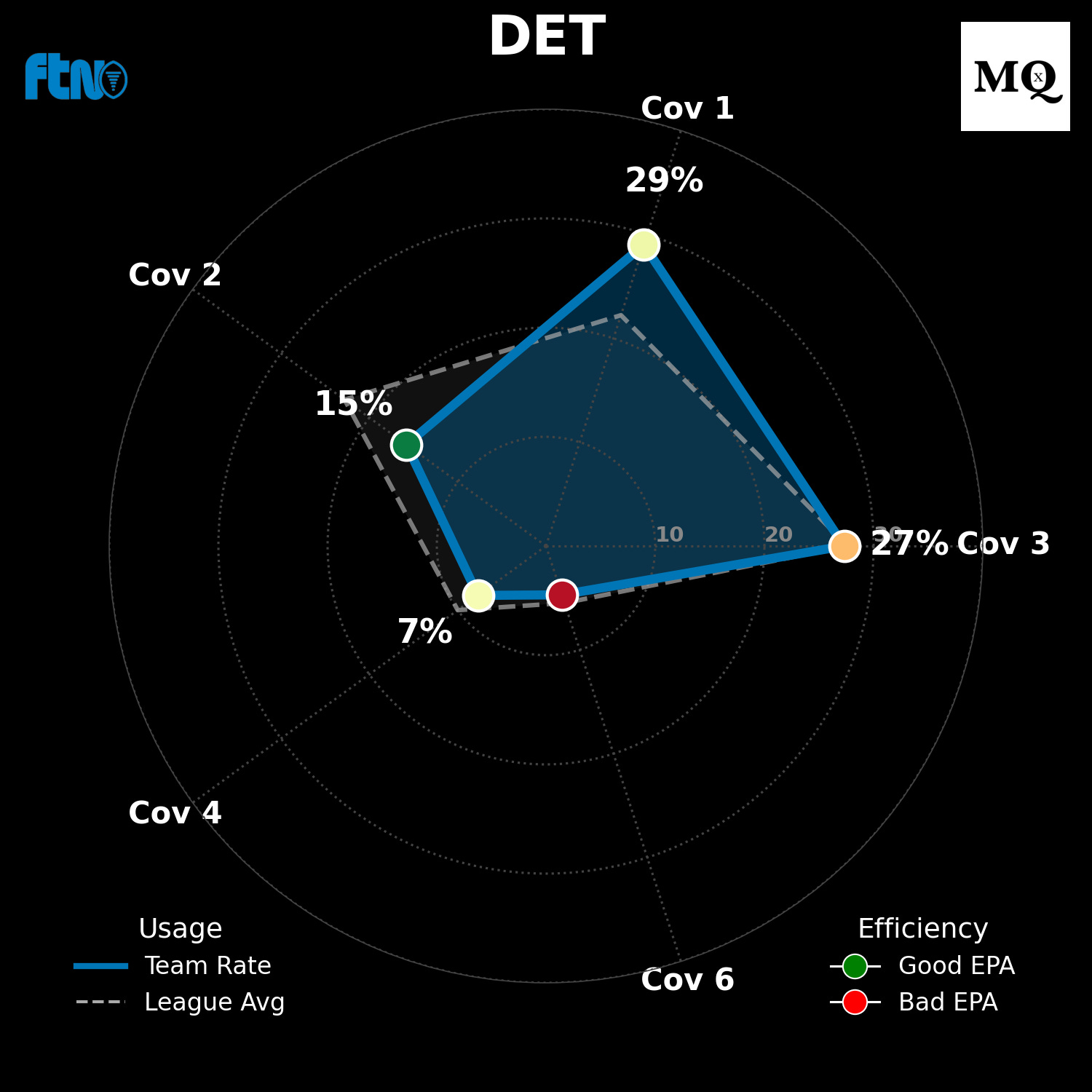
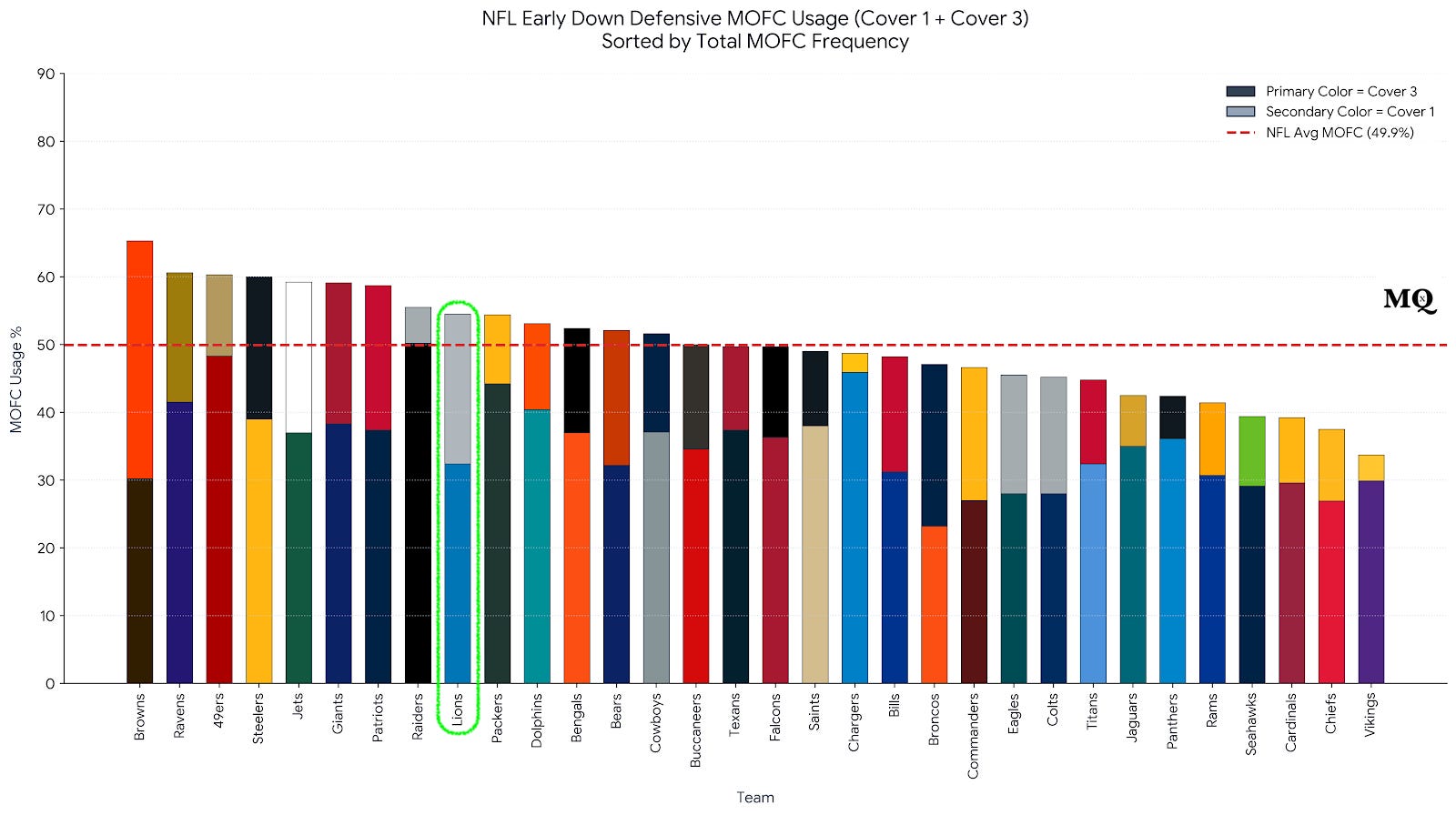
The Lions’ main coverage shell is a closed-post look, regardless of package. On early downs, they run Cover 1 or Cover 3 on about 55% of their snaps. Detroit ranked in the top 10 in closed-post usage while fourth in Cover 1 usage (25%) on early downs.
The NFL is averaging over 80% zone coverage schemes on these downs, with an almost 50/50 split between open and closed-post structures league-wide. Detroit is also an outlier in this category, again, leaning heavily into closed-post schemes.
The use of Base forces the Lions to play more man coverage to protect the defense's second level. Branch is the enforcer near the box and mainly handles the TE or Slot WR on early downs, depending on which package the offense is running. In the “post” is All-Pro Safety Kerby Joseph, who, when healthy, acts as a middle-of-the-field eraser.
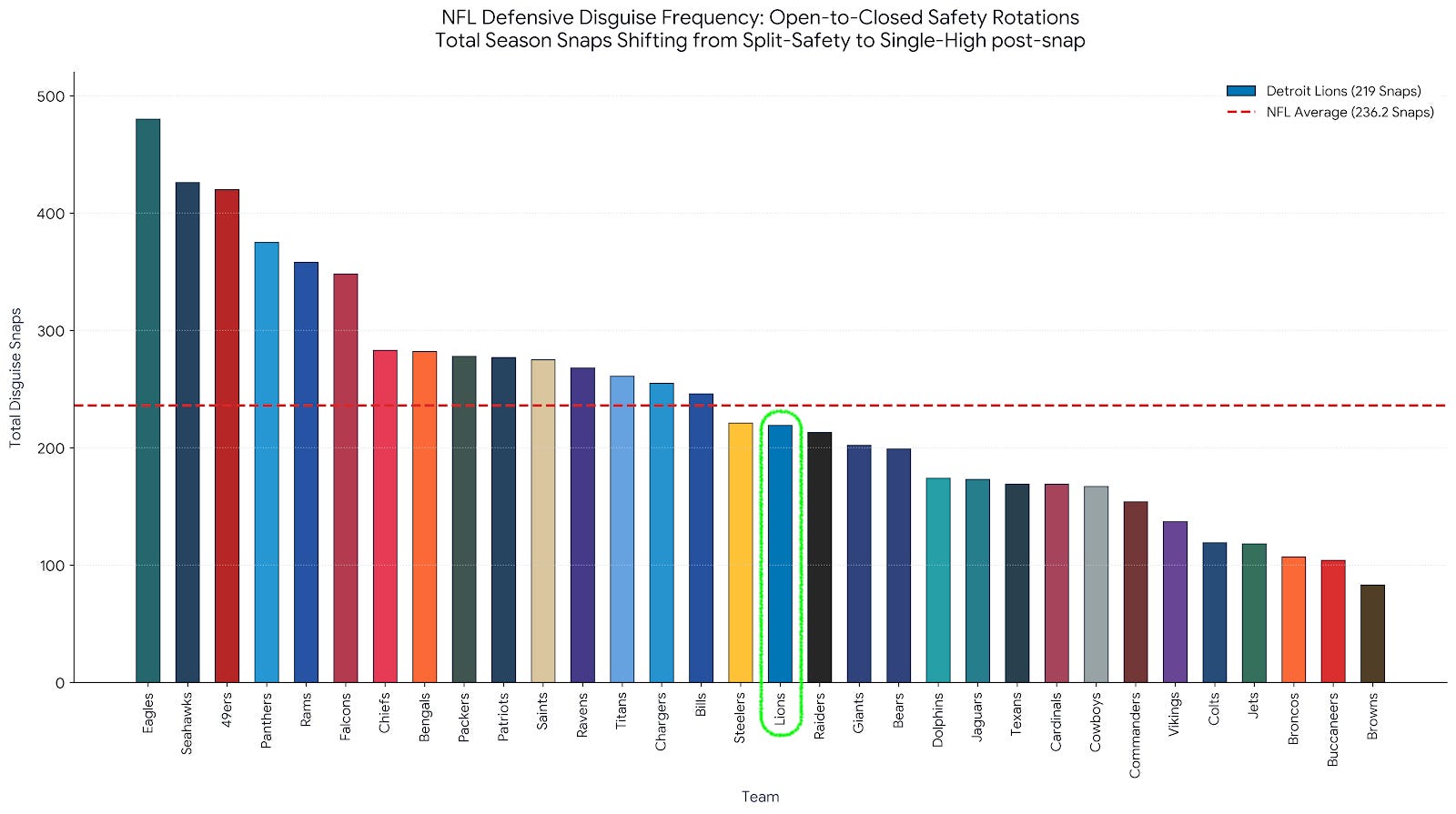
Though Detroit carries a highly functional Quarters coverage that ranked ninth in usage (21%), the defense also doesn’t lean into the disguised-coverage meta that has taken over the league.
Because the Lions do not base from a two-high shell, they don’t utilize coverage disguises that often. Most disguises in the league are open-to-closed, with few using closed-to-open rotations at high volumes.
NFL offenses can clearly see what shell the Detroit defense is in on most downs. To counter that predictability, the Lions employ a technique in the Post that allows their defense to better play crossing routes that plague basic Cover 3 structures.
On average, NFL offenses gain almost a full yard more against closed-post defenses when running play action. Though the Lions have a high-level change-up in Quarters, their standard coverage choice is squarely in a closed-post defensive shell.
Below, I’ll examine how the Lions adjust their Post Safety play depending on the offense. First, we will look at how Detroit uses traditional footwork against an 11 personnel offense (Bengals). Then, we’ll examine how the Lions use a “Cheat” technique in the Post to counter a play-action-based offense in the Bears.
The ability to adjust the technique to match the offense, while keeping the same coverage and personnel packaging, is a critical part of the Lions' success. Since Detroit doesn’t disguise coverages, they must use different techniques to alter coverage patterns in the back end. Let’s dive into the tape!
—
» Get the full technique, film breakdowns, and extra resources by becoming a paid subscriber to MatchQuarters.
Help your coaching staff eliminate hours of manual film organization. The Cutup Generator automatically creates custom cutups, charts, and title slides directly from your tagged data.
