


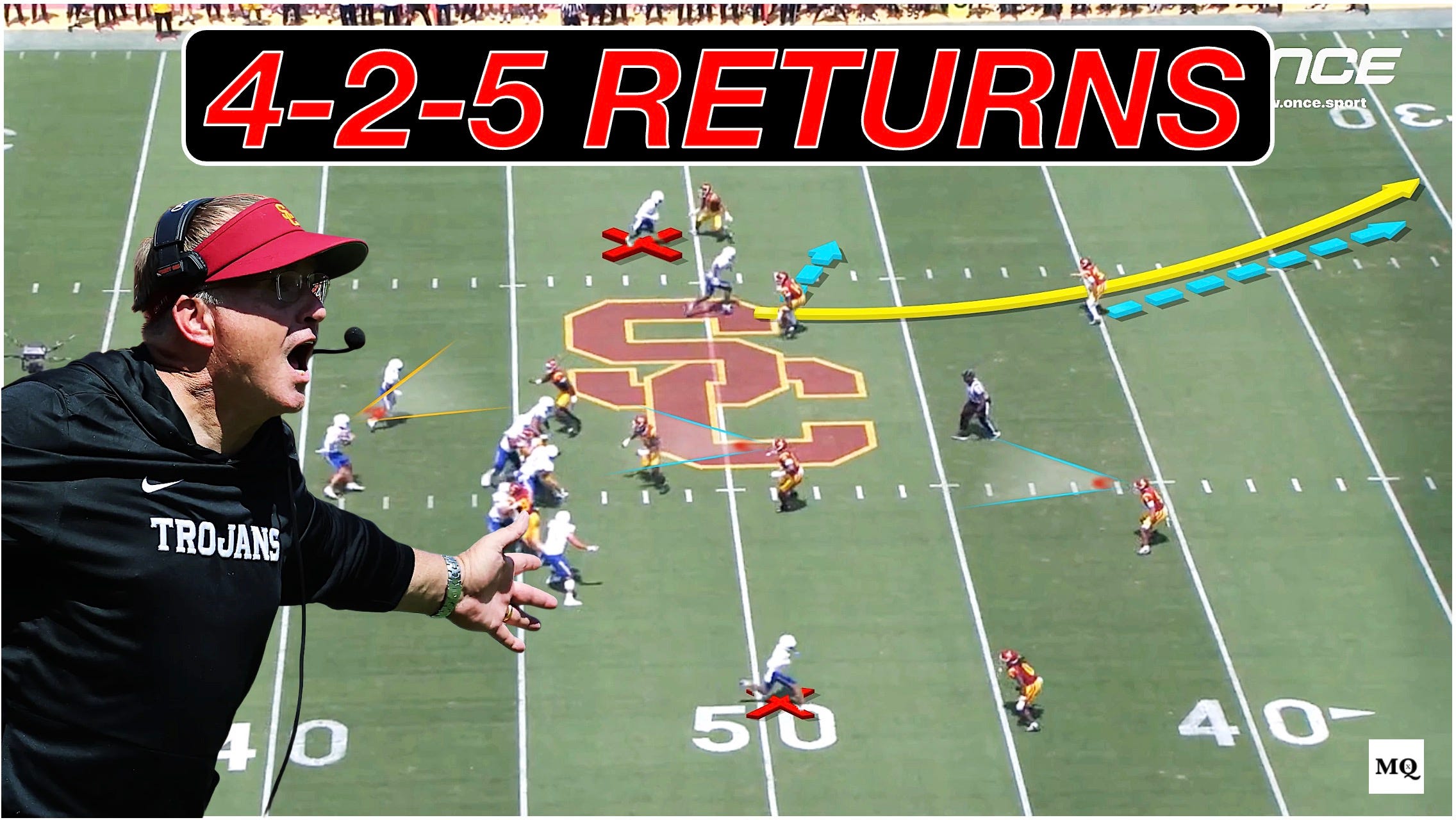
Newly elected Hall of Fame coach Gary Patterson is back on the sidelines, calling defense after a three-year hiatus. He wasn’t away from the game completely, though, after mutually agreeing to part ways with TCU at the end of October 2021.
First, a stint as the Special Assistant to the Head Coach at Texas for Steve Sarkisian in ‘22 and then a consultant gig for Dave Aranda’s Baylor Bears in ‘23. Why did it take him so long to get back in?
“I had to be out three years to qualify for the college Hall of Fame,” Patterson explained to The Hardline, a radio show on “The Ticket” in DFW. But he did have suitors during his “sabbatical,” one being USC’s Lincoln Riley.
Patterson was 0-6 overall against Riley, but his defense left an impression on the coach. At Big Ten Media Days this summer, the former Oklahoma Sooners head coach explained, “I've never coached against somebody that I thought was more unique and tougher to go against than Gary Patterson.”
One thing that stuck with Riley was Patterson’s ability to defend Oklahoma's high-caliber athletes with a relatively limited roster at TCU. “…[T]he talent level was different. He just consistently year after year adapts and coaches and develops in such a unique way.”
Riley is entering his fifth year in LA and has surpassed double-digit wins only in his first season, a sharp contrast to his first four years leading in Norman, where he won four straight Big 12 titles. Defense has been a consistent issue.
In his first two years, the Trojans’ defense was abysmal, ranking in the bottom third of DFEI, an efficiency metric similar to the NFL’s FTN DVOA. Alex Grinch, who was Riley’s defensive coordinator in Norman, was fired, and D'Anton Lynn was poached from cross-town rival UCLA. The defensive floor rose, but it was still not a top-25 unit.
As the landscape of college football changes, Riley is realizing that to compete nationally, and especially in the Big Ten, he needs a dominant defense. Last year, the Big Ten had four defensive units in the top 10 of the DFEI, including National Champion Indiana. If USC is going to return to dominance, it has to rebuild its defensive standards.
Riley first tried to get Patterson to join the staff in ‘23, but, as the coach said, he didn’t want to reset his Hall of Fame clock and was elected last December. Later that month, Lynn left LA for Penn State, his alma mater, opening the door for Patterson and Riley to reconnect on the golf course and eventually land a DC offer.
The unique defense Gary Patterson implemented resonated with lower-level coaches and enabled his Horned Frog teams to compete with higher-caliber opponents. TCU’s Rose Bowl victory in 2011 over highly touted Wisconsin was arguably its most famous victory.
That game featured a Badger offensive line averaging 320 pounds against TCU’s 270. The 2011 Rose Bowl was proof that the smaller, agile defense Patterson created could hang with traditional offenses, but the entire football world was about to change, and the Horned Frogs’ defense was already ahead of the curve.
Patterson is the quintessential “Quarters” coach, and his 4-2-5 defense is popular in every corner of the United States. Along with Virginia Tech’s Bud Foster, Patterson helped push the popularity of the 4-2-5 as a viable defense against the rising Spread offenses at the turn of the century.
In 2021, Patterson’s last year in Fort Worth, the Horned Frogs ran split-field coverages on 60% of their snaps, easily in the top five. When asked to help Texas the following year (’22), their split-field coverage rates rose from 42% to 58% (PFF).
Quarters is a malleable coverage and can carry extensive teaching and tags; it’s more of a defense than a coverage concept. What appears to be a simple Quarters 4-2-5 defense can carry a deep bag of “tags” and alignments to counter anything an offense throws at it.
One of the unique features of the TCU defense was its ability to separate the front six from the secondary (divorced). The front six worked independently in alignment with the five DBs. Going further, each side of the secondary could “match” the formation to their side (set), making the defense flexible to any alignment.
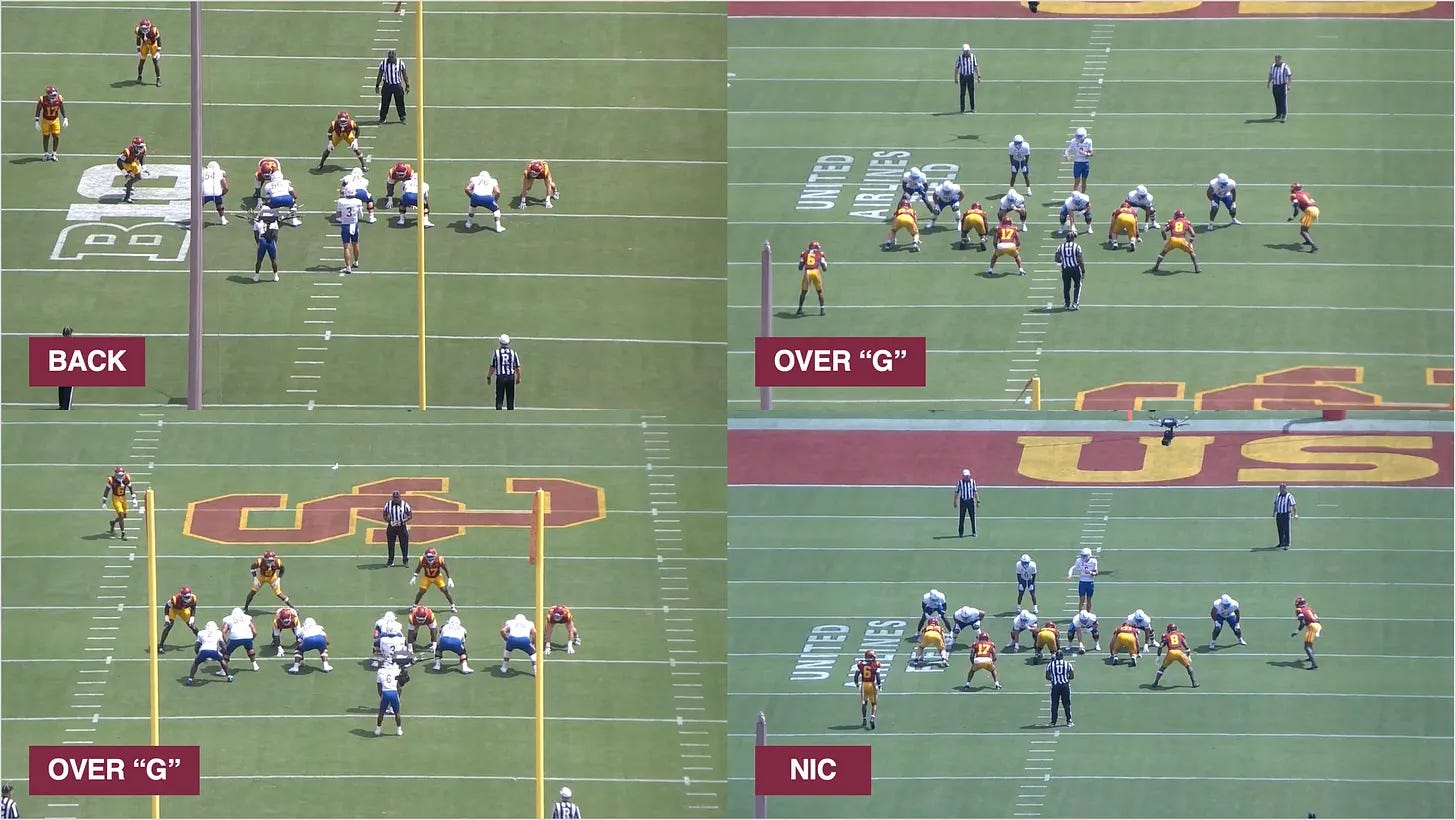
Patterson builds leverage tools with his defensive line to assist his unit without needing to check into different packages and alignments. The front is also amplified by stunts and formation checks that can be dependent on each week’s game plan, forcing coordinators to recalibrate during the game.
Ironically, as Patterson heads back to the sidelines, we are seeing a rebirth in the popularity of the 4-2-5. Teams in the late 2010s began shifting to Odd Fronts that plugged the B-gaps and allowed the defense to blitz from multiple points while still maintaining seven-man distributions (Creepers/Sims). Issues began to arise as teams realized their pass rush was limited and were constantly being forced to play in five-man fronts as multiple TE formations became more popular.
—
Below the fold for paid subscribers: A complete film breakdown of Gary Patterson's Week 0 defensive structure vs. San Jose State, detailing the alignment rules, coverage mechanics, and the technical details behind Special (Stubbie) and Solo (Poach).

Help your coaching staff eliminate hours of manual film organization. The Cutup Generator automatically creates custom cutups, charts, and title slides directly from your tagged data.
