


LSU defensive coordinator Blake Baker runs one of the most aggressive pressure systems in the country, with a near-50% Pass Blitz Rate (PBR), ranking seventh in the Power 4. That high-pressure approach is built into Baker’s schematic DNA, tracing back to his roots in the coaching tree of current Duke head coach Manny Diaz.
Having worked under Diaz at Texas, Louisiana Tech, and Miami, Baker reflects his mentor's approach by avoiding passive four-man rushes and instead relying on heavy blitz packages to dictate terms to opposing offenses consistently. The Tigers’ defense is unique, though, in that it operates within a structural paradox.
LSU has always been able to carry elite defensive back play. Man coverage has been a main tool for most defensive coordinators in Baton Rouge. Even the zone-dominant Dave Aranda played mostly “Wizard 1” (four-man rush with Cover 1) during his tenure.
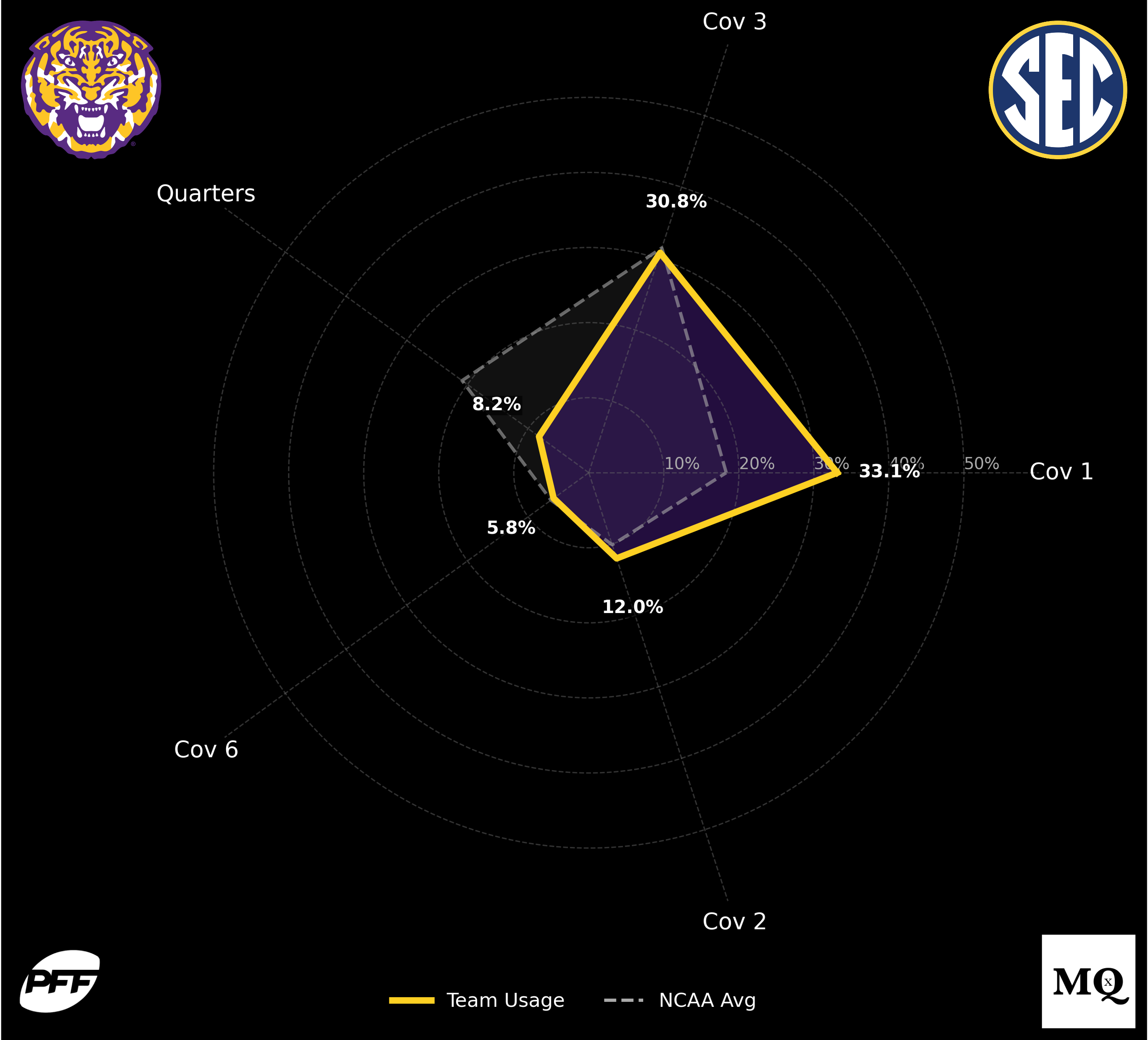
On standard downs, LSU ranked sixth among the Power 4 in Cover 1 usage (34%), with Cover 3 accounting for another 35% of the pie. Varied split field coverages made up the rest.
Coverage, for the most part, was not an issue, which is why the Cover 1 numbers were so high, but the pass rush was. LSU only recorded 24 total sacks, ranking 100th in Sack%. On passing downs, Baker had to consistently amplify the rush by sending numbers. The metrics validate his efficiency as a blitz designer:
Unblocked Pressures (UBP): 5th in the FBS, proving schematic manipulation over raw physical wins. When LSU blitzed, Baker understood how to attack the protections.
Average Time To Pass (ATTP): 16th in the FBS at 2.36 seconds, forcing the ball out before routes could develop. When LSU blitzed, the pressure got there fast, only amplifying an already stout secondary.
Though LSU operates one of the most aggressive systems in the country, sending five or more rushers on 70% of its blitzes, Baker leans heavily into “safe” zone coverages rather than exposing his secondary in man coverage. When sending numbers, the Tigers completely flip from a man-match defense to pure zone. LSU’s structural shift cuts its standard Cover 1 usage to 30% while flooding the backend with Fire Zone coverage on 52% of pressure downs.
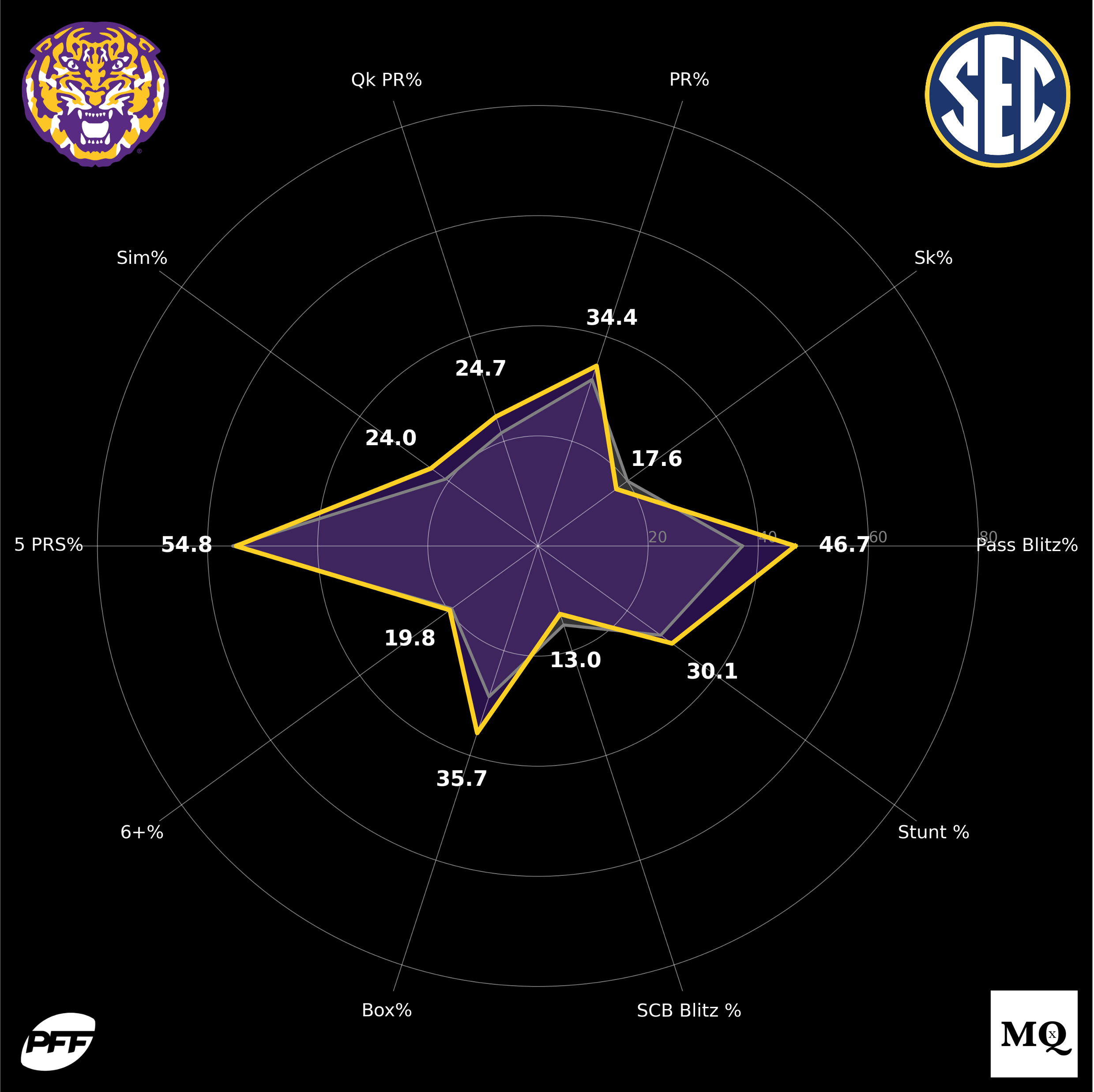
An extension of LSU’s main pressure package is the Hot, or “Eyes,” blitz (16%), which accounted for a third of the Tigers’ play calls against 12 personnel this past season. The Tigers almost completely avoided max blitzes and used Cover 0 on fewer than 2% of their calls.
LSU’s defensive backfield was elite playing Cover 1 and Match-3, but Baker’s DNA is built in pressure. Instead of relying on an average pass rush and exposing his secondary in man coverage, Baker leaned into his roots and used zone pressure as a reprieve on passing downs.
Protecting coverage was also reflected in LSU’s below-average use of the Slot defender in the blitz menu. LSU blitzed the overhang on less than 9% of its pressures, ranking 48th overall in the P4. By comparison, Diaz at Duke ranked 16th and doubled that percentage to 18%.
Baker’s limited use of overhang pressure illustrates a modern shift toward maintaining coverage integrity and using LBs to bring pressure, letting the coverage defenders cover.
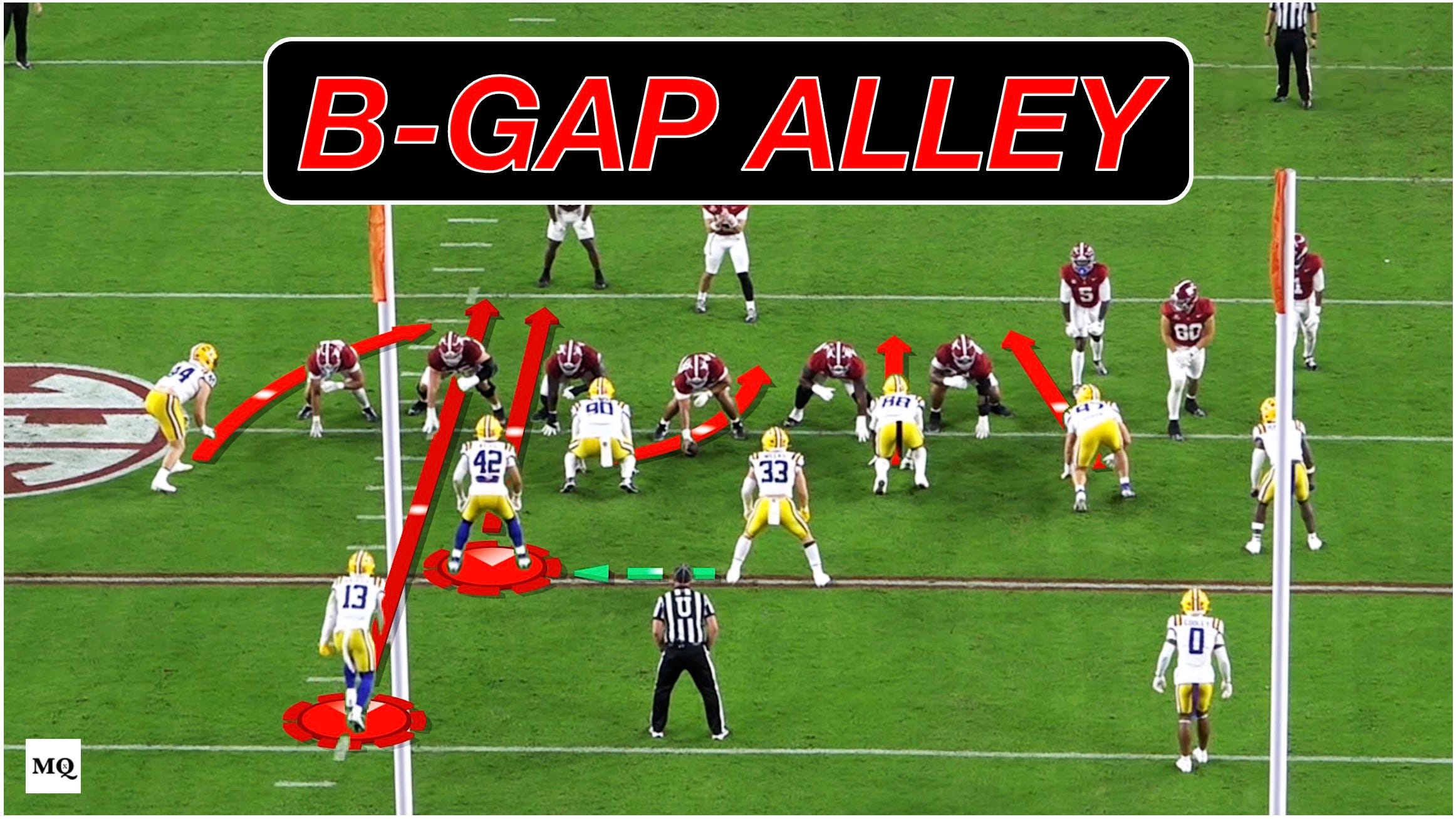
Below, I’ll break down the three main pathways Baker used to attack standard college offenses, with Clemson as “home base.”
—
Upgrade to Paid:
Problem: Standard four-man rushes are leaving your secondary on an island against modern offenses and leaning into man coverage can create too many “track meets.”
Solution: Unlock the full film-room breakdown below to see exactly how Blake Baker pairs interior B-gap punctures with “safe” Hot and Fire Zone tags to speed up the quarterback’s clock without blowing the roof off the top of the coverage.
To read the full breakdown, study the detailed mechanics, and access MatchQuarters’ complete archive of elite defensive scheme manuals, choose to become a paid sub.

