


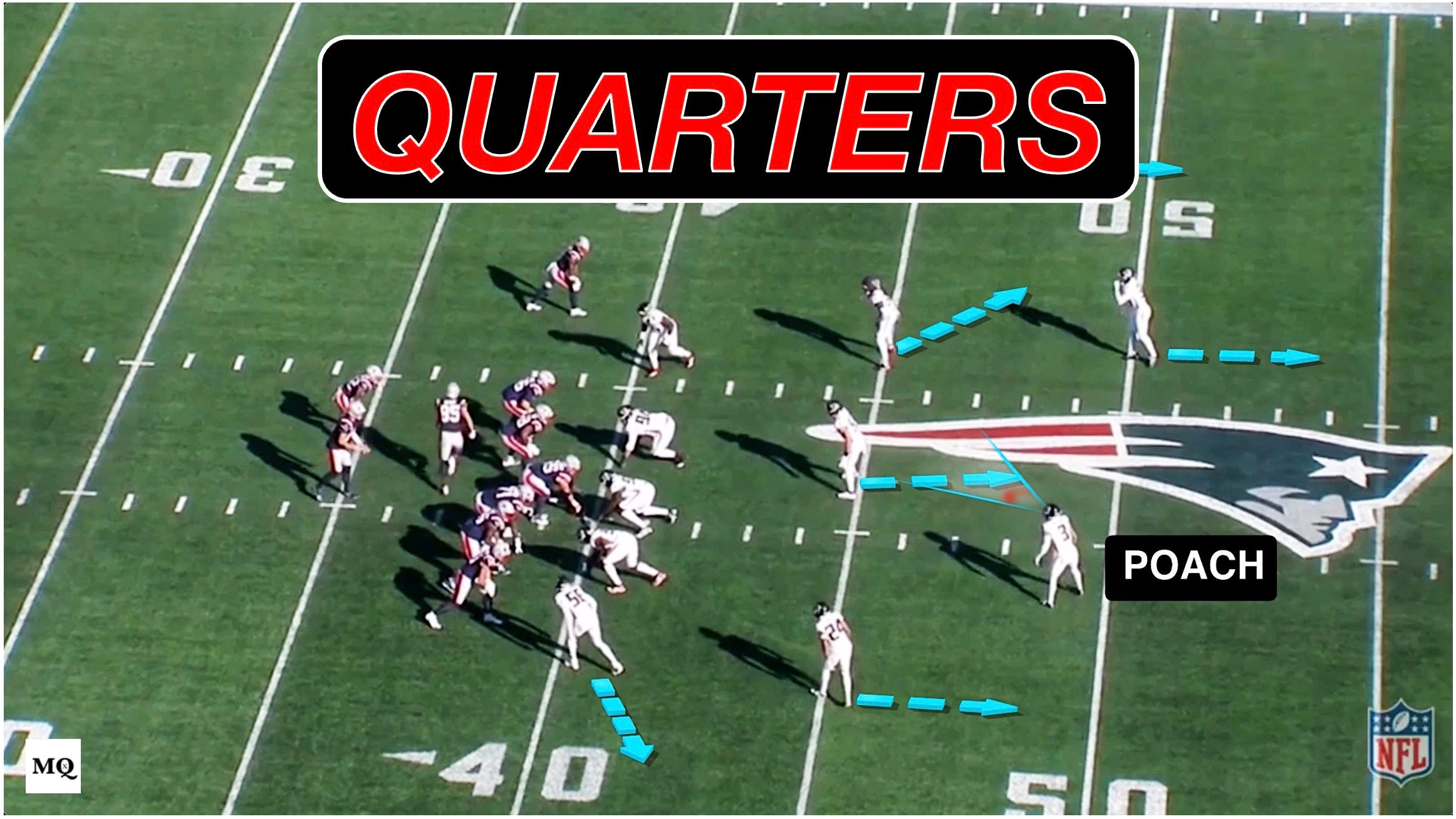
Defense is inherently reactive because the offense sets the table, creating a lag in adjustments that gives offenses an advantage until there isn’t one. The objective of the offense is to create space by any means necessary, with defenses designed to constrain that space. Football is currently in a space “war” as it moves past the Spread Era.
The main trend across football is the rise in heavy personnel packages by offenses to force the issue on early downs (1st and 2nd) by presenting a run-oriented attack. Base usage rose from ~23% in 2024 to over 27% in 2025. Offenses haven’t changed the basic nature of the run game, but have shifted how they are doing it and slightly increased the frequency on early downs.
Part of the engine for success for a modern offense is the play-action passing game. Ironically, an offense doesn’t need a good run game to reap the benefits of play-action passing. That should shoot a shiver down the spine of every defensive coordinator.
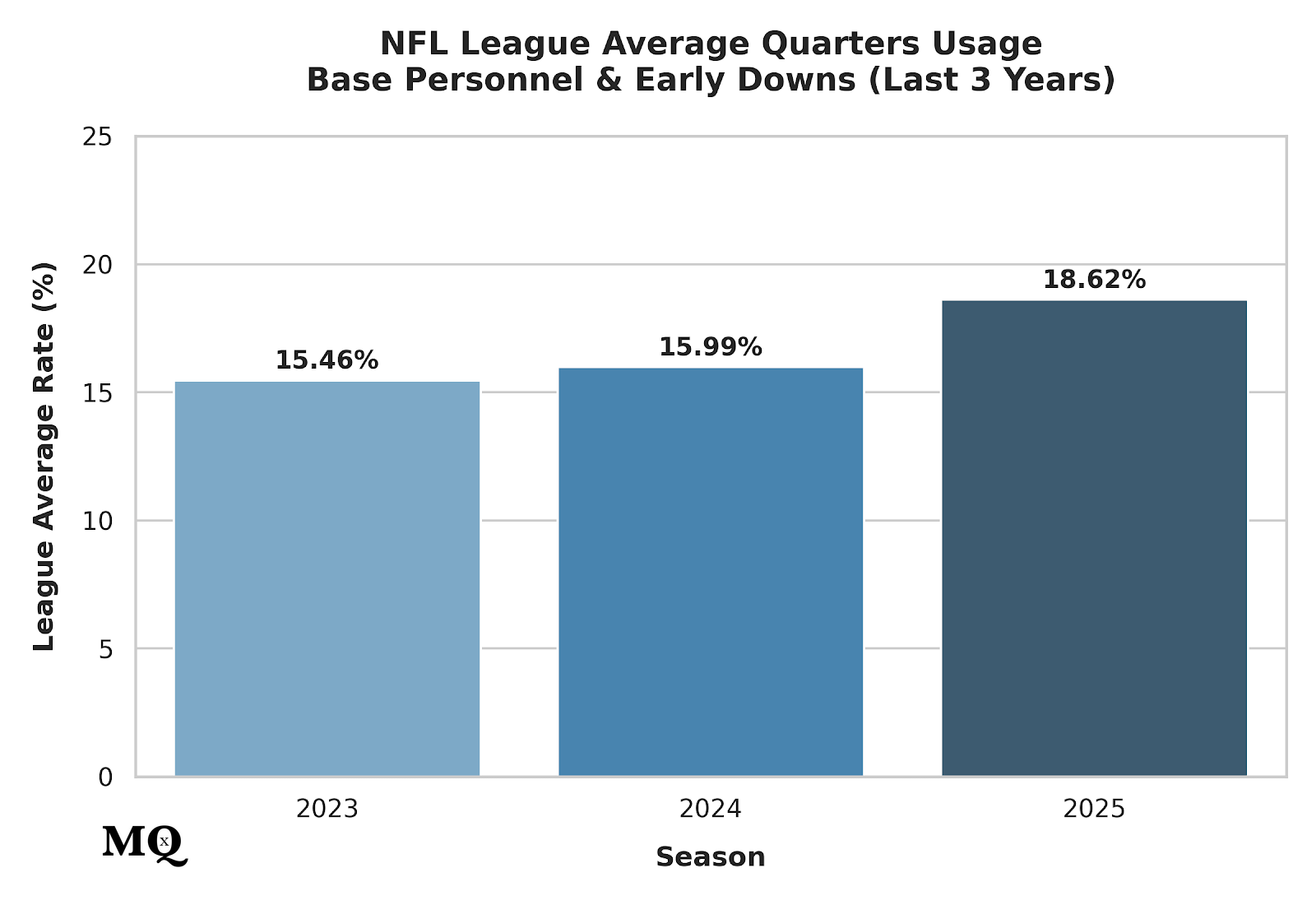
As a counter, more defenses are playing Quarters on early downs, especially in Base defenses, which have fewer coverage defenders. Part of this broader shift toward split-field coverages has been a 3% decline in Cover 1.
Cover 3 remains the dominant coverage on early downs, but teams are starting to limit play-action by pivoting to Quarters. Defenses are looking for a layered approach in the middle of the field rather than packing the box, as offenses understand how to punish isolated defenders or outmatched linebackers.
The issue, defensively, is in the structure. Closed-post or single-high coverages have loaded the box and are more vulnerable to run action, especially Wide Zone, which stretches the defense horizontally.
Two-high, or split-field, coverage alignment keeps the Safeties deep, giving them more time to “see” the play action and adjust accordingly. It is easier to play down than to play back, and the data is proving that out. Plus, it uses simple defensive logic: don’t allow the deep pass (fatals)!
Even Cover 3 ecosystems are changing. More defenses are playing two-high shells and using “match” principles in their schemes. The ideological shift in closed-post coverages illustrates an alignment within the NFL community of the diaspora of Fangio-adjacent principles and the adoption of the two-high shell pre-snap meta.
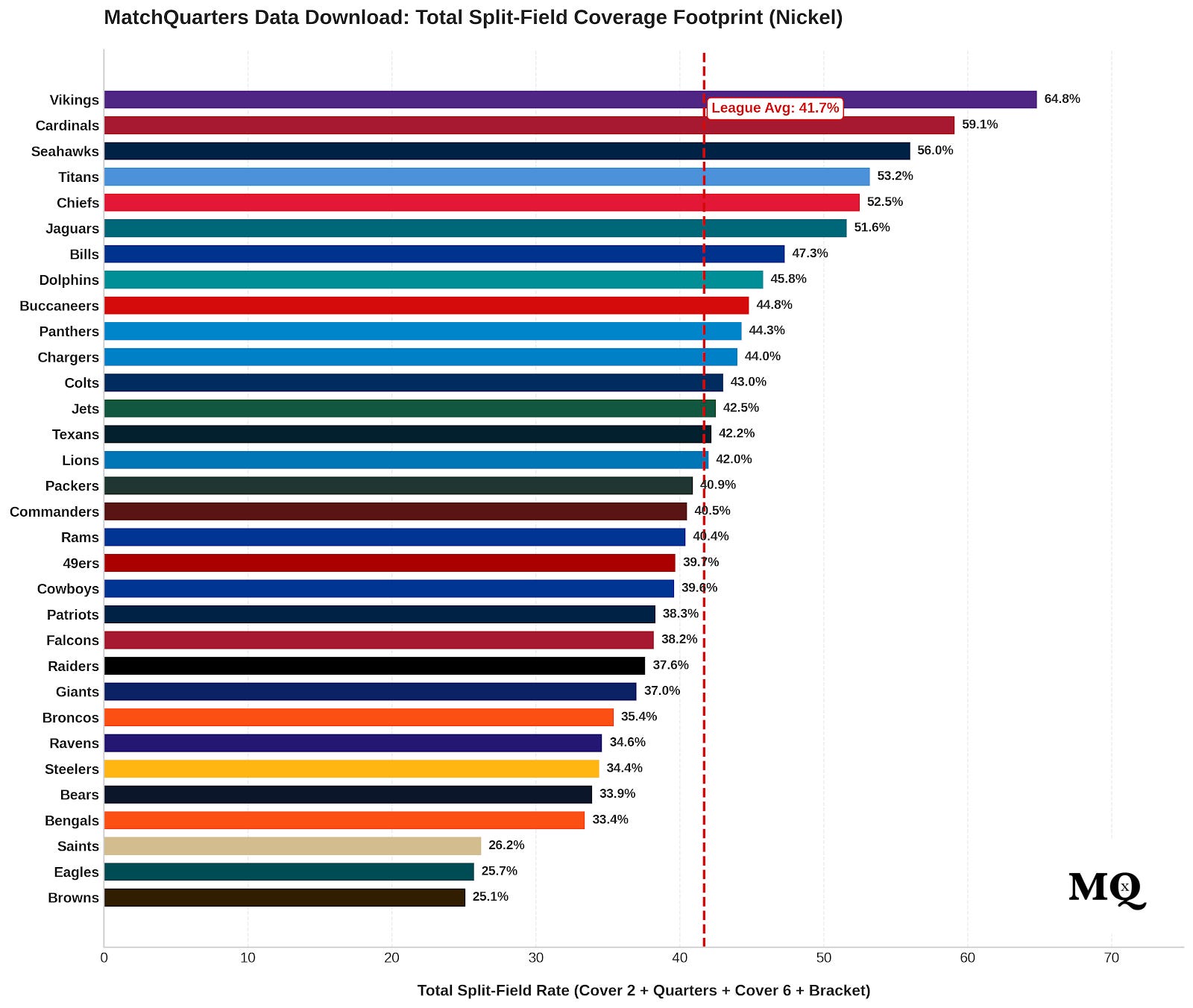
As for split-field coverages, especially in Nickel packages, NFL usage has steadily grown over the years, reaching its highest level in the past five years at 41.7%. Quarterly coverage within those philosophies grew by 2% in 2024.
The Atlanta Outlier
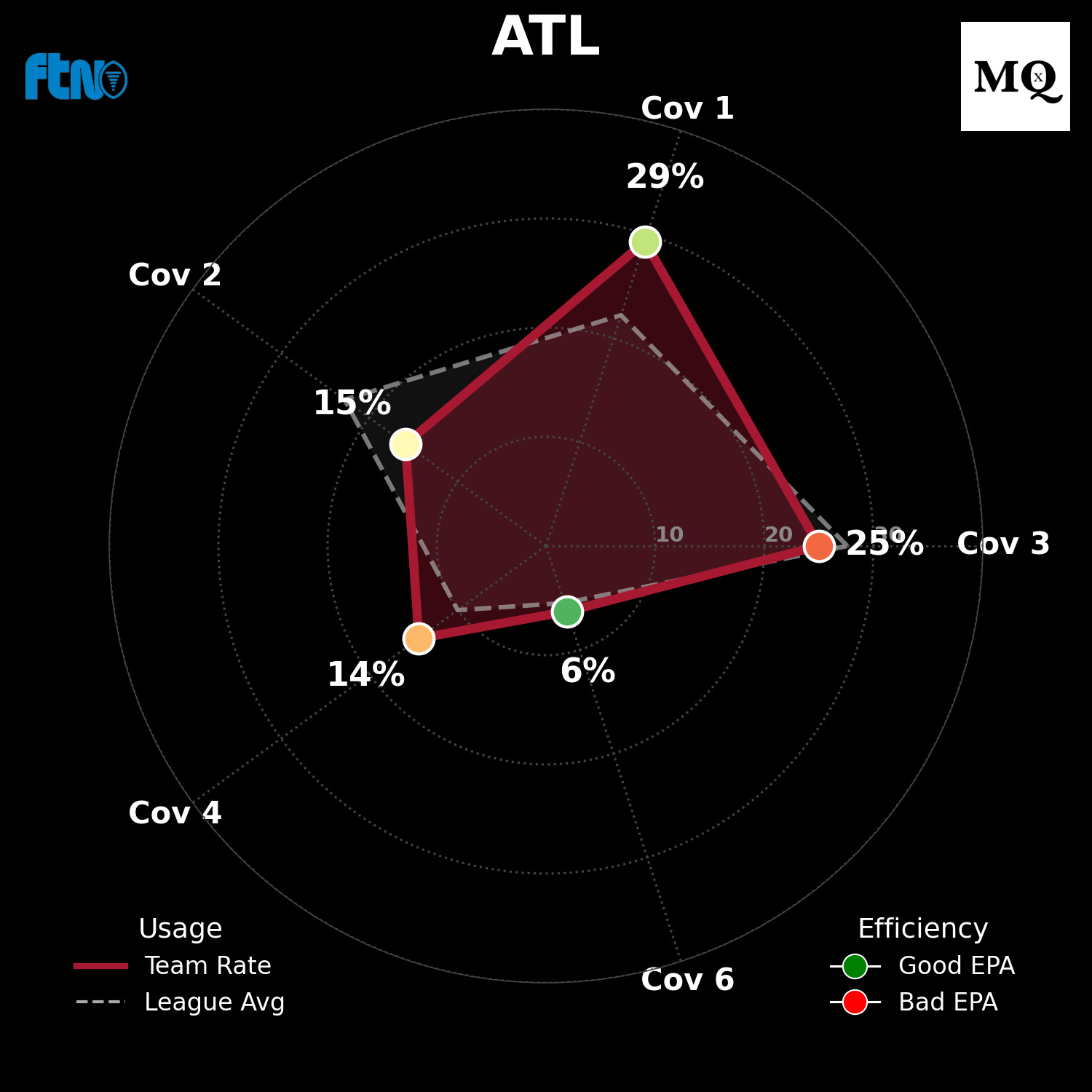
One of the more interesting “Quarters teams” in the NFL is Atlanta, which ranks below the league average (38%) in Nickel defense. It isn’t their volume of Quarters coverage that sets them apart; it’s the composition of that coverage that makes them unique.
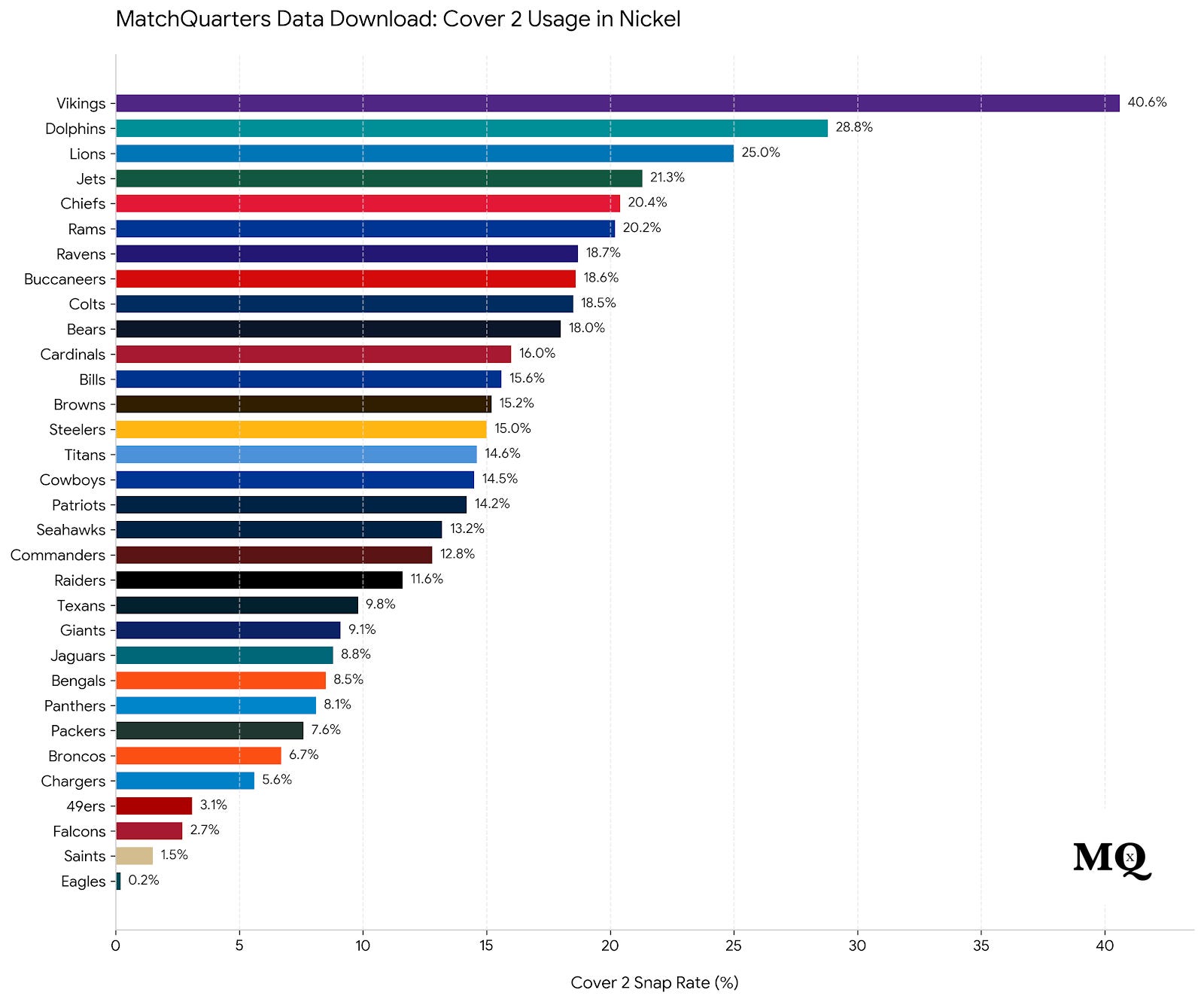
Starting in 2023, NFL offenses countered defenses utilizing match rules with more motion, condensed sets, and heavier packages. To address spacing issues, teams raised their Cover 2 rates by 4% in '24. In ‘25, more teams refined their split-field menus, reducing their use and increasing Quarters rates.
The refusal to pivot to more non-traditional Tampas and other forms of Cover 2, which have grown in popularity, is a philosophical one that pairs the system with other split-field dynamic playbooks, such as Fangio-adjacent staffs.
In Atlanta, the defense ranks near the bottom of the league in Cover 2 usage, at under 3%. Ulbrich didn’t want to add more to a defense that has struggled in recent years to generate any pressure; that would have been a disaster. Instead, Ulbrich addressed Atlanta’s issues by getting better at executing the tighter coverage menu he carries.
The Ulbrich Blueprint
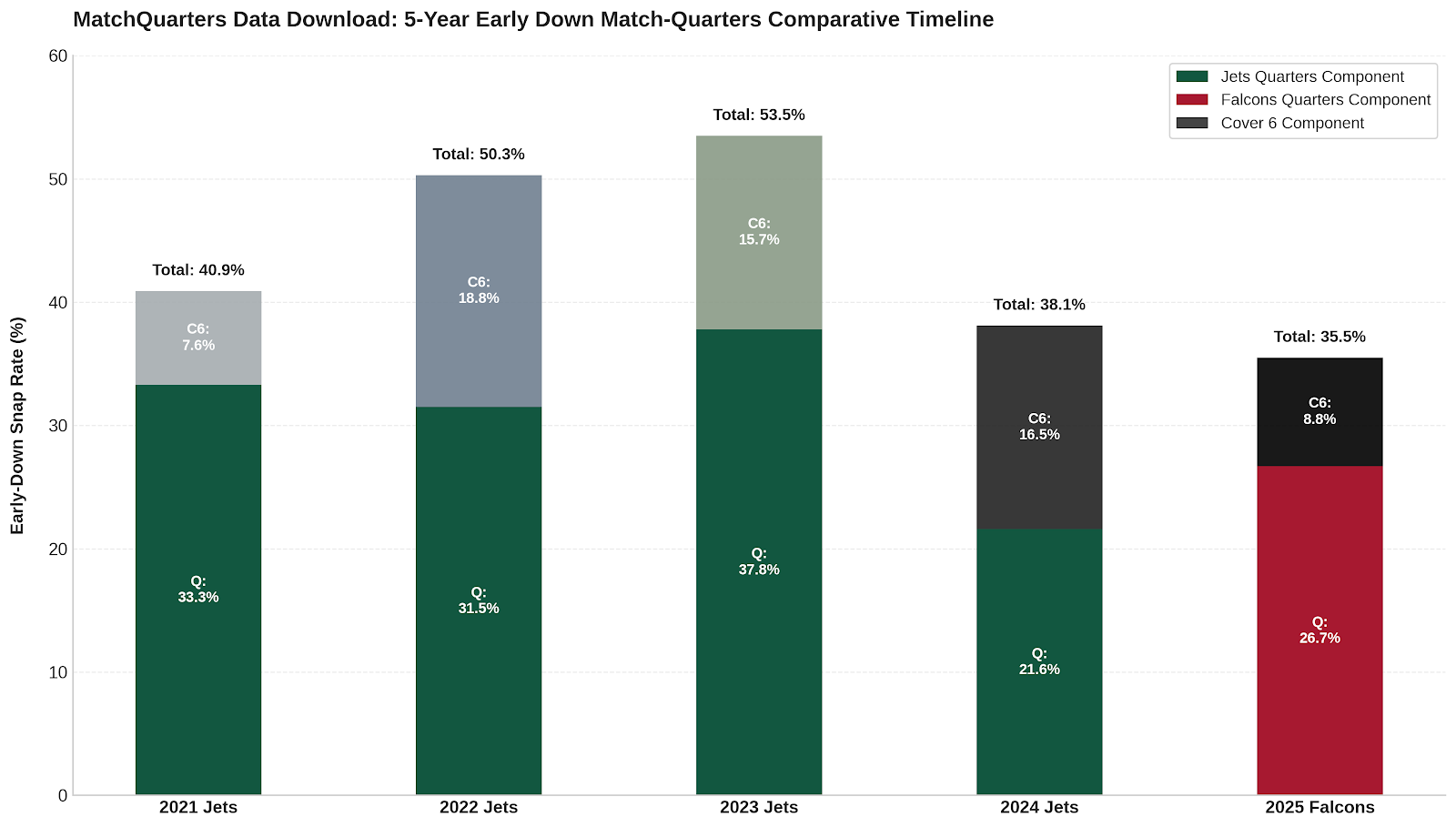
Ulbrich and Saleh in New York had some of the highest Quarters rates in the league. That number dipped significantly in 2024, when Saleh was fired. Once in Atlanta, Ulbrich was paired with Raheem Morris, who came from the Fangio-adjacent tree, but the Cover 6/8 “rotations” never showed up in volume ‘25. However, Ulbrich’s Quarters percentage was higher than his ‘24 number.
With the Jets, Ulbrich has arguably the best CB duo in the league in Sauce Gardner (Colts) and DJ Reed (Lions). Playing Match Quarters requires CBs that can play man-to-man on the outside, so it is understandable why New York carried such a high number.
Ulbrich’s scheme, like most NFL defenses, is anchored in Cover 3, especially in Base. Atlanta ran Cover 3 on almost 50% of its base downs and about a third of its downs in Nickel. When in Base, man-coverage dropped by 11% compared to Nickel, while Quarters rates rose by more than 9%. Without that extra defender, Atlanta wasn’t willing to give the offense one-on-ones across the board.
75% of all downs in Base are in a “binary” Cover 3 or Quarters choice (think Texans), eliminating variance. One trend from ‘25 is the growth in Quarters usage on early downs, especially in Base defenses.
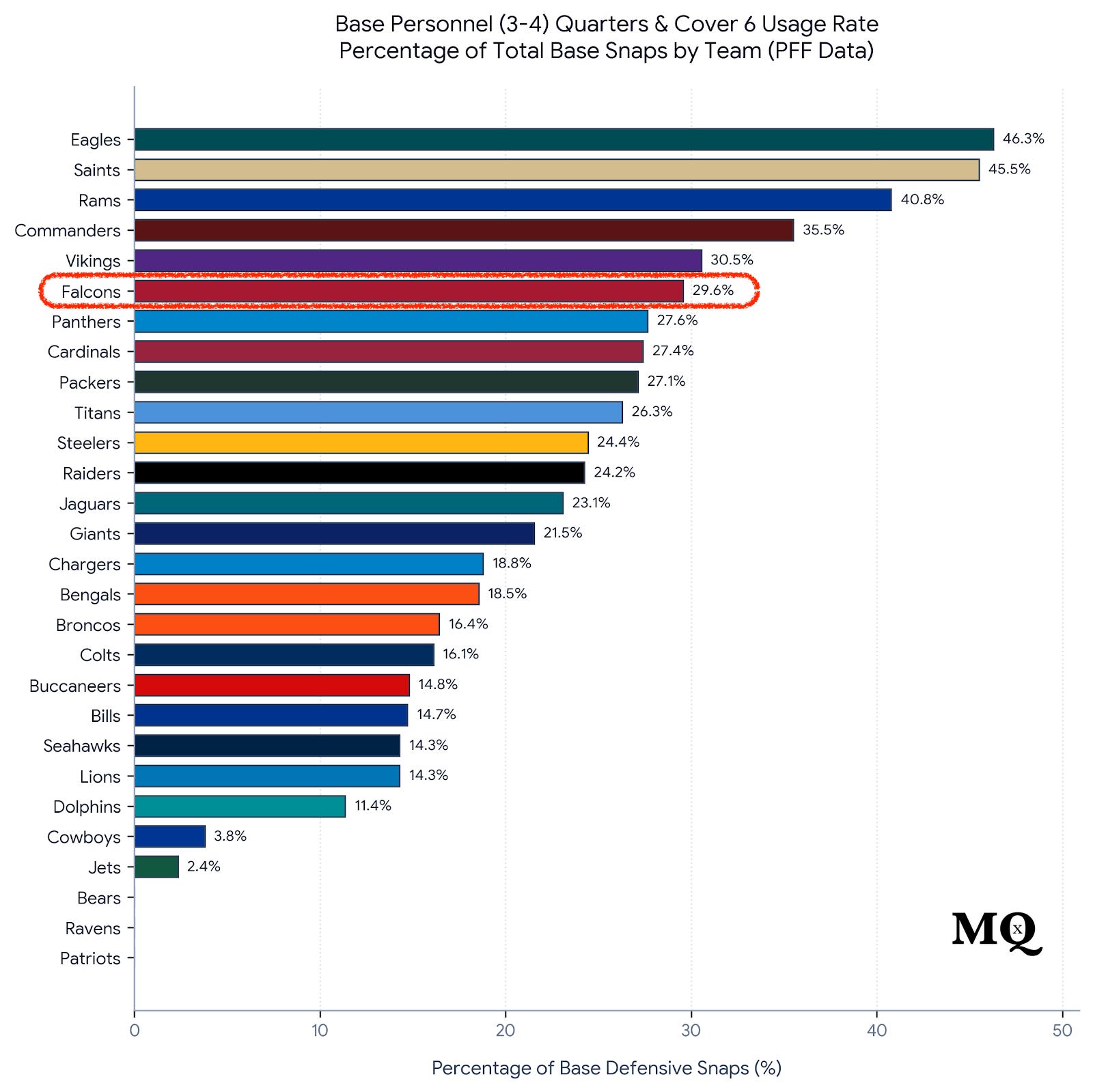
Above, the chart illustrates where the Falcons sit around the league, using Quarters on just under 30% of their snaps. The Falcons are unique in this setup, as the Eagles, Saints, and Rams are all Cover 6-reliant and stem from a different philosophy than the Commanders or the blitz-centric Vikings (Hot Quarters).
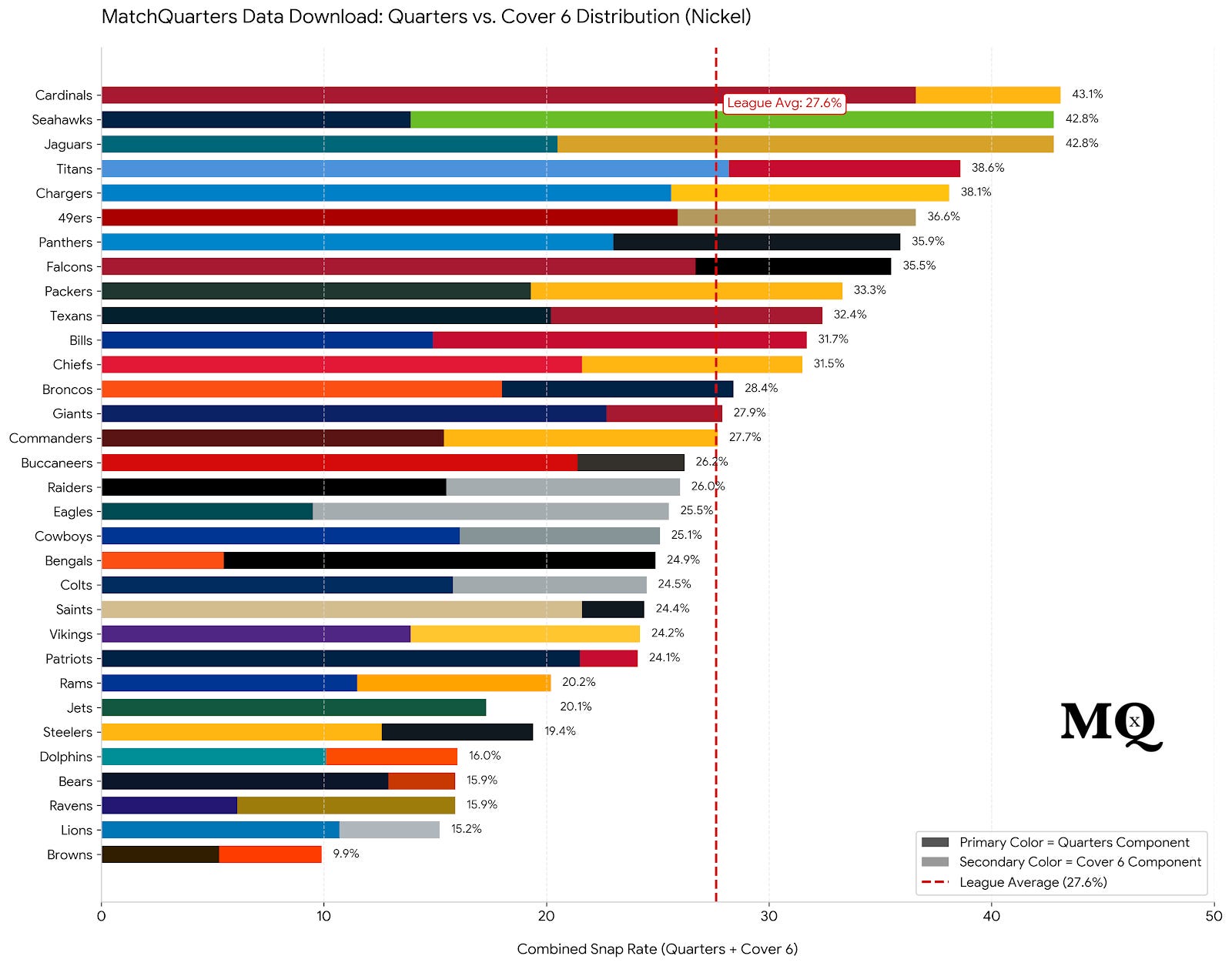
Even in Nickel, the Falcons are unique. Compared to the other teams that use high amounts of split-field coverage, the Falcons are mainly doing it with Quarters. Only the Cardinals had a higher usage number. During the offseason, Atlanta added the Cardinals’ Safety Coach, Patrick Toney, signaling Quarters isn’t going anywhere, even as the head coach changes in Atlanta.
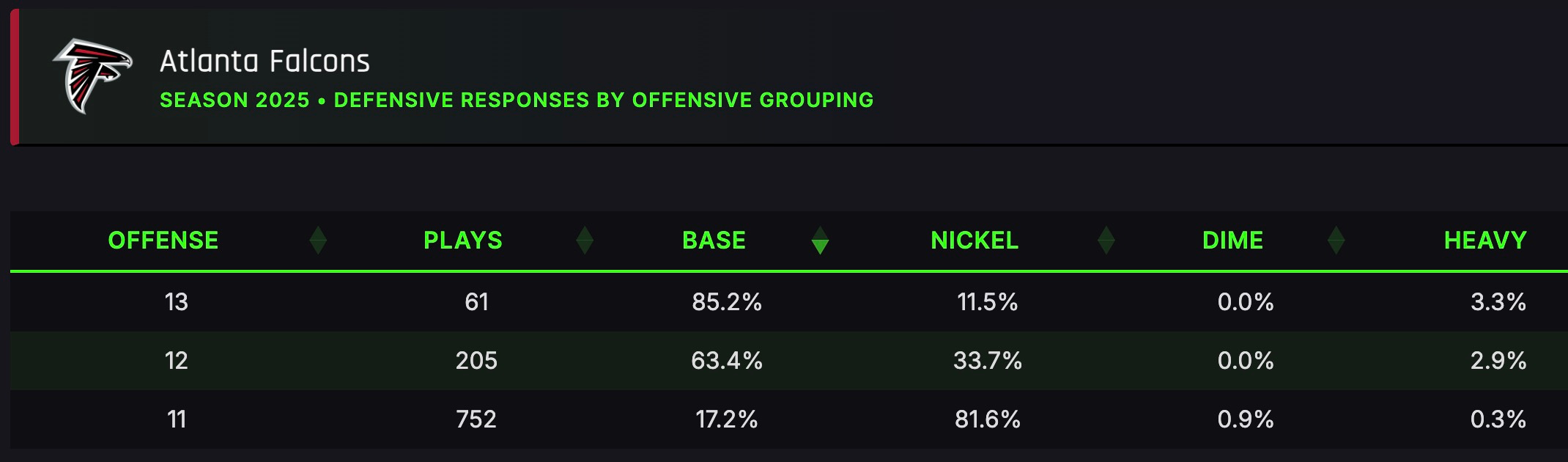
Overall, Nickel snaps were down 16% in 2025 as more offenses used 12-personnel packages. Offenses are challenging “lighter” philosophies to meet their extra gap and blocker with Base. The logic, offensively, is that the matchups are better for their hybrid TEs, and the coverage menu is pared down, making the defense more predictable.
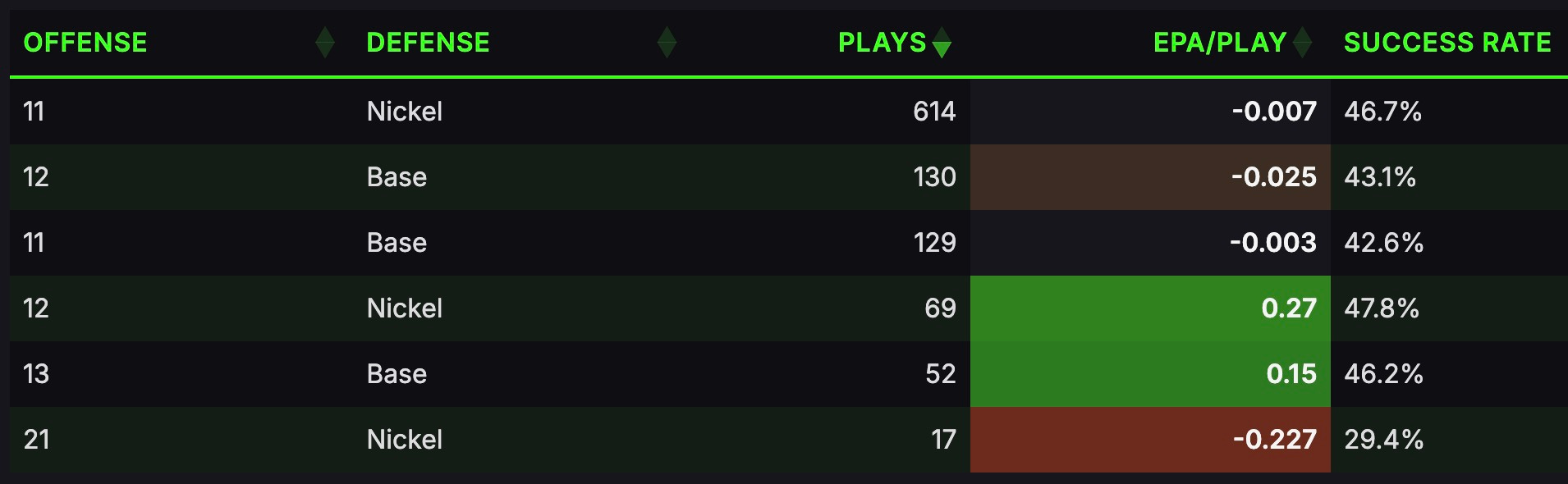
Atlanta’s coverage menu translates from Base to Nickel seamlessly and even increases in split-field usage. Atlanta’s matchup style and ability to carry a full menu stabilized the defensive performance regardless of the package.
Nickel Billy Bowman is 5-10 and 200 pounds, but he missed much of the season because of an injury in place of Dee Alford, who weighs in at 175. That mass difference forced the Falcons to use more Base personnel.
In 2026, the hope is that a full year in the system and a healthy season will allow the Falcons to increase their Nickel usage. Ulbrich had a similar reaction in New York when looking at his ‘23 and ‘24 Nickel rates. Nickel in ‘23 was on the field 82% of the time on early downs, compared to 67% in ‘24, when he had injuries at Nickel and the NFL landscape began to pivot to heavier packages.
Film Study
Below, I take a look at Atlanta’s Nickel and Base Quarters structures. One common theme throughout is the use of a five-man front alignment. Whether it was James Peirce and Jalon Walker in Base or a “walked” Kaden Ellis (Saints), Ulbrich was trying to get to five-man spacing to help with the run defense on early downs.
Still, the split-field coverage remained constant, and the Falcons’ unique style reflects the NFL’s new meta: playing Quarters on early downs, especially in Base. Let’s dive into the tape!
—
Offenses are using heavy personnel to isolate your LBs and weaponize early down play action. Stop playing into their hands.
Unlock Jeff Ulbrich’s complete Quarters structural philosophy, five-man spacing adjustments (“Walk”), and full film-room breakdowns on how the Atlanta defense counters the modern heavy-set meta.
Subscribe to unlock the full article.

