


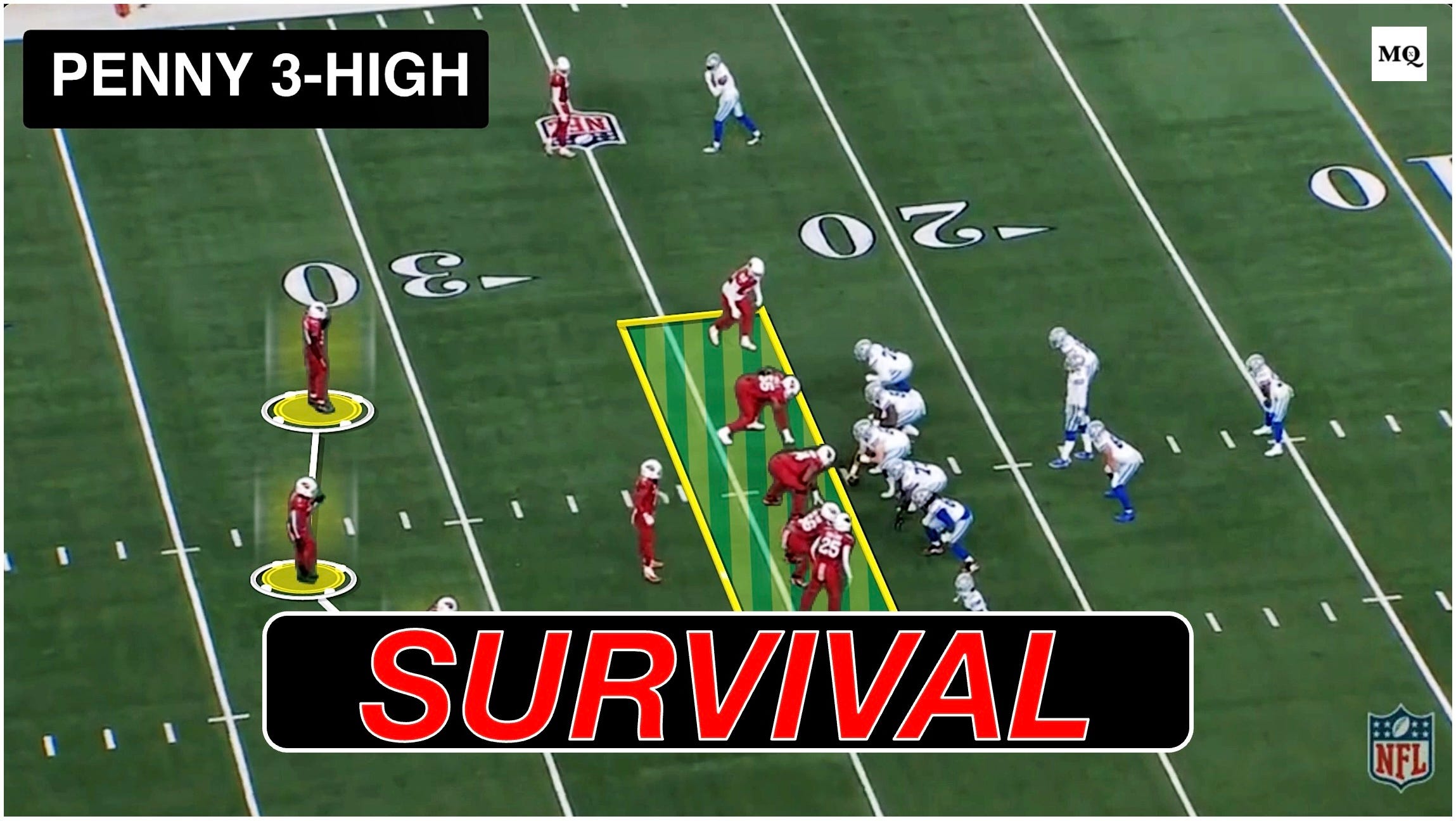
Arizona’s defense is an exercise in “schematic survival.” By pairing a positionless secondary with an outmatched front, Nick Rallis has built a system that relies on “passive pressure” (mental) rather than physical dominance. Being schematically unique is not something many defenses strive for in the NFL, but in Arizona, it wasn’t an option.
The league is notoriously close-knit and copycat. Though the Jonathan Gannon era ultimately wasn't a success, it provided the league with one of the best examples of innovation born of desperation (i.e., a lack of talent).
Most pundits and fans alike were a little shocked that the organization retained Nick Rallis. Arizona interviewed multiple candidates, including Gus Bradley (former Colts DC), Aubrey Pleasant (former Rams PGC), Dino Vasso (DBs/Texans), and Karl Scott (Seahawks PGC).
None of the names listed were ultimately hired, with Bradley, according to SI’s Albert Breer, choosing “to go to Tennessee with Saleh, despite a richer financial offer and the opportunity to call plays in Arizona.” Scott, another high-profile candidate within the division, also turned down the opportunity, returning to Seattle.
Ultimately, outside of Bradley, no candidate had actually called plays in the NFL. ESPN’s Jeremy Fowler tweeted about Rallis’ retainment, explaining, “[Arizona] wanted playcalling experience. Rallis brings that and continuity.”
Innovation Born of Desperation
There were high hopes in the desert for much-needed defensive improvements within the NFL’s most unique defense. Edge Josh Sweat was acquired from the Eagles, along with Dalvin Tomlinson (Browns), and the ageless Calais Campbell (Dolphins), to assist in the growth of 1st Round draft picks Walter Nolan III (‘25) and Darius Robinson (‘24).
In the backend, Will Johnson was scooped up on the 2nd Round; a player that many had as a 1st Round prospect. All things were pointing north for a defense that was in serious need of a talent injection. Then the injury bug took a massive bite out of the roster.
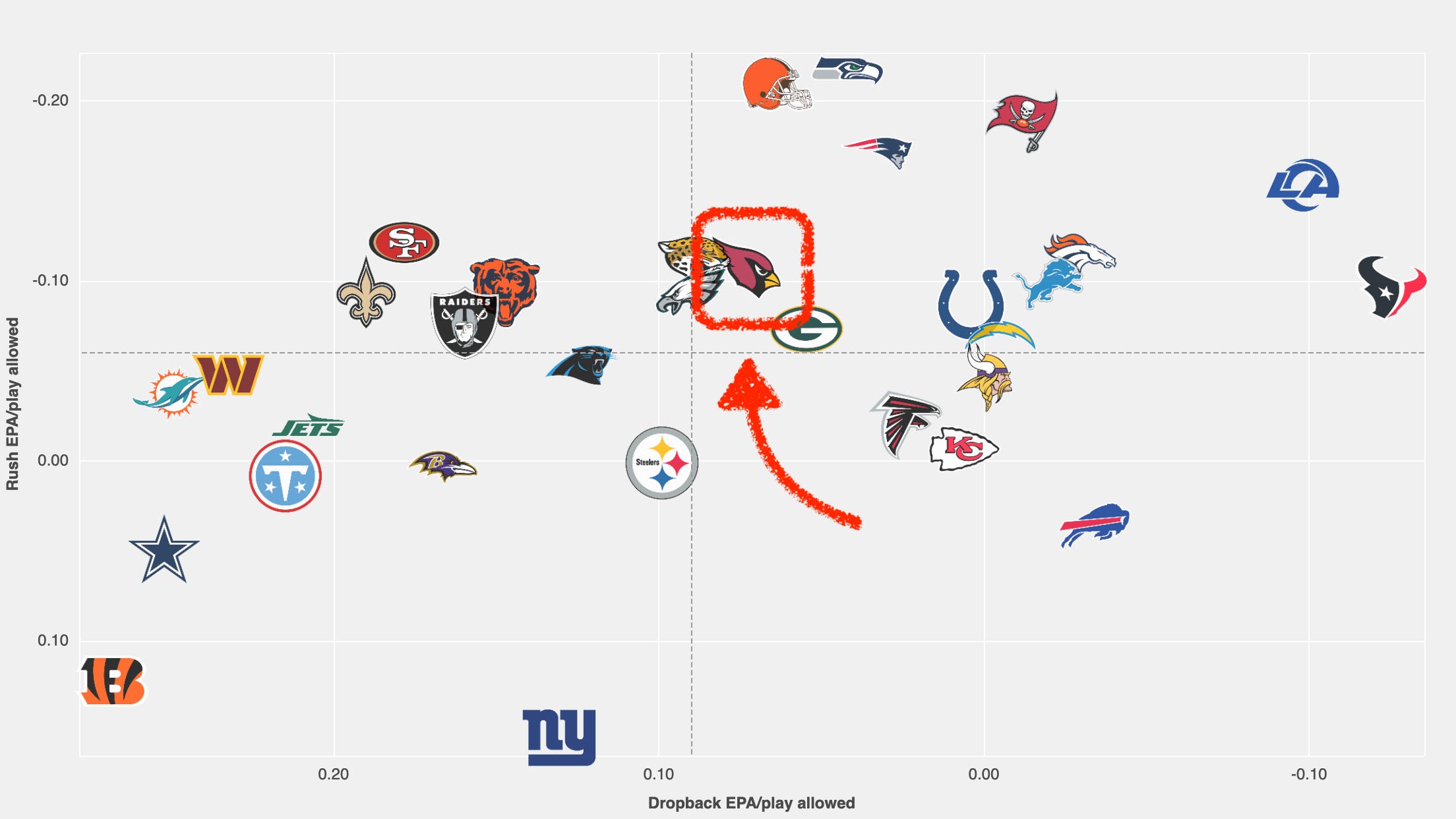
Nolan, the draft class's centerpiece, started and ended the year on IR. In the secondary, Nickel Garrett Williams and CB Starling Thomas were out from the start. Even with a disjointed beginning to the season, the Cardinals were holding steady as the 16th-best defense in EPA and the ninth-best run EPA.
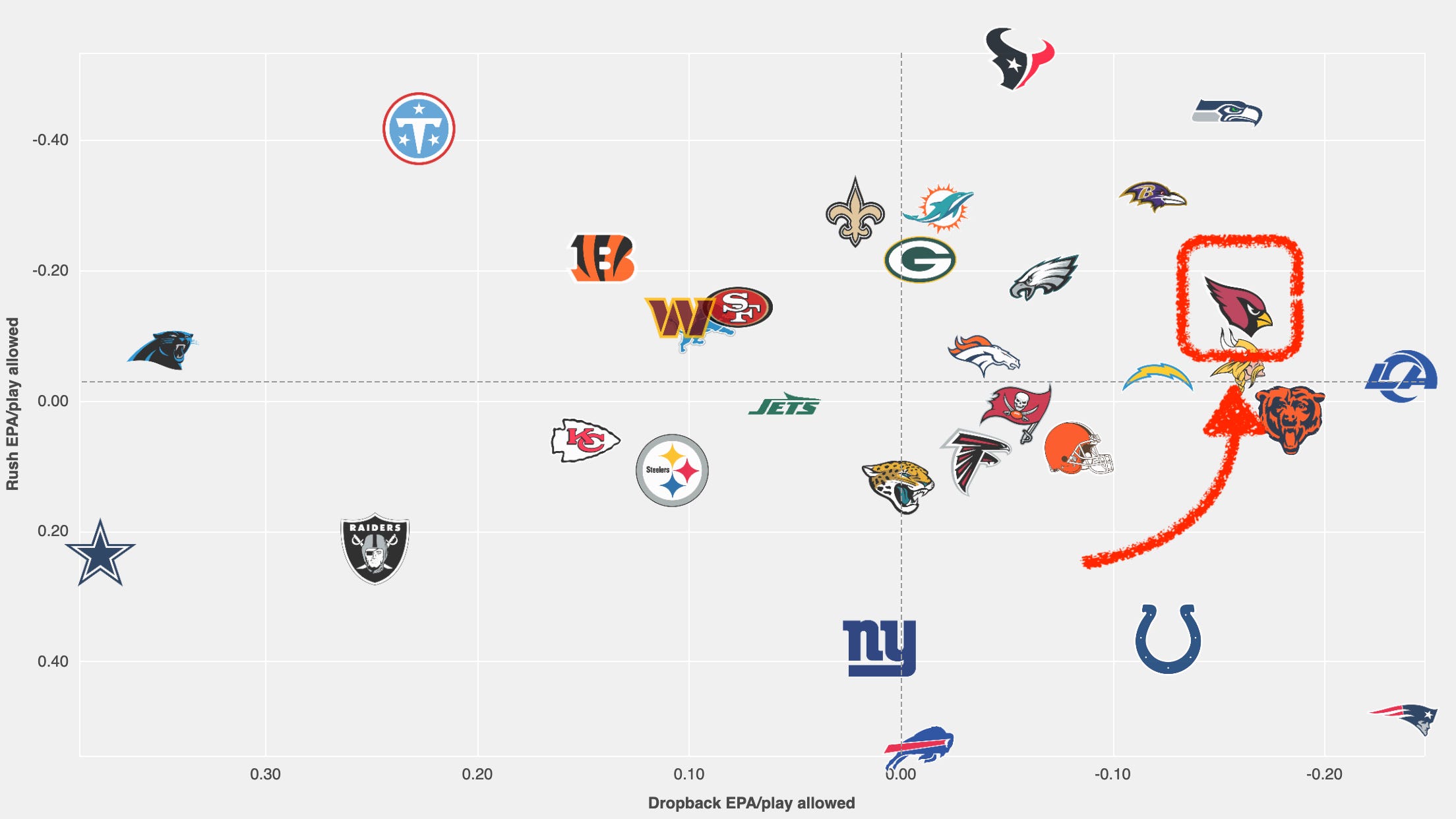
But by Week 8, Arizona was 2-5. They’d win one more game, Week 10 versus the Cowboys, and sputter to an 0-9 finish. Both sides of the ball played poorly, but Rallis stabilized the defense at times with his unique scheme, especially on 3rd downs before Budda Baker was injured late in the season.
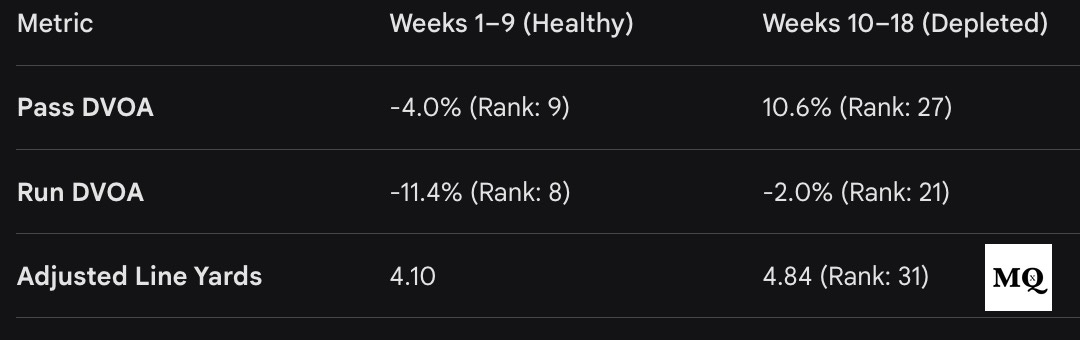
Rallis ultimately had to protect a young CB room and win consistently with an outmached front. For the Cardinals, this was nothing new and exactly what the defense’s design was built to handle. Arizona’s strength comes from its “positionless” secondary, in Baker, Jalen Thompson (Cowboys), and Dadrion Taylor-Demerson.
—
The Problem: How do you maintain box integrity against heavy personnel when your front is outmatched, and your best players are in the secondary?
The Solution: Below, I dive into the technical mechanics of Arizona’s “Build a 3-4” concept. I break down the safety rotations and post-snap structures that allowed Nick Rallis to stabilize a “light” defense on early downs (and before injuries), while ranking #1 in coverage disguise.
Subscribe to the MatchQuarters to unlock the full technical breakdown, film clips, and the 2026 personnel forecast.

