


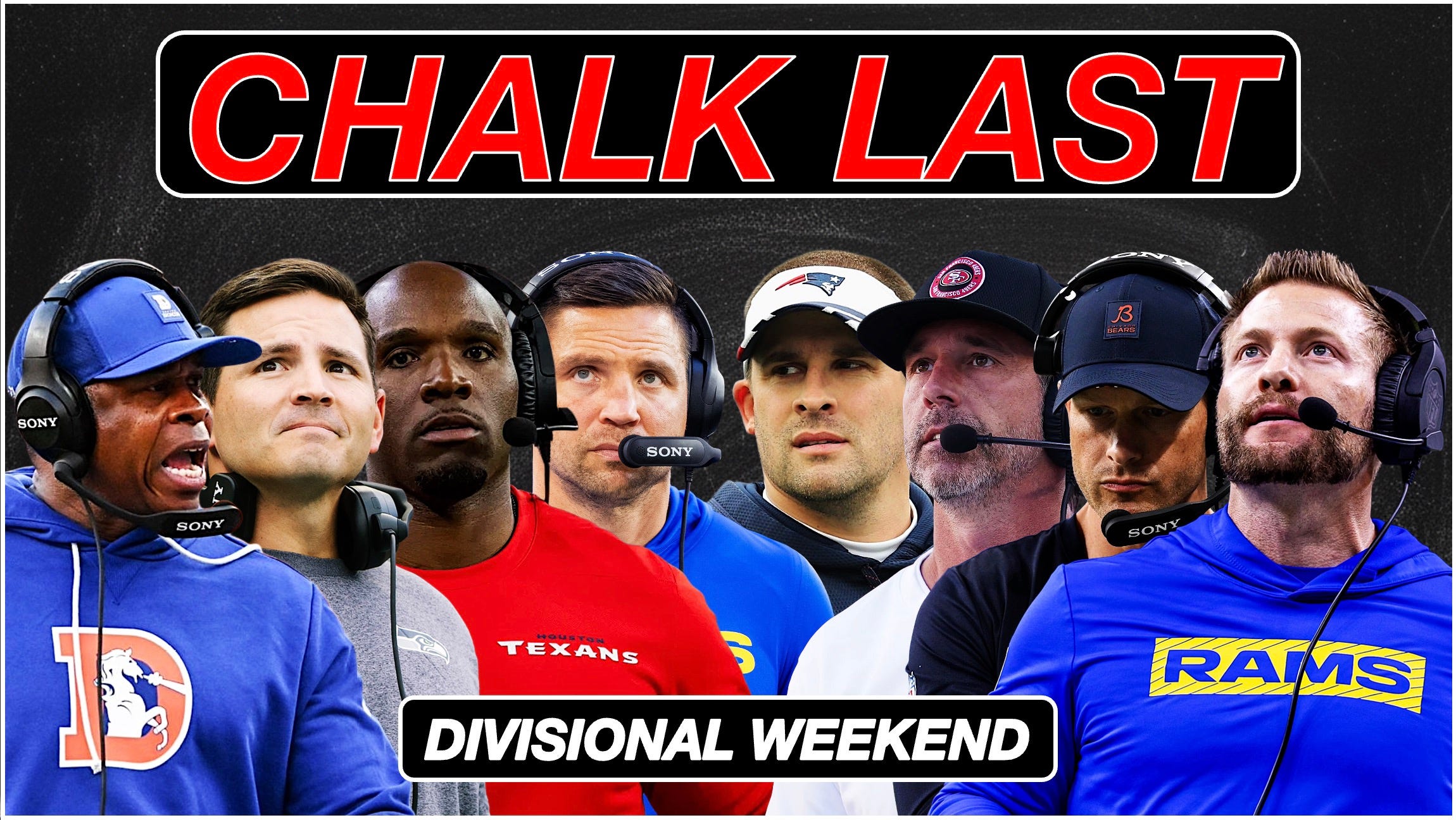
This weekend features a clash between the traditional philosophies—like Denver’s aggressive Man-Match—and the “Modern Meta” of light-box spacing seen in Seattle and Los Angeles.
These aren’t just physical battles; they are games of schematic chicken.
» Which coordinator will blink first and abandon their DNA when the opponent starts poking at their defenses?
Below is your Defensive DNA Dashboard for the 2026 NFL Divisional Round.
AFC DIVISIONAL ROUND
Saturday, Jan. 17 (7) Buffalo Bills at (1) Denver Broncos 3:30 p.m. ET (CBS)
Denver Broncos (Defense)
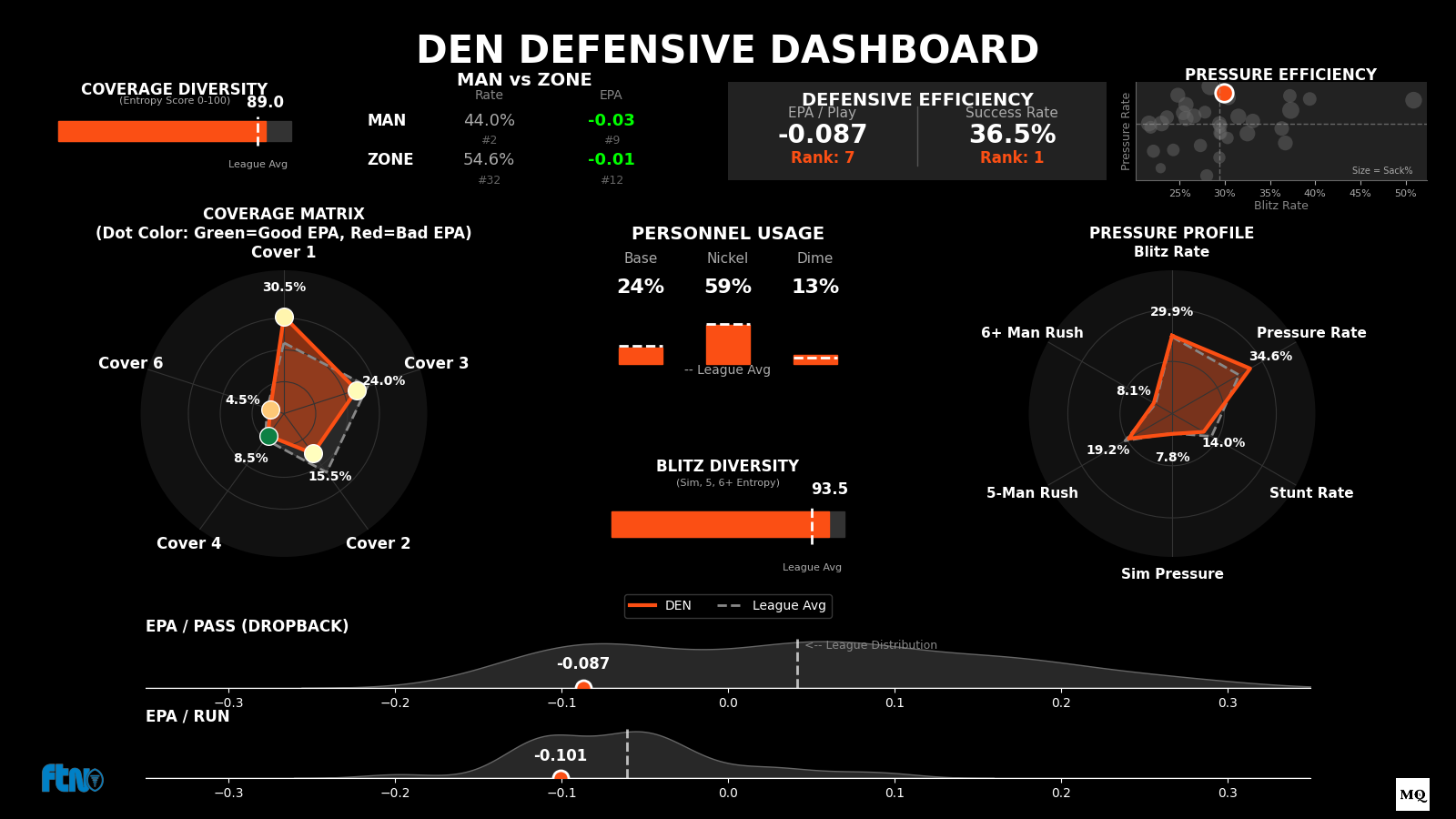
Personnel: Base 24.2% | Nickel 58.9% | Dime 13.0%
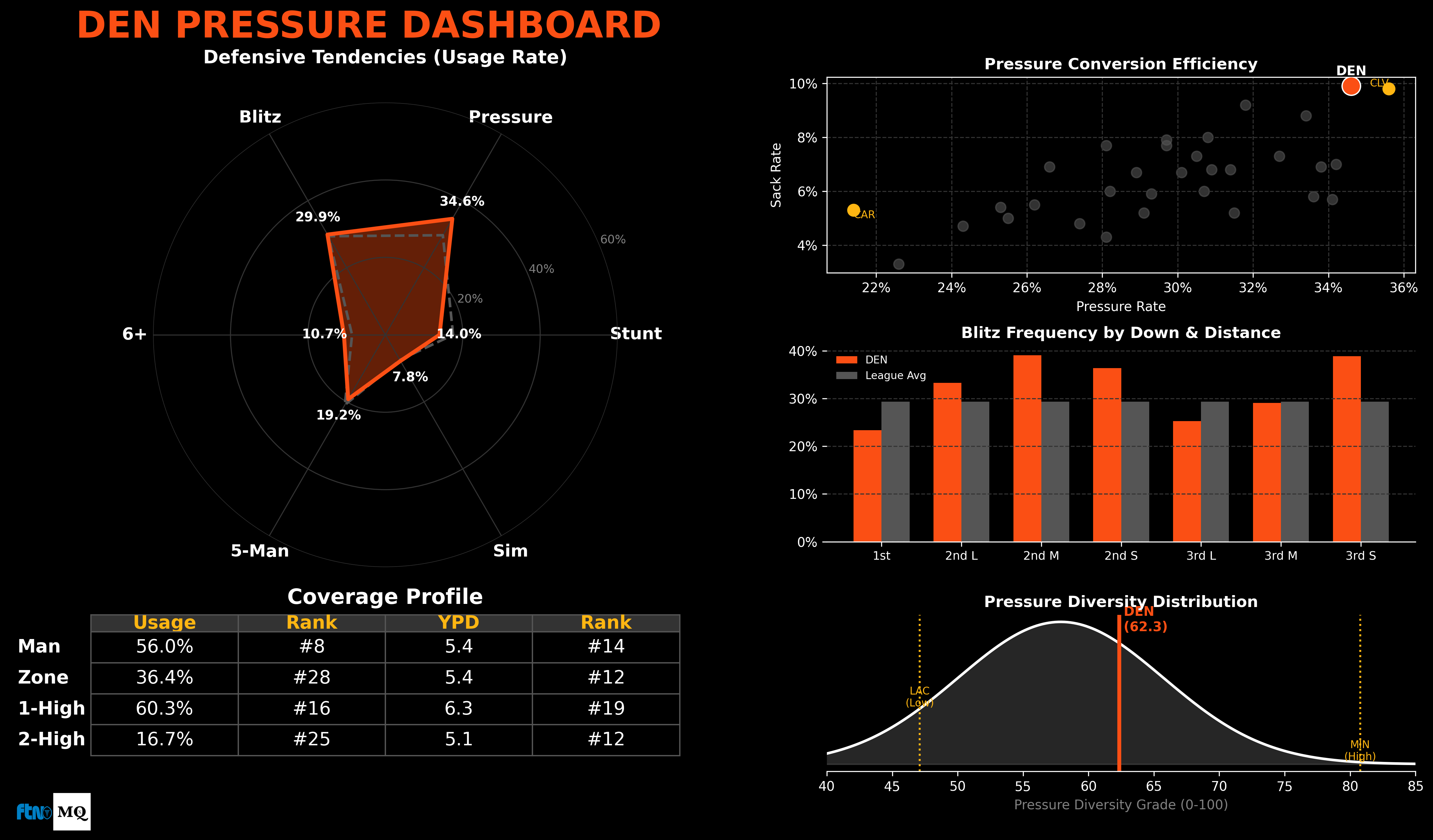
Pressure: 34.6% Pressure Rate | Rank #2 | 29.9% Blitz Rate
Identity: Aggressive Man-Match. They defy the modern NFL trend of "zoning up," playing Man Coverage 11.6% more than the league average (29.1%). This reliance on isolation coverage is supported by a pressure rate that is +4.6% above the NFL meta, proving they sell out to disrupt the QB.
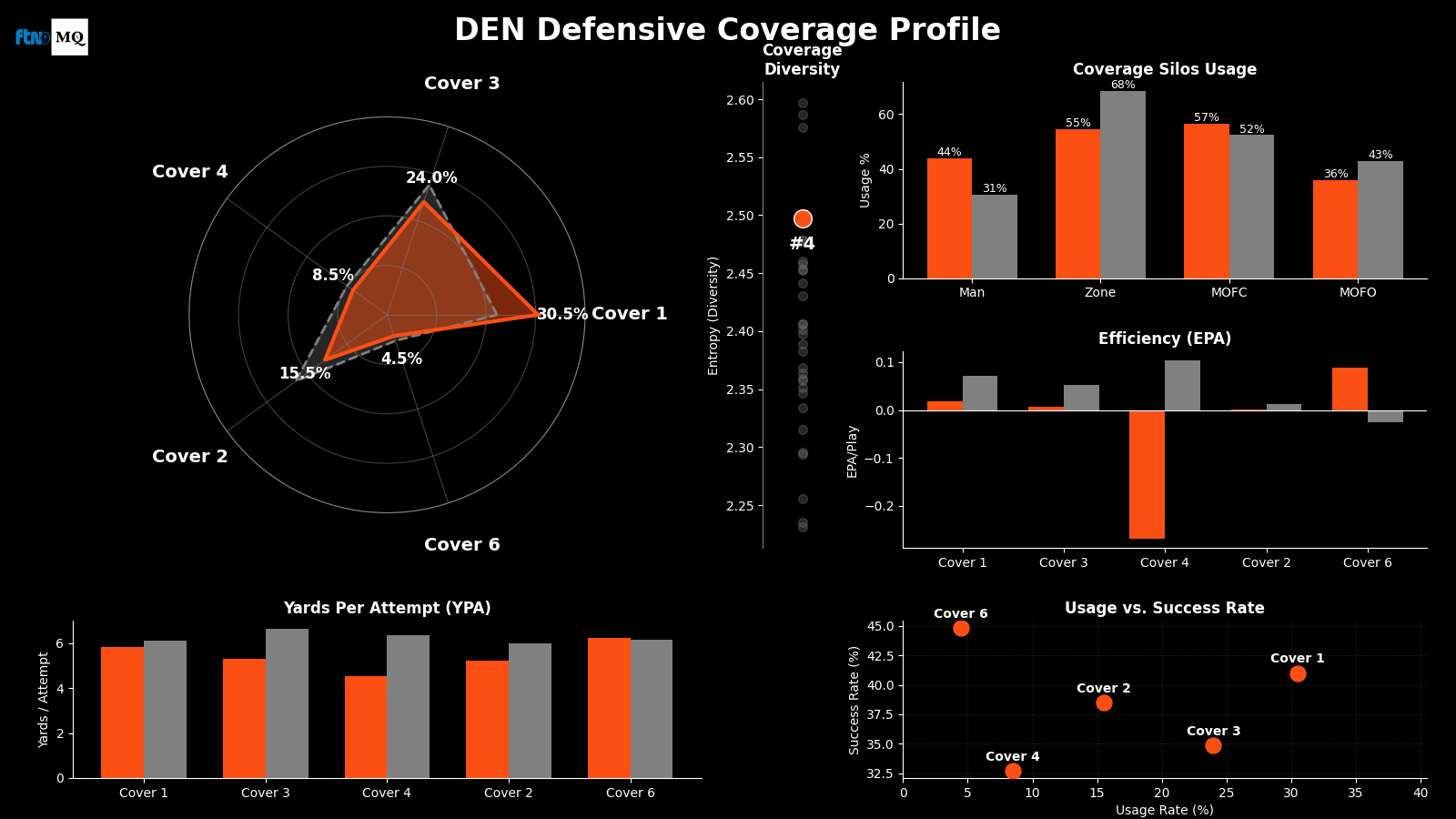
Coverage: Cover 1 (30.5%) / Cover 3 (24.0%).
Man Rate: 44.0% | Zone Rate: 51.3%
Shell: 36.0% Middle Open (MOFO) | 56.6% Middle Closed (MOFC)
Profile: The heaviest Cover 1 team remaining in the playoffs (30.5%). They live in Middle Closed shells, trusting Pat Surtain II to lock down one side while they bring heat from the other.
Three Unique Traits:
The Finisher: They rank #1 in Blitz-to-Sack Efficiency (13.4%). When they send extra rushers, they finish the play.
Man Coverage Bullies: They play Man Coverage on 44.0% of snaps. They essentially dare you to beat them 1-on-1 while under duress.
Run Defense Volatility: While stout in DVOA (-4.5%), their aggressive fronts can leave them susceptible to gap-scheme runs if the first line of defense is breached.
THE EDGE:
The Issue: Denver ranks #1 in Blitz-to-Sack Efficiency.
The Supporting Data: Buffalo’s offense struggles significantly against pressure. Josh Allen allows a 7.9% Sack Rate (Rank #6 in Playoffs) when pressured and completes just 37.5% of passes vs Man Coverage.
The Mismatch: Denver plays Man Coverage 44% of the time. Buffalo’s receivers have struggled to separate, averaging just 5.6 Yards Per Dropback vs Man. If Allen can’t scramble (his one elite trait vs Man), Denver’s secondary will smother Buffalo’s route concepts while the pass rush gets home.


—
Buffalo Bills (Defense)
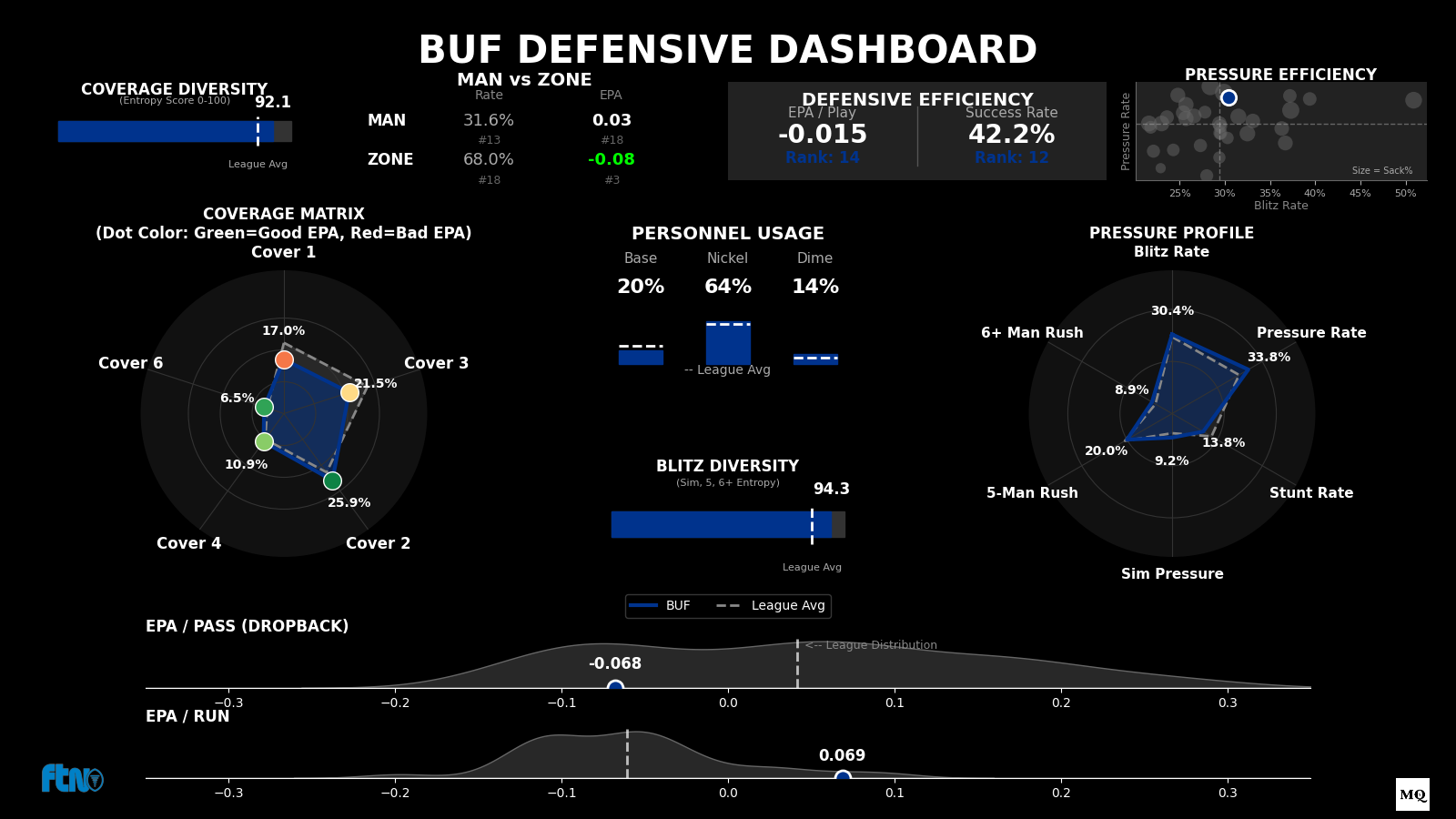
Personnel: Base 20.4% | Nickel 64.3% | Dime 14.3%
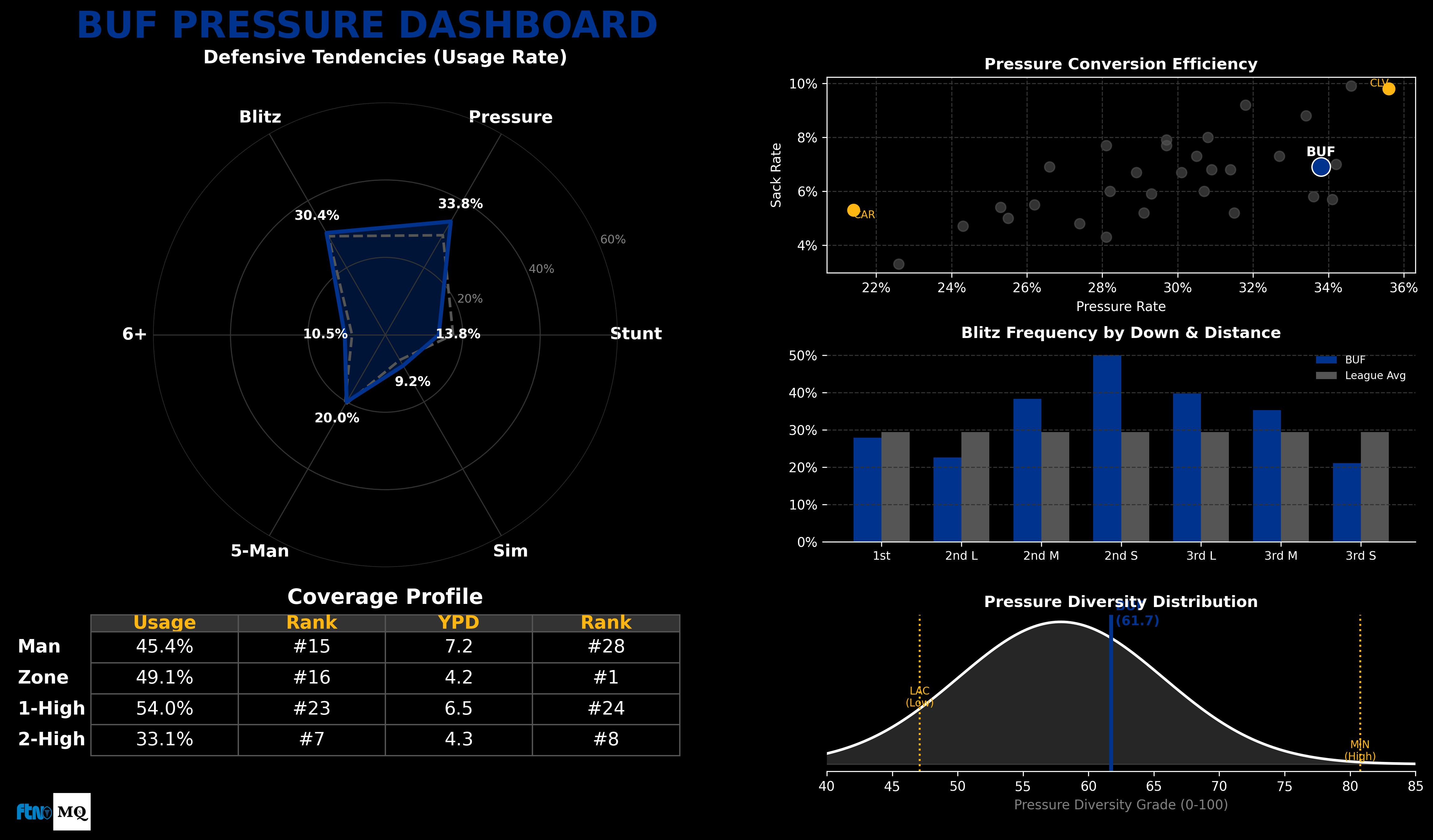
Pressure: 33.8% Pressure Rate | 30.4% Blitz Rate (Rank #10)
Identity: Disguised Split-Safety Structurally, they lean heavily into Middle Open (MOFO) shells (+11.3% vs League Avg) to cap explosive plays. However, they are not passive; they generate pressure at a rate 4.1% higher than the NFL average, often simulating pressure from these two-high looks to confuse protection rules.
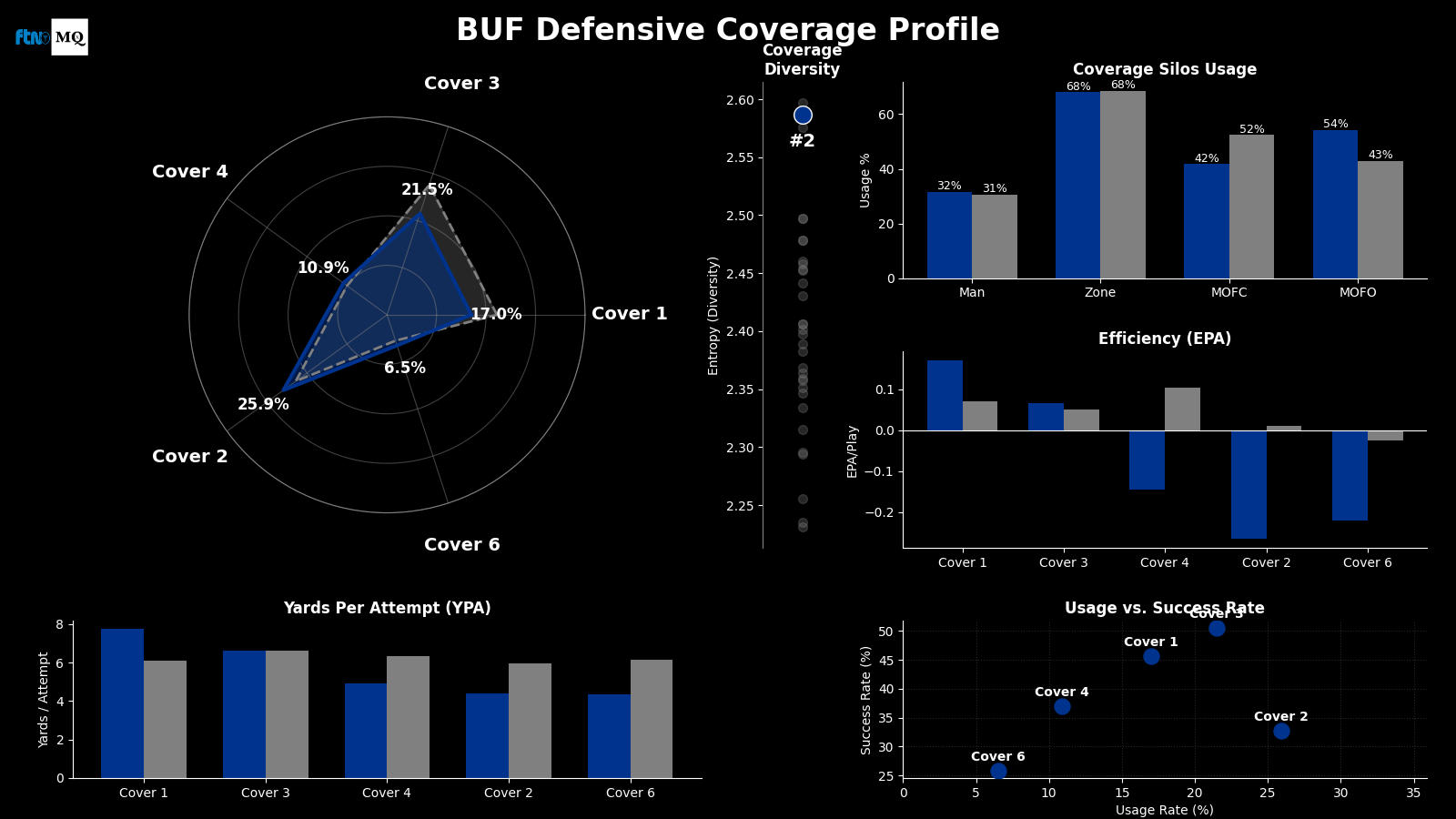
Coverage: Cover 2: 25.9% | Cover 3: 21.5%
Man Rate: 31.6% | Zone Rate: 68.0%
Shell: 54.3% Middle Open (MOFO) | 41.7% Middle Closed (MOFC)
Profile: A diverse coverage unit that leans on Cover 2 (25.9%). They pair this with a heavy Cover 1 change-up, making it hard for QBs to trust their pre-snap read.
Three Unique Traits:
Blitz Pressure King: When they blitz, they generate pressure on 50.3% of dropbacks (Rank #1).
Middle Field Open: They sit in MOFO shells 54.3% of the time. This two-high structure is designed to cap explosive plays.
Run Defense Issues: Their Run Defense DVOA is +46.6% (Rank #32), ranking dead last in the league.
THE EDGE:
The Issue: Buffalo plays a light box and has the worst Run Defense in the league (+46.6% DVOA).
The Supporting Data: Denver’s offense is ill-equipped to exploit this, averaging just 3.8 Yards Per Carry.
The Mismatch: Bo Nix has actually been efficient vs pressure (6.7 YPA vs Pressure, Rank #2). Buffalo’s high-pressure rate might play into Nix’s hands if he can get the ball out quickly to his backs, neutralizing Buffalo’s rush.


—
